I went analog for 30 days as a therapist who struggles to rest (+ video)


written and filmed by Linda Lin, RCC RCAT

For those who enjoy longer-form content to pair with my newsletters and blog posts, I've just launched a YouTube channel where I'll be talking through topics I'm exploring and sharing in a different format.

I hope this newsletter finds you in moments where time feels like a meadow, or where you’re nestled somewhere you really like.


This time last year, my friend Leah challenged me to take a full month off work while we were creating our healing money anxiety art therapy course. The relevance of this exposure alone shook me. We travelled to China together, but I couldn’t honour the non-working part.


Then, an intrusive thought that was supposed to pop in and out, came true: Decipher was in crisis. Our studio was reported to be flooded by rainwater 3 days after I left for my break. I put on that leadership hat as the practice founder and parentified eldest daughter, replying to bureaucratic calls, took on some clients on the whim, 4am in China Standard Time. The anxiety voice insisted that I had to fulfill these roles and expectations to get through this. My mind locked in by crisis managing even though I was trying really hard to take a break.


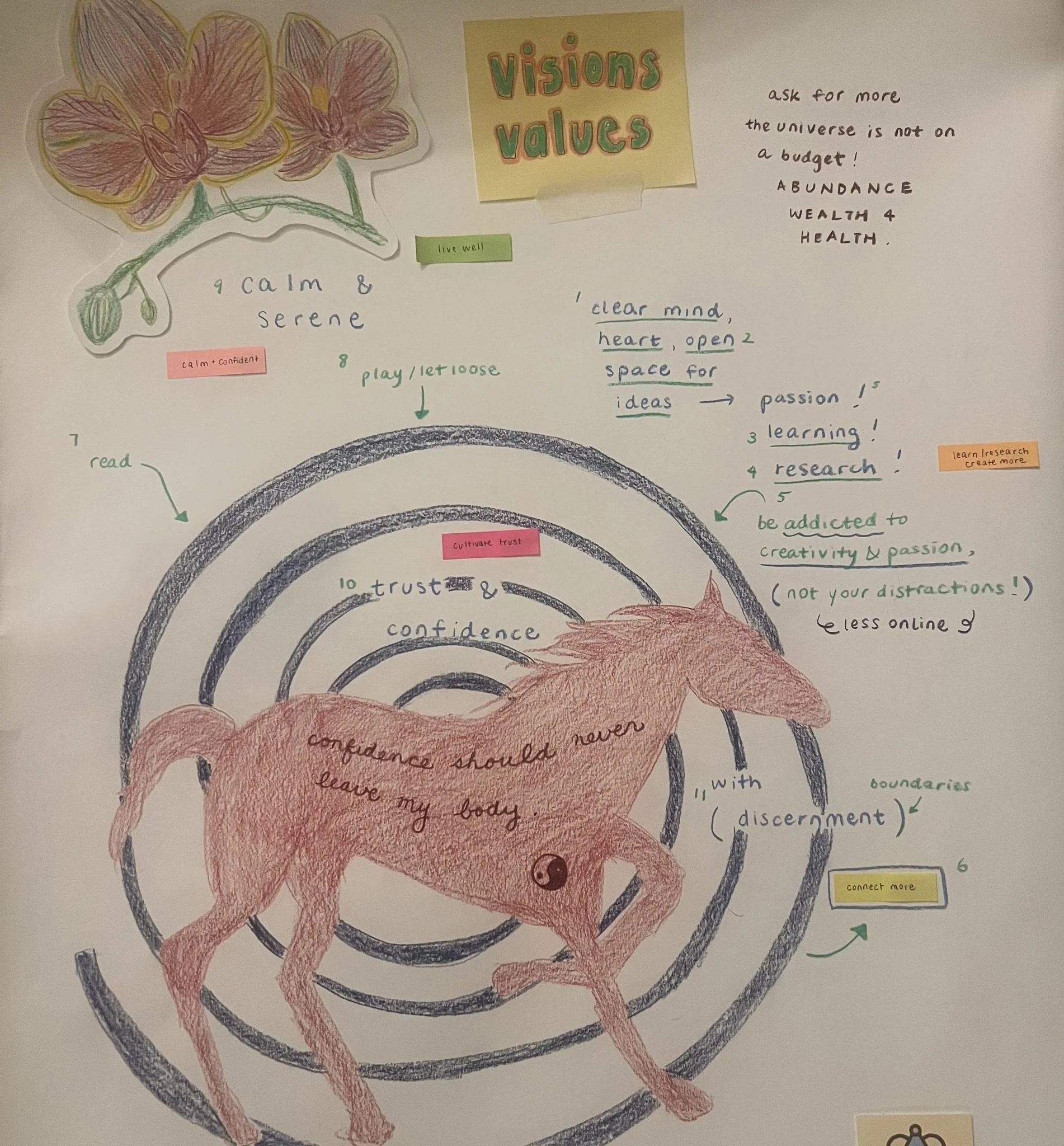
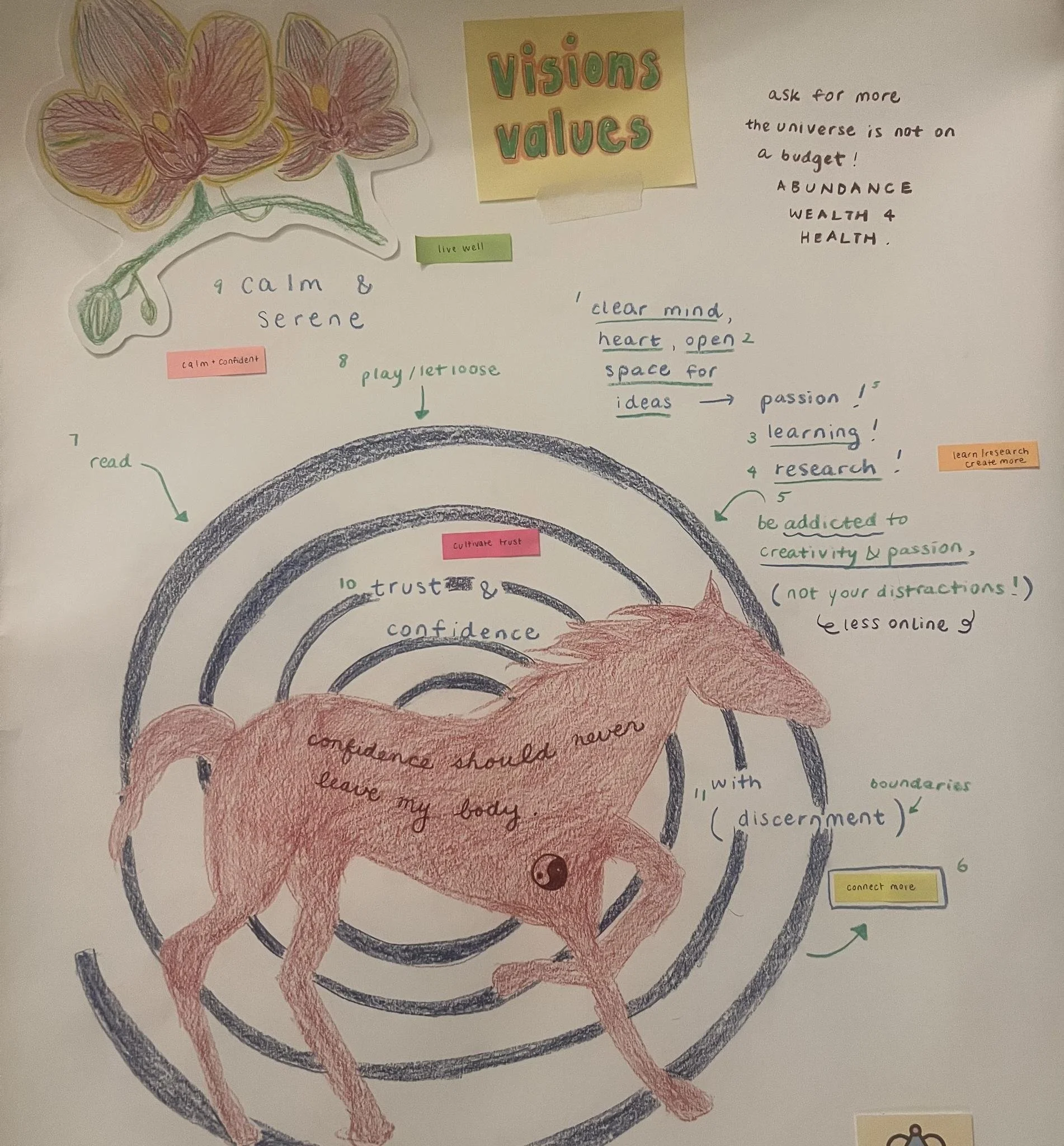
In major contrast, one of the essence goals that made it onto my 2026 bingo card was to go analog. On my bingo card, I had written that I wanted to take two months off work (!!), wean off screens, and spend more time with analog media like filming for fun, and returning to things I really love → liberating imagination and creativity, unlocking maps of the world, and taking in philosophical pauses.


"Nature does not hurry yet everything is accomplished" - Lao Tzu
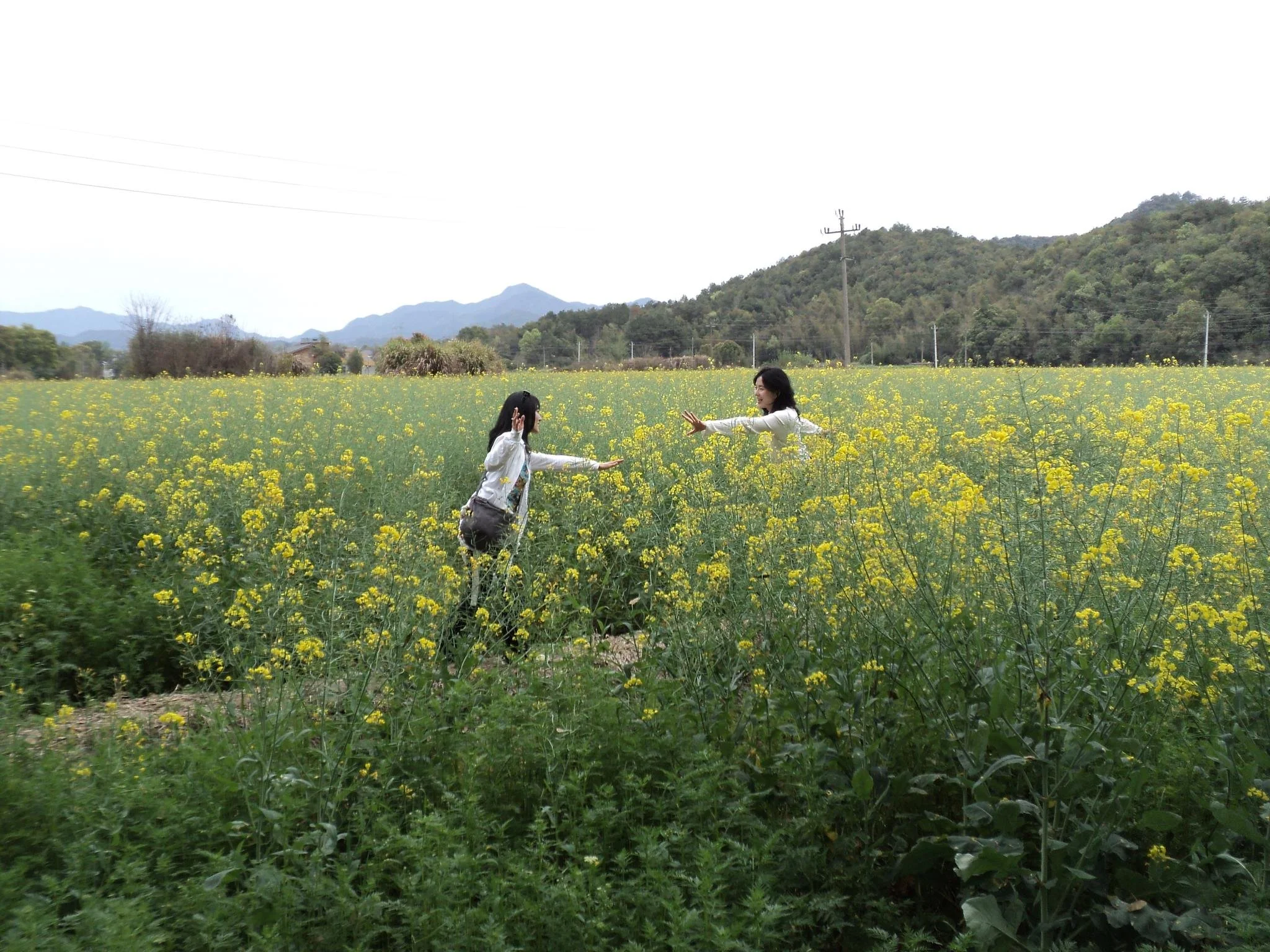
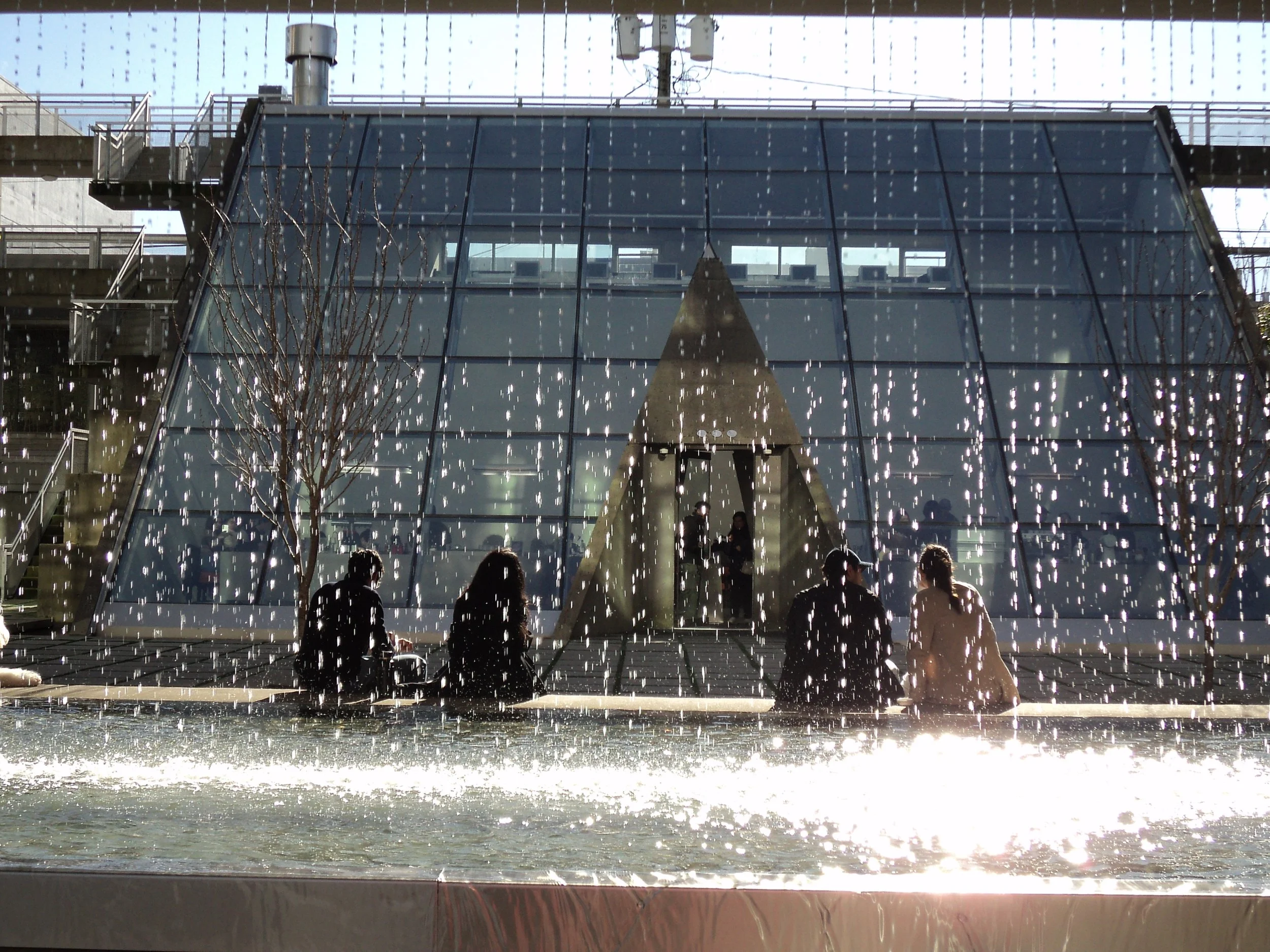
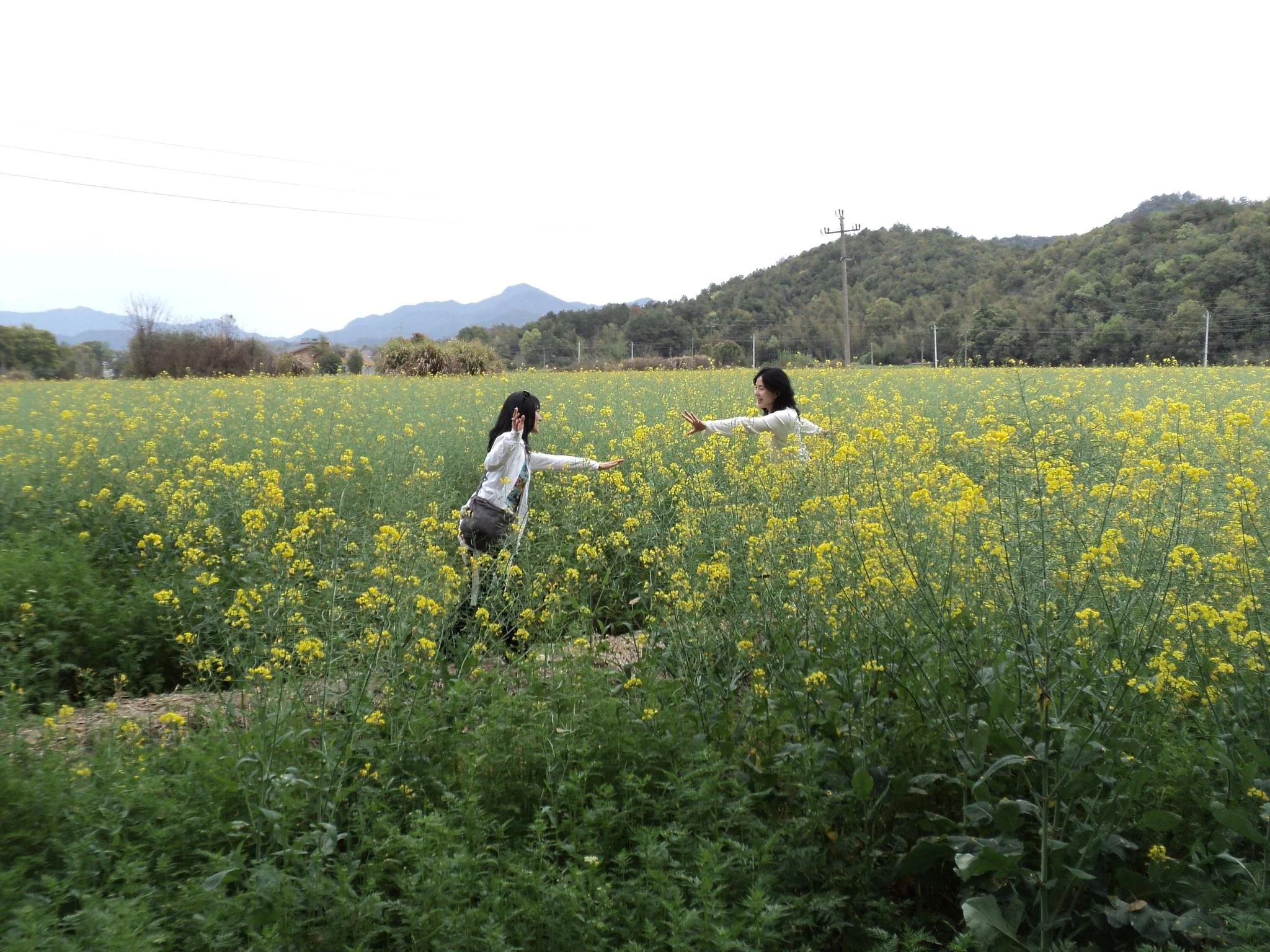
Fig.1 among a field of canola flowers in Jingdezhen

So what happens on a full month on analog?

There was more of whatever this feeling is: "the next step appears because we moved, not because we tried to make sense of it first” and building on roles outside of being a therapist.


Procedural learning. I didn’t consciously notice it during my break, but after last year’s office flood incident and after co-creating a course on healing money wounds, going analog naturally helped me step out of crisis responding rooted in fear. I fully stepped out of my usual role of monitoring emails and everything happening back at home. This allowed my body to implicitly learn that not everyone and everything is dependent on me, and leadership doesn’t look like constant vigilance.


I’ve always loved philosophy of culture and in ethnography. Arriving in Lijiang, Yunnan, for the 2nd time (my 1st was last year), I interviewed my mom, who had finally returned to her birthplace for the first time in over 60 years (after years of me urging her to reconnect with her roots). I dug up books and history around my family's lineage (a NaXi clan from Lijiang) who lost their wealth during the cultural revolution and ethnic minority cleansing. Hence complex money wounds and inherited anxiety. More of this in the upcoming newsletter!


Going rogue/off screens helped me see the world in another way. Like adopting rituals that support me to experience the flow and pace I’ve been craving. From fight and flight → rest and digest, without binary lines.

Fig.2 West Lake, Hangzhou — golden hour on the water

The month was full of creative, liberating moments like doing things just for fun! I noticed my creative voice sparking with more confidence (stepping out no matter how dressed up I am, dancing midway when a song gets stuck in my head, cracking jokes without filtering). There was less pressure to take things seriously or shape myself around a specific image or identity (like a “therapist” or “the older sister”), or to meet the demands of the algorithm. In these moments, my attention feels like it is sacred and actually belongs to me again.


Going analog helped me create glitches in the system. Capitalism handed all of us a bag of rocks and told us “this is the kit we need to survive”. Grasping onto internalized strategies like ableism, production and optimization over welfare, fatphobia, or taking time here on Earth too seriously… aren’t things I actually value. They’re inherited. Forcefully fed. Learned and rehearsed from a place of fear. Even though internalized thoughts will still appear through the course, I can discern what's mine more clearly and that makes the time I spend with myself so much easier.


I felt the depth of this: diligence without context isn't discipline, it's constant numbing and busywork. The goal was never to optimize myself into exhaustion. It's always been ease, alignment and a slightly unhinged feeling of being genuinely, embarrassingly alive.
 

This month felt like a different pace: a kind of attention and a life that doesn’t need to be constantly monitored to be lived. I honoured this principle, "说到做到" translation “following through with my promises” throughout the walk.


I don’t think going fully analog is the point. 

I’m more curious about what parts of this I’ll carry forward.

And for now, that’s enough. 😌


Putting these feelings into words for you, in case you haven’t already named them for yourself.


Thanks for tuning in, friend ✮⋆˙
 
 
SMART goals are not suitable for personal development


written by Linda Lin, RCC RCAT


FEAR is the number 1 theme I’ve been witnessing throughout therapy sessions these days. 


A lot of us are going back to survival mode, while the western world of psychology calls this ‘dysregulation’. Whether it’s dealing with sudden major life transitions, many times out of our control, to the rapid changes of living in the world today, fear comes up hard and fast.


As a client calls it, "honestly our brain is just a meat sac with electricity".


Our brains get mushy and our feelings feel complicated when fear shows up. I see us grabbing at straws, searching for immediate relief, for answers, solutions, quick fixes as we navigate this territory. Then we try to cope with everything at once, and we end up self-sabotaging or freezing in overwhelm when things don’t go the way anxiety wants them to.

It doesn't have to be like that. 

Life shouldn't feel THIS complicated.

Here's how I am facing feelings like fear!

(in relevance to dealing with 2026, year of the fire horse)


1. Reminding myself, feelings aren't facts.


What if we didn't treat feelings, fear, rage, disgust, contempt, irritation, dislikes as verdicts? 


Imagine what it’d be like if we didn’t treat feelings as hard labels, like “this is just who I am” or “this is how things will always be”, but as guidance we can listen to, not obey.


Feelings always signal what matters to us.
They point to our unmet needs, unclaimed desires, and the ideas or beliefs we never consciously chose.

Kinda like when we're driving and we see a sign (the feeling) that says “slippery roads ahead”. This doesn't mean that we are bound to slip and fall so we gotta turn around and go home. We can drive or walk through with care, be mindful to go a little slower, or stay on parts of the road that feel safer.
 

I'd like to believe that feelings are always trying their best to guide us toward what hurts, what matters, and what needs care. They’re asking for our attention and trust.


At its very core, feelings want us to remember that we matter — that we are deserving of understanding, even when listening to this might change everything we once believed.


Pause for a moment. Take a breath.

Notice how these words land for you before you continue reading.


ᯓ :ִ ࣪✩ ݁∶⊹˖ᯓ⭑ᯓ :ִ ࣪✮ ݁∶ ᯓ :ִ ࣪✧ ݁∶

2. Practice the art of decision making.
 

Act before courage feels perfect. What if we focused on honesty instead of busyness, or the pressure to make everything “just right,” as if we were performing for a critical audience?


Building awareness. When we slow down, we can see ourselves more clearly like our values, desires, what we care for, and the unique energy we bring into the world. 


Part of presence building is slowing down and taking courage toward attempting. We don’t have to go far or move fast. The focus is more of that simple noticing and listening to what we need in the moment.
 

Practices like art journaling, using stickers and prompts, bibliotherapy and building in small rewards or celebrations, like a Big Paper Planning Day, have helped me build the courage to simply start. 

3. Your goals need to be neuro-informed!


Hate to break it to ya but did you know SMART goals increases fear and anxiety?

SMART goals may sound clear, functional, reasonable and responsible (due to surviving under a capitalist system)
…but people find that SMART goals work hand in hand with their anxiety and cognition instead of our energy and noticing what is happening in the present moment. 

An example like, “I have to go to the gym 5x this week.”
Our brain will do this thing by adding extra rules with it. 
“No matter what.” 
“Push harder than yesterday.” 
“Okay now increase the sets by 5%.”
Before we know it, the goal stops feeling motivating and we can't put ourselves to actually do it.


So why does demanding X amount by a certain time, in a specific way, make us anxious and self-critical?

It’s similar to how we overcomplicate our art, writing, and projects. We are trained to take pride in being driven by anxiety, perfectionism, the need to “look busy,” thinking that more effort will better ourselves so that we could finally meet our goals. 

Deep down, we know that all that pressure, all that busy-work rarely moves the needle and most often than not, we become frozen by overwhelm and FEAR.

That's because SMART goals originated from a place that was NEVER meant to be used for personal development! ( ˶°ㅁ°) !!

SMART goals started as a management tool for organizations and the C-suite. It wasn’t built for emotional well-being since the beginning, but to keep employees in check.

Did you know? The A in SMART originally stood for Assignable, not Achievable 😒 That’s why they land so cognitively, cold, performance-obsessed when we apply them to day-to-day goals we have for ourselves. 
 

For many of us, SMART goals lead to disappointment, lower self-esteem, and spike our anxiety. Say we’re low in energy, but we set these goals when we were high in hope. The same SMART goals can then make us feel disappointed, “not good enough,” or “inconsistent” when life doesn’t go exactly as planned.

TLDR; SMART goals weren’t made in accommodation to emotional wellbeing, neurodivergence, context to our current energy level, or to nuances and sensitivities, and when times are multi-faceted (feeling collective despair as an example).

4. Our identity builds when we see ourselves as consistent.


When we show up consistently, even in small ways, our sense of self starts to feel real, and fear becomes less relevant. Self‑perception forms when we are a certain way because we have acted that way repeatedly. 

Like when we set boundaries consistently, and it strengthens the way we see ourselves, while sustaining our relationships. A win-win-win!?!

Research shows that when our actions align with our values on a regular basis, the brain strengthens neural pathways that reinforce our self-image over time. Consistency isn’t about perfection, it’s about building a reliable story of who we are.

5. Simplify everything with essence goals.


Essence goals sound almost too simple, but they actually work. Instead of overcomplicating life with logic and overthinking, they guide us back to what really matters: our values and desires.


This is what essence means to me ↓

Essence is unwavering in self-advocacy and protection with unconditional acceptance of our values. 
Essence brings deep attunement like the way nature and land show up. Like a grounded tree or a portal accessing our intuition. 


I’d like to imagine that our essence has been with us our whole life.

 Essence goals are adaptive, discerning, and handles nuances. They focus on how we actually want to feel, live, and move through the world.

Instead of pushing past our capacities, we practice honouring our emotional reality!


Examples can look something like this:

“Move in ways that make me feel alive and strong this week.”

“Show up for my community with presence and solidarity.”

“Unplug easily and celebrate after each workday.”


So here’s to more moments of tuning into your innate wisdom (which is backed by science btw.ᐟ.ᐟ ) to support your emotional wellbeing.


Always in your corner,
Linda ♡


Surviving → Redirecting Year-End Season


written by Linda Lin, RCC RCAT


Year end / holiday stress is so real. 


Many of us enter December already depleted, with our numbing or protective safety behaviours running on overdrive.


So I wanted to write a newsletter to validate some of these experiences and patterns I’ve been noticing. 


These patterns can be so familiar that they often go unnoticed, even when we know this season feels heavier than it appears from the outside.


Please note that language I use may sound ‘too clinical’ so if you’d like to personalize with different language/words to describe similar things, go for it!

The end of the year often asks us to push through exhaustion, emotions, and (over)stimulation.


This time of year often stirs up financial pressure to find the perfect gifts, brings complicated interpersonal or family dynamics to the surface, and encourages us to wrap things up or end on a high note. 


It’s easy to become overstimulated by end-of-year sales (side note: did you know we can be exposed to 4,000 to 10,000 ads a day?), while juggling invitations and obligations, both external and internal, and navigating feelings of isolation when we’re “supposed” to feel joyful, restful, and connected. 


The stress can affect our body weeks or even months before anything actually happens at all.


A lot of us are going through this month with our safety behaviours activated. These behaviours help us numb or cope with discomfort so we don’t have to fully feel or process it. 


Safety behaviours are any acts that reduce distress in the short term by anticipating or preparing for the worst, often increasing our perception of fears. They can be very sneaky, work alongside anxiety, and often go unnoticed, leaving us feeling confused, lost, and overwhelmed.

Some examples of safety behaviours I’ve noticed (not exhaustive!):

  • Overcleaning or working overtime

  • Bed rotting but not allowing for true rest

  • Frozen in doomscrolling

  • Retail therapy or overconsumption

  • Comfort eating, or restricting/picking/counting/purging, or obsessing over food/”health”/body

  • Exercising excessively with little to no recovery

  • Always trying to fix ourselves without ever celebrating our wins

  • Avoiding conflict by pleasing others (while we have no idea what our needs are)

  • Rehearsing how situations will play out at future gatherings

  • Replaying something you said or something unresolved over and over in our mind

  • Hyper-vigilance or hyper-independence that feels “right”

  • Fixating on rigid routines that fuel perfectionism

  • Harsh internal dialogue when routines are disrupted or our goals aren’t met

  • Numbing with something because you feel distressed or irritated at ourselves, others, systems, or the world

  • Exhaustion from masking or showing up performatively at gatherings

  • Texting back immediately even when we have no more capacity, or the latter, avoiding texting back for weeks

  • Seeking reassurance from others for most decisions we need to make

  • Intellectualizing or over-analyzing everything.

Good news is that there are patterns / wiring that we start to become more aware of! 

Here's what safety behaviours have in common:

  • Coping, not processing: They keep us “safe” momentarily, but not in the long term.

  • They play on our fears: Safety behaviours increase our perception of existing fears. They make fear feel more intense or obsessive, rather than helping us heal from it.

  • They respond to urgency: Acting “before the shoe drops,” safety behaviours turn anxious thoughts into rules, rituals, or compulsions in the hope of preventing a consequence. These can be physical actions, mental acts, or rigid routines we feel we have to do in the moment—or else.

  • They've worked before: At some point in history, these behaviours helped you cope and feel safe. That’s why they’re so familiar, and may even feel safe and comforting.

  • They dislike uncertainty: Safety behaviours often show up when situations are unpredictable, unresolved, or ambiguous.

Some practices I’ve been using for long-term care and support instead of safety behaviours:

  • Catching, disengaging, and redirecting from my safety behaviours toward what actually matters. For example a fear I’m working through, always feeling responsible for my team, is gradually being redirected into the belief that I am becoming a stronger leader and team member.

  • Making, creating, or crafting something with my hands (great for slowing down). 

    Enter our giveaway to drop in access to Off Screen Hours and an art journalling kit here: a special collab with 1912 Amax Stationery.
     

  • Reducing screen time on my phone, using apps like Opal to block distracting social media during the week for more mindful consumption.

  • Allowing 15+ minutes of boredom each day to check in with my nervous system and mind-body.

  • Eating food that keeps me satiated, exciting, and simple (base repetitive, toppings rotated!).

  • Moving in ways that make me feel strong while allowing ample recovery time. Lately I’ve been enjoying low-impact, high-intensity workouts (iykyk!).

  • Inviting friends to do mundane activities: dog walks, grocery shopping, co-working, cooking a meal together, or asking them for help (this one is huge for me).

What have you been practicing? 

Below I'm sharing my fave reflection questions that really help slow me down (fyi they can go deep)!

Since we tend to be reflective during this time of year, I’m inviting us to journal, discuss with a good friend and/or make some art to check in with ourselves if safety behaviours have been showing up.

Get your tea, pens and stickers ready!


• What signals do my body give me when I feel safe, and when I feel overwhelmed?
• What are my safety behaviours? List them out and try calling them out. (see above for some examples)
• What are my go-to ways of avoiding or distracting from conflict or discomfort?

• What feelings have been harder to feel lately?
• Are there parts of me that learned to stay quieter/numb/unnoticed to stay safe?
• What does this protective strategy/response want me to know?
• Where do I notice myself toning down or editing parts of who I am, especially around others this season?
• What has it taken for me to arrive here, and what needs acknowledgement and care?


In a society designed to keep us numbing, with no time to slow down, where rest is mistaken for laziness and bursts of anxiety are mistaken for productivity, our awareness is rebellion. Slowing down to notice our limits, finding ways out of misery and fear, and understanding our grief are acts of resistance. And this resistance doesn’t have to feel endless or scary.


If you’re needing some extra love and support navigating these complex experiences, our team is here for you!


May this season of reflection lead us to explore moments for rest, awareness, and connection to support us into the new year. Take good care, First name / friendsee you in 2026 ♡


Sincerely, 
Linda


Enter our giveaway before the end of the year (Dec 31st, 2025) for a chance to win: 
📓 Drop-in access to weekly Off Screen Hours (Friday workshops until Feb 2026)*
🖋️ An AMAX journaling kit — Hitotoki notebook + Pentel brush pen set


Navigating Social Media in Today’s World


written by Maryam Dada, M.A., RCC ; intro/outro by Linda Lin RCC, RCAT

We are living in a moment where information is everywhere, yet attention feels increasingly scarce. Our phones promise connection, stimulation, and ease, often at the cost of depth and our sense of presence. As scrolling replaces reading and fragments replace stories, some are describing our entry into a post-literate society.

Each notification shapes the way we think and feel, speeding up a pace that asks our nervous systems to adapt faster than we might choose or want. This creates what some call cognitive debt: the mental fatigue and attentional strain that builds when our minds are constantly stimulated but rarely allowed to rest or reflect. Navigating social media today is therefore not simply about screen time. It is about how we care for our internal wellbeing in an attention economy that profits from this depletion.

History of Instagram and its Original Function

Instagram was first released in 2010, fifteen years ago. It was a time where pink-coloured skinny jeans and shudder shades were all the rage. We wore bright colours and messy prints, our hair in a trademark sock-bun, lips pursed, and duck-face at the ready to post on Instagram. 


Instagram at its inception was so new and so special. Previously, if we wanted to share photos they’d be through a Facebook album – and while that was an online sharing platform it didn’t have the instant effect of instagram. An instant way to share photos and only photos with friends and family.

 
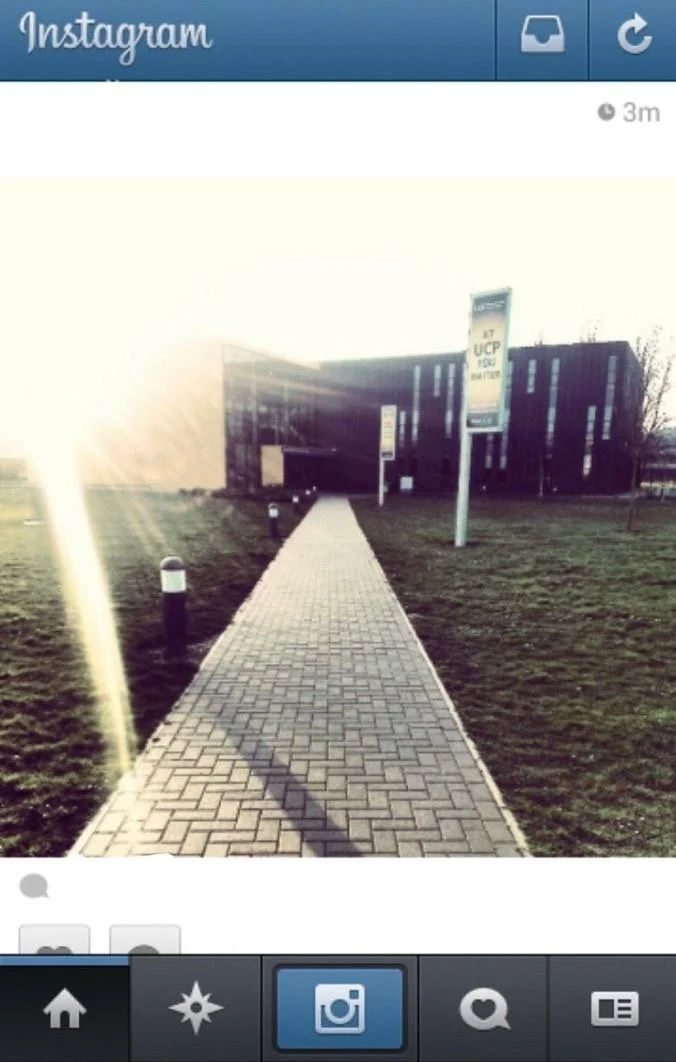
old instagram interface from 2012

In its humble beginnings, Instagram existed purely as a way to share photos with loved ones and build community. Photos were sequential, we could comfortably scroll to the end of our feed, feel ‘caught up’ and neatly put our phones away. It was simple, easy, and a mark of the time. 

In the 2010s we started to see a shift to online platforms, whether that was through Facebook, Instagram, or Buzzfeed, a subtle shift had started to take place. Our attention was moving online. 

We didn’t know it at the time, but this would mark the beginning of a new way to consume media and with it, of course, would come a whole host of other considerations that we are only now starting to unpack. 

In this blog post, we’ll be exploring:
• the different pitfalls of social media (like targeted marketing)
• being bombarded with content
• influencer culture and performativism
• having an online presence
• our self-perception
• and doomscrolling.

At the end, I’ll share some tips to help you navigate social media in today’s world.

Pitfalls of Social Media 

Today, social media looks a lot different, with the advent of short form videos like TikTok/Reels, instagram stories, and ads, we are living through a time where we are constantly being bombarded with content


In addition, marketing strategies, advertisements, and a daunting algorithm, curate content that is specifically tailored to you. What you are seeing has been cultivated for you. In a lot of ways this can be efficient, intended to make your life easier, and in other ways, it can feel nefarious, taking away your ability to choose the time/place you want to look into something.

Social media has also taken on an amorphous quality – a shapeless thing that is somehow tangible in nature. The platform exists online but we are very much impacted by what we see.

We are influenced by influencers, locked into other peoples’ routines: what I eat in a day, what my 5-9 looks like after my 9-5, get ready with me’s…etc. This can negatively affect our sense of self and self-esteem. 

It has made news accessible in a way that allows us to be informed but also pressures us to feel on top of everything all the time (a big ask).

This can lead to performative activism which actually serves to disconnect us from what we are seeing/feeling and how it’s impacting us and shift instead into thoughts of, how is my online presence being perceived? 

While it is important to be informed about what is going on in the world, when we are operating from a place of “I need to share this to fit” or “I feel anxious because everyone is talking/sharing about this”. Give yourself permission to take the time to learn about the issue at hand, and then, make an informed decision about your impact. 

Additionally, it is important to note how our attention spans are being impacted, short form content has made it difficult to focus and we find ourselves in the endless chasm of doomscrolling - content that is targeted and tailored to us, with no end in sight.

It’s what our parents warned us about: social media can be a distraction. Not only is it impacting our ability to focus on longer forms of content, it can also surreptitiously eat up hours of our time without us realizing if we’re not paying attention. Revenge procrastination, time warps, and of course, doomscrolling. This can be particularly harmful if we use social media to avoid tasks that we need to complete. 

All of this makes it especially important for us to be able to filter what we are seeing. Not necessarily to turn away, but instead to start tuning in to ourselves

I am of the belief that social media is here, and here to stay. There can be some really lovely benefits in finding and participating in online communities, but the onus is on us to be aware of social media pitfalls too. How can we be using social media in a way that benefits rather than harms us? 

Practical Tips for Navigating Social Media Use

(download full list in pdf below!)

  • ‘Hack’ your algorithm - intentionally watch videos that will bring you comfort, joy, humour…etc 

  • If you are getting your news online, allow it to digest (i.e. take a moment to understand what you are seeing) before instantly sharing/reposting 

  • Recognize the system at play (i.e. capitalism) that makes things like doomscrolling so appealing. 

  • Opt out of notifications

…more in our pdf download!

Benefits of Social Media 

Finally, I want to end with a positive take on social media. I think we do have to be mindful of how we spend our time online and that it is our responsibility to do so in ways that are sustainable and overall feel good for us. 


Social media has also been a place of community, education, resource building. It’s created platforms for us to learn about each other directly, learn from one another, we’ve been able to see things as they are happening in real time and form our own opinions about them. We’ve felt less alone in our struggles. We’ve enjoyed fandoms, communities, allyship, memes, and advocacy. It’s given us a place to express ourselves, our love, our friendships, our style…it’s taken some of the mystery out of being human. Sometimes, it helps us feel as though we know one another. These are all good <3


Living in a postliterate society does not have to be black or white like accepting where technology will lead us or grieving of a predigital past. It can mean noticing the costs within our personal lives and the broader shifts in society, while making intentional choices about how we reclaim our attention, how our bodies are responding through our behaviours, and what we truly value. It can also mean supporting and challenging the status quo by strengthening our capacity for critical thinking.

Navigating social media today is less about discipline and more about relationship—how we relate to our attention, our time, and our sense of self. We do this through small and intentional acts: reading slowly, writing imperfectly, posting as if we are speaking with the people we want to connect with, and pausing before the next scroll. In choosing moments of depth over endless input, we are not falling behind. We are remembering a different rhythm of being human, one where meaning is not optimized, but felt.

Maryam is a Registered Clinical Counsellor at Decipher. If you like to explore themes in tv, media, or literature and how it relates to your life or the different things you may be going though, she may be a good fit.  She is currently taking new clients! Book a free consultation with Maryam today—available online and in person in so-called Vancouver, BC.