Posts tagged embodiment
Navigating Social Media in Today’s World


written by Maryam Dada, M.A., RCC ; intro/outro by Linda Lin RCC, RCAT

We are living in a moment where information is everywhere, yet attention feels increasingly scarce. Our phones promise connection, stimulation, and ease, often at the cost of depth and our sense of presence. As scrolling replaces reading and fragments replace stories, some are describing our entry into a post-literate society.

Each notification shapes the way we think and feel, speeding up a pace that asks our nervous systems to adapt faster than we might choose or want. This creates what some call cognitive debt: the mental fatigue and attentional strain that builds when our minds are constantly stimulated but rarely allowed to rest or reflect. Navigating social media today is therefore not simply about screen time. It is about how we care for our internal wellbeing in an attention economy that profits from this depletion.

History of Instagram and its Original Function

Instagram was first released in 2010, fifteen years ago. It was a time where pink-coloured skinny jeans and shudder shades were all the rage. We wore bright colours and messy prints, our hair in a trademark sock-bun, lips pursed, and duck-face at the ready to post on Instagram. 


Instagram at its inception was so new and so special. Previously, if we wanted to share photos they’d be through a Facebook album – and while that was an online sharing platform it didn’t have the instant effect of instagram. An instant way to share photos and only photos with friends and family.
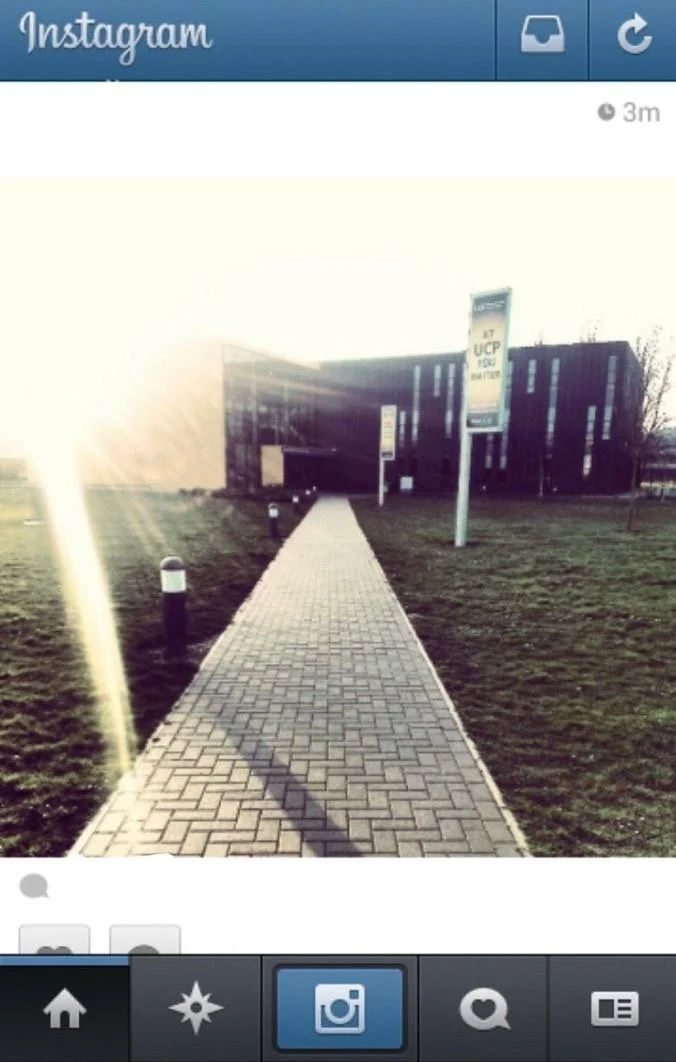
 
old instagram interface from 2012

In its humble beginnings, Instagram existed purely as a way to share photos with loved ones and build community. Photos were sequential, we could comfortably scroll to the end of our feed, feel ‘caught up’ and neatly put our phones away. It was simple, easy, and a mark of the time. 

In the 2010s we started to see a shift to online platforms, whether that was through Facebook, Instagram, or Buzzfeed, a subtle shift had started to take place. Our attention was moving online. 

We didn’t know it at the time, but this would mark the beginning of a new way to consume media and with it, of course, would come a whole host of other considerations that we are only now starting to unpack. 

In this blog post, we’ll be exploring:
• the different pitfalls of social media (like targeted marketing)
• being bombarded with content
• influencer culture and performativism
• having an online presence
• our self-perception
• and doomscrolling.

At the end, I’ll share some tips to help you navigate social media in today’s world.

Pitfalls of Social Media 

Today, social media looks a lot different, with the advent of short form videos like TikTok/Reels, instagram stories, and ads, we are living through a time where we are constantly being bombarded with content


In addition, marketing strategies, advertisements, and a daunting algorithm, curate content that is specifically tailored to you. What you are seeing has been cultivated for you. In a lot of ways this can be efficient, intended to make your life easier, and in other ways, it can feel nefarious, taking away your ability to choose the time/place you want to look into something.

Social media has also taken on an amorphous quality – a shapeless thing that is somehow tangible in nature. The platform exists online but we are very much impacted by what we see.

We are influenced by influencers, locked into other peoples’ routines: what I eat in a day, what my 5-9 looks like after my 9-5, get ready with me’s…etc. This can negatively affect our sense of self and self-esteem. 

It has made news accessible in a way that allows us to be informed but also pressures us to feel on top of everything all the time (a big ask).

This can lead to performative activism which actually serves to disconnect us from what we are seeing/feeling and how it’s impacting us and shift instead into thoughts of, how is my online presence being perceived? 

While it is important to be informed about what is going on in the world, when we are operating from a place of “I need to share this to fit” or “I feel anxious because everyone is talking/sharing about this”. Give yourself permission to take the time to learn about the issue at hand, and then, make an informed decision about your impact. 
Additionally, it is important to note how our attention spans are being impacted, short form content has made it difficult to focus and we find ourselves in the endless chasm of doomscrolling - content that is targeted and tailored to us, with no end in sight.

It’s what our parents warned us about: social media can be a distraction. Not only is it impacting our ability to focus on longer forms of content, it can also surreptitiously eat up hours of our time without us realizing if we’re not paying attention. Revenge procrastination, time warps, and of course, doomscrolling. This can be particularly harmful if we use social media to avoid tasks that we need to complete. 

All of this makes it especially important for us to be able to filter what we are seeing. Not necessarily to turn away, but instead to start tuning in to ourselves

I am of the belief that social media is here, and here to stay. There can be some really lovely benefits in finding and participating in online communities, but the onus is on us to be aware of social media pitfalls too. How can we be using social media in a way that benefits rather than harms us? 

Practical Tips for Navigating Social Media Use

(download full list in pdf below!)

  • ‘Hack’ your algorithm - intentionally watch videos that will bring you comfort, joy, humour…etc 

  • If you are getting your news online, allow it to digest (i.e. take a moment to understand what you are seeing) before instantly sharing/reposting 

  • Recognize the system at play (i.e. capitalism) that makes things like doomscrolling so appealing. 

  • Opt out of notifications

…more in our pdf download!

Mindful Scrolling: Download the PDF

Benefits of Social Media 

Finally, I want to end with a positive take on social media. I think we do have to be mindful of how we spend our time online and that it is our responsibility to do so in ways that are sustainable and overall feel good for us. 

Social media has also been a place of community, education, resource building. It’s created platforms for us to learn about each other directly, learn from one another, we’ve been able to see things as they are happening in real time and form our own opinions about them. We’ve felt less alone in our struggles. We’ve enjoyed fandoms, communities, allyship, memes, and advocacy. It’s given us a place to express ourselves, our love, our friendships, our style…it’s taken some of the mystery out of being human. Sometimes, it helps us feel as though we know one another. These are all good <3


Living in a postliterate society does not have to be black or white like accepting where technology will lead us or grieving of a predigital past. It can mean noticing the costs within our personal lives and the broader shifts in society, while making intentional choices about how we reclaim our attention, how our bodies are responding through our behaviours, and what we truly value. It can also mean supporting and challenging the status quo by strengthening our capacity for critical thinking.

Navigating social media today is less about discipline and more about relationship—how we relate to our attention, our time, and our sense of self. We do this through small and intentional acts: reading slowly, writing imperfectly, posting as if we are speaking with the people we want to connect with, and pausing before the next scroll. In choosing moments of depth over endless input, we are not falling behind. We are remembering a different rhythm of being human, one where meaning is not optimized, but felt.

Maryam is a Registered Clinical Counsellor at Decipher. If you like to explore themes in tv, media, or literature and how it relates to your life or the different things you may be going though, she may be a good fit.  She is currently taking new clients! Book a free consultation with Maryam today—available online and in person in so-called Vancouver, BC.

 
Bibliotherapy: The Intersection between Reading Fiction and Therapy


written by Maryam Dada, M.A., RCC
mildy edited by Linda Lin, RCC, CCC RCAT

Do you have a favourite fictional book and if so, what makes it your favourite?
Is it the characters? The storyline?
Or a bit of both?
Increasing research has come out around the therapeutic benefits of reading fiction and bibliotherapy.  

In this blog post, we’ll be exploring:
• the self-improvement fallacy
• why reading is an act of resistance
• how reading fiction both influences and amplifies our empathy and sense of self
• bibliotherapy as a creative approach to collective healing

a library from a school in the 90s with shelves of books and 4 computers and workspace in the middle

The Self-Improvement Fallacy

In the 90s, we saw a big push towards reading self-help or psychological books that really influenced societies’ reading habits. It makes sense, when we think about therapeutic reading, we are naturally going to want to read educational, self-help, and informative books. 

According to market research, the self-improvement industry (books, podcasts, academies, courses) is only going to continue growing. While there is a lot of good and useful information in these self-help books, they often sway towards being text heavy, which can take some time for us to process and digest, and don’t always leave us feeling ‘improved’

a subway full of Asian people who are reading or occupied on their phones

On one hand, I understand the desire for accessible self-improvement interventions, and on the other, I worry about the implications of a society driven by “self-improvement” (air quotes intended). 

Self-improvement implies that there is always something to be working on. In other words, it operates on the belief that you, just as you are, are not good enough

From a therapeutic perspective, there is a difference between acknowledging things that would be helpful to work on…and believing that you always need to improve.

You don’t always have to be improving something about your life — in fact, this notion may stem from feelings of internalized capitalism and productivity. Instead, it can be helpful to ask, who benefits from you having these feelings? 

Why Reading Fiction is Key 


This is where fiction comes in. Human beings are experiential in nature. This means we learn best through experiencing something. 

words say, "the best books, they don't talk about things you never thought about before. They talk about things you'd always thought about, but that you didn't think anyone else had thought about." quote by TOmmy Wallach, we all looked up.

Reading fiction is different from studying a text or absorbing information. The very act is experiential. When we read stories we are getting a first-hand account of a characters’ lived experience. 


We get to go on adventures with them, understand what they’re feeling, and take part in their journey. It’s a gateway into a different life or timeline, a peek into a world different from our own. That’s what makes reading fiction so invaluable, the opportunity to experience life from a different perspective.

shelf of books with a planter on the top shelf. Golden sunlight is beaming in the room

Bibliotherapy is a gentle, creative therapeutic approach that uses literature, storytelling, and poetry to offer perspective, deepen insight, and support positive change in clients. Books can provide a form of support that allows clients to find comfort, wisdom, and emotional connection. 

“We are more alike than we are unalike”- Maya Angelou


The Therapeutic Benefits of Reading Fiction 

There are many therapeutic benefits to reading fiction  (Billington et al., 2010; Parker, 2018; Dodell-Fetir, Tamir, 2018) it can:

  • ↑ our capacity to understand and relate to others 

  • ↑ our empathy and compassion for ourselves and others 

  • ↑ our social well-being—while reading we relate to characters in the story and that helps to both normalize and validate different experiences 

  • Give us diverse perspectives on matters 

  • Give us insight into other communities and groups

  • ↑ our concentration and ability to focus 

  • ↑ our self-awareness and ability to articulate 

  • Allow us to slow down and process stories

  • Help to regulate our nervous system

  • Help us engage in an act of counterculture. In a fast paced world that lauds productivity as the standard, reading is an act of resistance

Increased Empathy and why it matters

Snoopy is tiny reading a giant book while eating a cookie on a blue sofathe caption says "the world needs you"

Reading fiction allows us to deep dive into the human condition with its powerful capacity for resonance. We experience the spectrum of emotions from the protagonist and in doing so are simultaneously expanding, validating, and normalizing our own experience of what it means to be a human. 

One of my favourite quotes comes from Donna Tartt’s Goldfinch, on Art. She says:

“…even if we’re not always so glad to be here, it’s our task to immerse ourselves anyway: wade straight through it, right through the cesspool, while keeping eyes and hearts open.”

Increasing our empathy and our understanding of human behaviour, we take part in the struggle against moral apathy… or what happens when we no longer care about one another. 

James Baldwin famously said, “I am terrified of moral apathy, the death of the heart” 

Reading fiction is one of the best protective mechanisms against that struggle, precisely because of its relatibility. Given the current climate on book bans and universities censoring students, it is incumbent on us, the people, to question the systems at place, seek knowledge, and expand our awareness.

Have you read any famously banned books? If yes, consider why they might have been banned and what it means to sensor a narrative. Knowledge is our best ammunition against ignorance, and as a result against indifference. It's not only cool to care, it's crucial. 

Maryam is a Registered Clinical Counsellor at Decipher. If you like to explore themes in tv, media, or literature and how it relates to your life or the different things you may be going though, she may be a good fit.  She is currently taking new clients! Book a free consultation with Maryam today—available online and in person in so-called Vancouver, BC.

 
The Myth of Work-Life Balance in Severance: A Nervous System and Mental Health Perspective


written by Maryam Dada, M.A., RCC
mildly edited by Linda Lin, RCC, CCC, RCAT

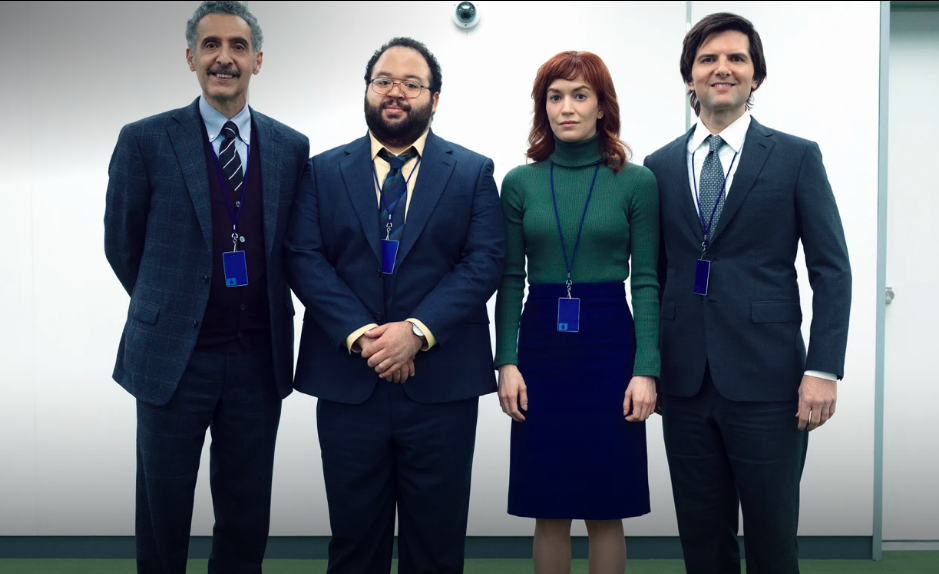
I started watching the hit show Severance on the recommendation of one of my besties who works in the corporate world. The show, which is currently receiving a lot of attention for its sci-fi portrayal of ‘work-life balance,’ depicts the lives of corporate workers at Lumon, a Biotech company. These employees have undergone a surgical procedure, known as severance, that allows them to mentally separate their work life from their personal life. An implanted device causes employees to lose all their memories of the outside world, which then creates a split personality— the “innie” who works at Lumon, and the “outie” who gets to live their personal life.

We’re going to be exploring the importance of mind-body connection, explain the role of our nervous systems (specifically the ANS), and what it looks like to live an ‘embodied’ life.

What Is Severance Really Saying About Work-Life Balance?

As I was watching, I couldn't help but think of all the different mental health implications of a severance procedure while also recognizing the appeal of getting some separation from work and the very coveted ‘work life balance’… especially under late-stage capitalism. 

Severance is set in the near future where getting this medical procedure is certainly controversial but also advertised, encouraged, and appealing for many. 

The main character, Mark, was a history professor at the local university whose wife died in a car accident. We learn that Mark chose to work for Lumon because it was easier than grieving his dead wife; which of course, is not the healthiest solution for grief and loss, but it does humanize our main character and sets the premise for some pretty important mental health questions. Namely, can work-life balance be achieved by splitting our personalities?

If our work personas only exist at work, it sure would make it a lot easier to not bring work home, to not think about work after hours, or to work overtime. And for our main character, Mark, having the option of forgetting about his partner’s death, seems like a surefire way to not deal with it™. 

Although, I wonder how true that actually is. 

While a very interesting premise and story-line, with many different undertones about our society and the emphasis we place on work, and how human beings respond to and deal with trauma, or even the ethical implications about having what is essentially a clone…

I think one of the biggest considerations for me was thinking about what happens to our bodies. 


The Mind-Body Connection: Why Compartmentalization Doesn't Work


From a therapeutic perspective, we might be able to mentally compartmentalize parts of our lives and that kind of organization can certainly be helpful, however we cannot escape from our bodily sensations

The mind-body connection operates on the belief that our mental and physical health are linked (Pally, 1998). When we feel dysregulated or even discomfort, we are likely experiencing a mental and physical symptom. 


For example, when you are feeling anxious you might start to have racing thoughts, while also noticing your muscles tensing or your palms becoming sweaty, you could have butterflies in your tummy, or even be feeling nauseous.

Strengthening the mind-body connection is a gentle reminder that we are made up of not only our mental states but also our physical states. It’s acknowledging that our bodies are not simply vehicles for our minds, but that two work in tandem to keep us healthy.


Understanding the Autonomic Nervous System and Stress

When we work to strengthen that mind-body connection we are engaging in a form of emotional regulation and directly working with our nervous systems. 


The Autonomic Nervous System (ANS)

  •  is our body’s command centre that influences everything from our breathing to our heart rate and how we navigate and understand stress (Gibbons, 2019). 

  • The ANS can be thought of in two parts: the sympathetic nervous system and the parasympathetic nervous system. 

The graphics explain that the sympathetic nervous system increases our energy for fight and flight while parasympathetic nervous system helps us rest and digest.

Sympathetic Nervous System (SNS): Our bodies’ fight or flight response that activates when we perceive a threat. It prepares our body by increasing our heart-rate, blood pressure, and by releasing adrenaline. 


Parasympathetic Nervous System (PNS): Our bodies’ at rest and digest. After a stressful situation, this system allows our body to slow and restore balance. 

ANS and the Severance Department: Our Bodies’ Aren’t Separate

Our ANS plays a big role in our bodies response to stress and furthers the importance of strengthening the mind-body connection. In Severance, characters who’ve undergone the medical procedure are only mentally compartmentalizing their lives. This means that if either the innie or the outie experiences a significant amount of stress or trauma —it will show up in the body for both of them. 

If the fight or flight response gets triggered for the innie at work, their outie will feel the effects of that in their body too. One could even argue that being severed doubles the stress, exacerbated by the fact that neither personality can remember what happens to the other. 


When we start to factor in mind-body connection, including how our autonomic nervous system plays a role, the curtain gets pulled back a bit more, and we see that ‘work-life balance’ for the characters in Severance is merely a mirage. 

Practical Ways to Cultivate an Embodied Life

Our bodies are central to our mental health, when we are living in ways that are embodied or simply, being in tune with the way our body feels throughout the day, we are more likely to engage in the kind of emotional regulation that activates the parasympathetic nervous system — when we are recalibrating and at rest. 

This is easier said than done and it takes practice. It’s a normal thing to want to compartmentalize, run away, or hide from our problems/feelings and a large part of that is societal conditioning to value productivity. 

One of the ways we can practice becoming more embodied is to give ourselves permission to exist, be, and/or live slower but with more intention. This is where somatic interventions like box breathing, grounding exercises, physical activity, or meditations can help by bringing us back into the present moment and creating an awareness of our body to develop a more holistic approach to our healing.


Further Reading on Trauma, Stress, and Embodiment
Invitations for further study

Bodies you can mirror when being in your own is just too much via Instagram @eroticsofliberation https://www.instagram.com/p/DGLGS6WssSC/?igsh=MWVmODAyM2oyYXBoNg==
Book: The Pain We Carry: Healing from Complex PTSD for People of Color by Natalie Y. Gutiérrez

Podcast: The Meaning of Embodiment, with Prentis Hempill https://www.ted.com/talks/how_to_be_a_better_human_the_meaning_of_embodiment_w_prentis_hemphill


References: 

Pally, R. (1998). Emotional Processing; The mind-body connection. The International journal of psycho-analysis, 79(2), 349.

Gibbons, C. H. (2019). Basics of autonomic nervous system function. Handbook of clinical neurology, 160, 407-418.


About the Author: 

Maryam is a Registered Clinical Counsellor at Decipher. She is currently taking new clients! If you like to explore themes in tv, media, or literature and how it relates to your life or the different things you may be going though, she may be a good fit. 

Interested in exploring work-life balance and embodiment through therapy? Book a session with Maryam today—available online and in person in so-called Vancouver, BC.