Posts tagged identity
Confronting Uncertainty 🕳️


Confronting the Crisis of Imagination 

Written by Linda Lin, RCC RCAT


A few notes on imagination during uncertain times.
Imagination carries a strong, spontaneous energy that control and certainty do not always approve of at first. Perhaps that is exactly why we need it. Imagination might teach us how to transform a future that does not yet exist.

 “Summertime sadness” has taken on a crisis-like state this Summer.

The word and feeling of uncertainty carries urgent, and collective grief as we face these precarious times.

It is the shared exhaustion of witnessing our dreams deferred, anxiety and numbness about the future, frustration of the widening social inequality and division, and feeling helpless amidst ongoing mental health crises.

When's the last time you let yourself wish for something without immediately talking yourself out of it?

In the therapy room, I often hear thoughts, feelings, images emerging that are ego-dystonic: inconsistent with who we are, what we believe, what we actually want to see in the world, and in our future.

When we see a decline in our mental health, through urgency and insecurity: be-it financial anxiety, intense transitions, unexpected changes of our climate, or being failed by systems of power, I wonder if underneath it all is a deeper crisis. A failure of imagination.


“Mental illness…is consistently associated with deprivation, low income, unemployment, poor education, poorer physical health and increased health-risk behaviour.” —“A Mad World: Capitalism and the Rise of Mental Illness,” Hampton Institute


The uncertainty we're experiencing highlights how deeply our environments, access to resources, and social conditions shape our wellbeing and sense of self. 

Creativity and imagination require conditions where people have room to wonder, play, and envision possibilities beyond survival. So nurturing our imagination is part of protecting our health and wellness.

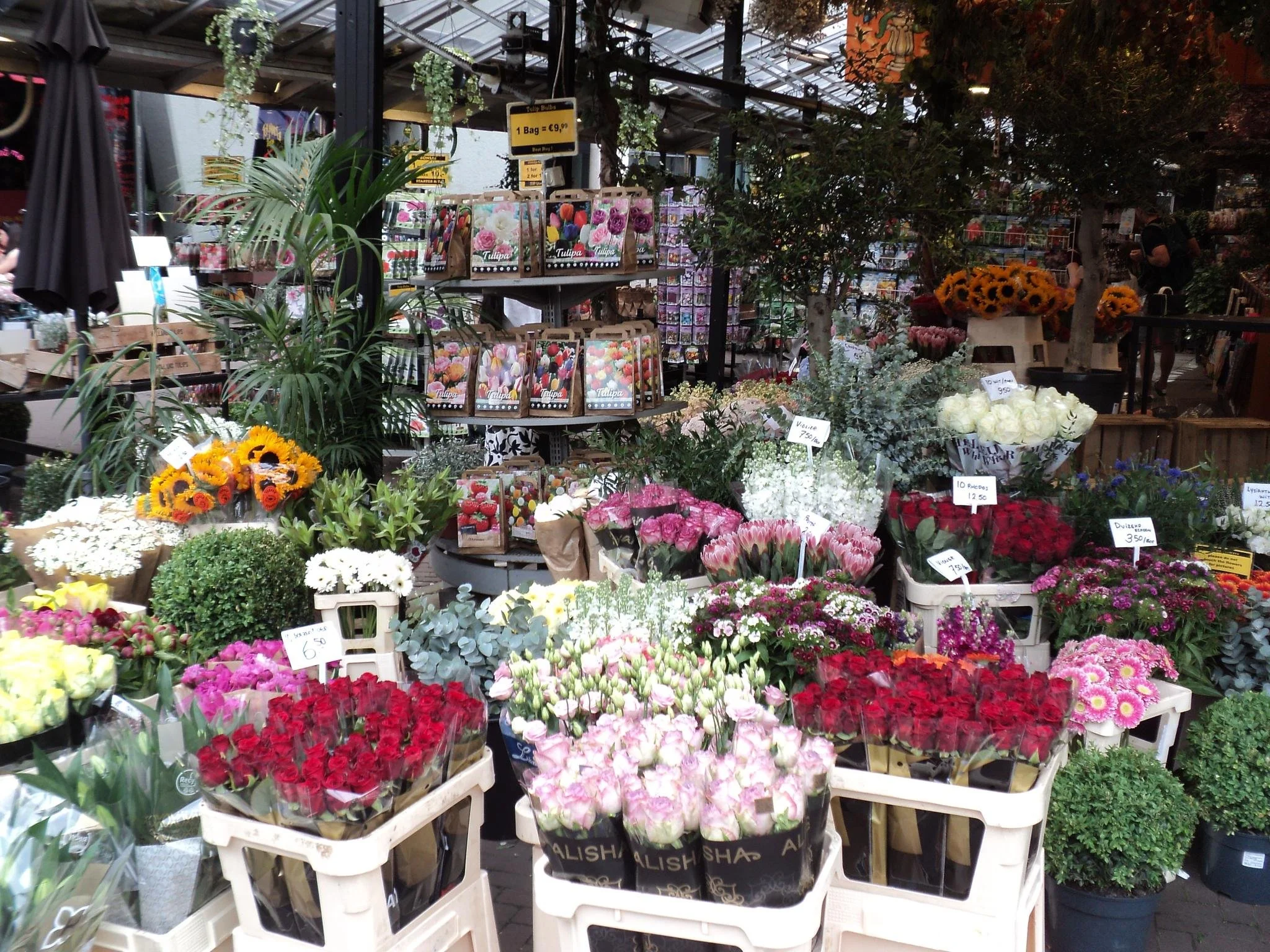
a digital camera image of a flower shop in Amsterdam

Figure 1. a flower shop in Amsterdam

The longing for certainty.

There’s this trauma we face on a daily basis: the experience of not being able to feel certain. The uncertainty of not knowing whether we’ll be able to meet the earnings we hope for at the end of the month (i.e. the ups and downs of entrepreneurship, finding a job we like, budgeting when we feel sad) or the anxiety of wishing joy and safety could show up more consistently, in case it leaves.

Often times we witness the celebration of the idea of creativity while simultaneously seeing systems create spaces that make creative exploration difficult, feeling like imagination is impossible for regular folks who have to grind, work, worry, and choose from scraps.

 There is a major disconnect between valuing creativity and believing it can be cultivated. Many people have internalized the idea that creativity is something you either have or you don’t.

But creativity is not a fixed trait: it expands the more we practice and nurture it!


Don't stop wishful thinking because that is what they want us to do.

When we stop imagining, it isn't just a stuck feeling, it bypasses our awareness of what's happening around us structurally.

 We are living in a time where imagination is increasingly squeezed out:

  • 50% of Canadian 15-year-olds believe creativity is something that cannot change (a fixed mindset).

  • Only 23.5% of applicants from one of the country’s largest arts grant programs received funding (2024–25).

  • The federal government has planned to cut $75.9 million arts and culture programs by 2028–29.

  • 85% cuts from government funding for non-profit organizations who build resources that specifically help underrepresented folks in the community

Not going to include more because we get the gist and we know they're specifically targeting communities that need resources. Everything is political. 

When creative spaces disappear, we don’t just lose art. We lose spaces where people practice imagining futures that are worth living for. 


Certainty is a trap

We become attached to “what is” because certainty and staying in the comfort zone (avoiding looking at what's uncomfortable) feels safer than imagining alternatives. 

 The contradiction to certainty is that imagination flourishes in uncertainty. The very thing we resist may be the condition that allows creativity to exist.

 We enter our own crisis: where we fear and distract (usually being harsh toward ourselves). We compare and lose grounding in what we desire and value.

 In an effort to resist this uncertainty, to make space for something beyond it, we can begin going against the usual grain of productivity and pace, one practice at a time. Maybe we can emphasize creative practices that align with a pace that supports our nervous system, or build consistent habits centered around wonder and play.

During uncertain times, imagination is how we begin to create what does not yet exist.

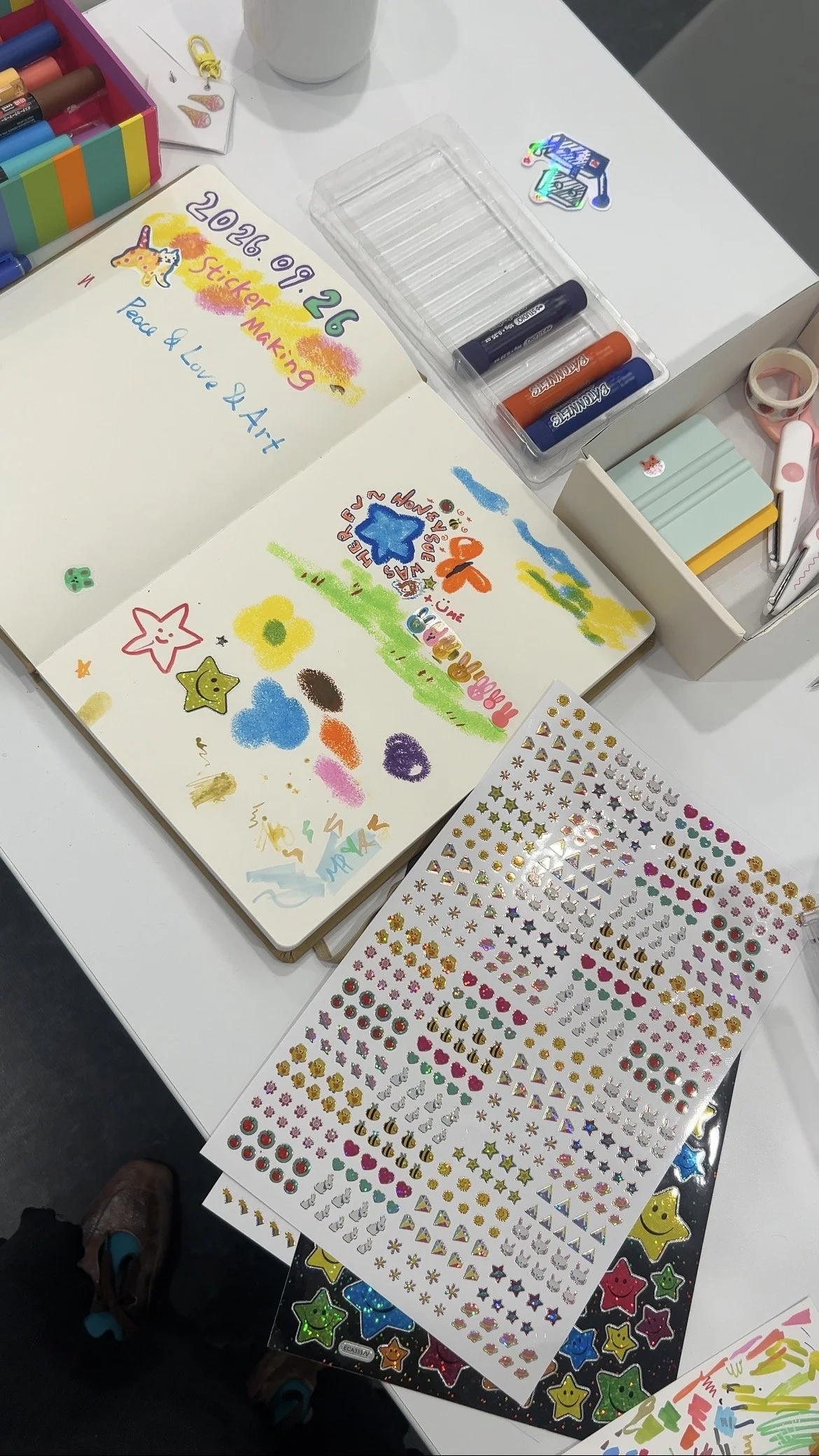
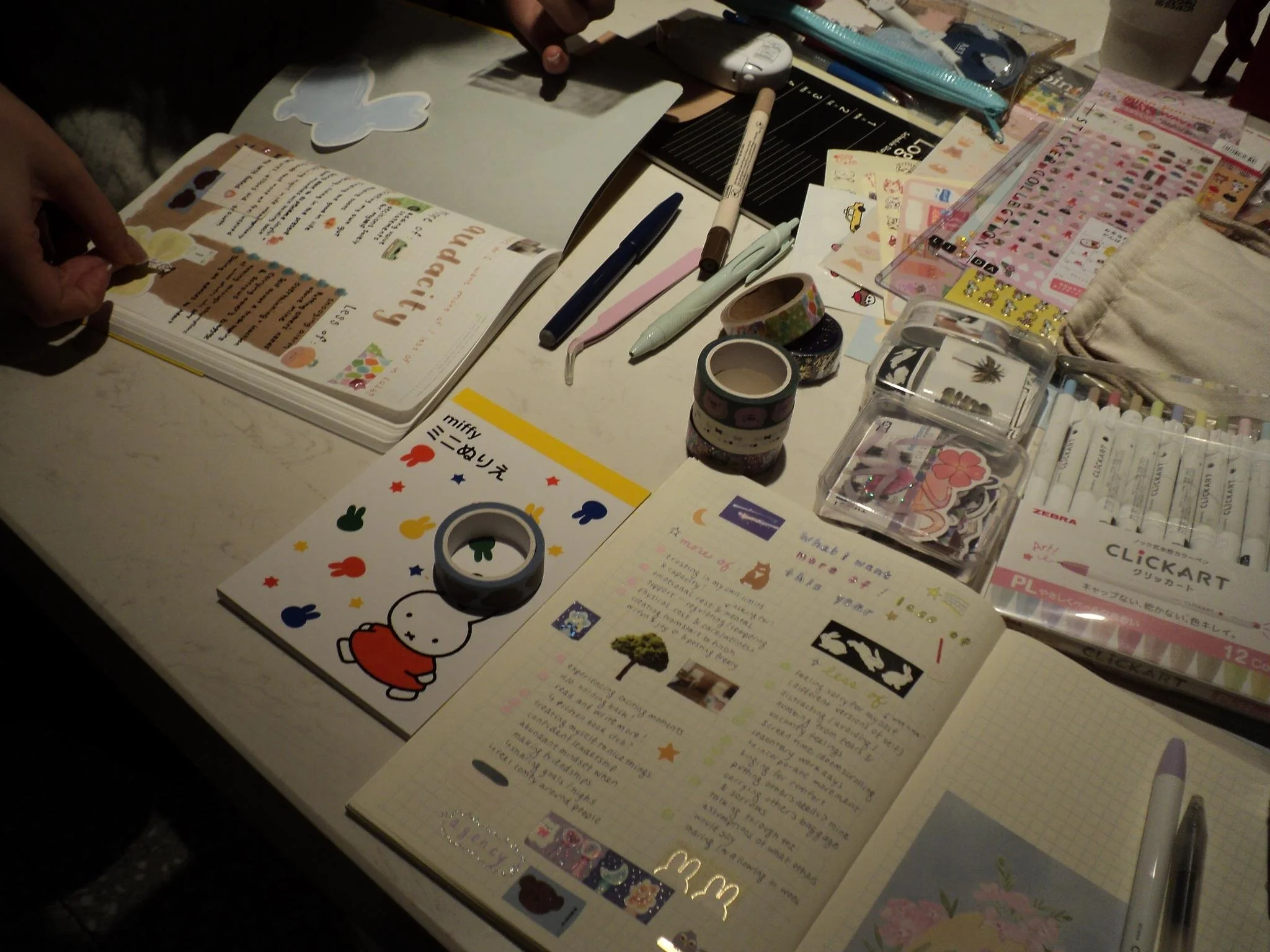
an art journalling spread (aka craftivism!)

Figure 2. an art journalling spread (aka craftivism!)

Building courage for agency / possibility / choice

 My clients always hear me say, trauma and systems of oppression make up stories to keep us stuck. 

 When we look for and create exits, we build new patterns that help us get unstuck!

 It’s about time we treated creativity as something NOT optional or reserved for those who are privileged with time and resources.

 What if creativity was something vital to our personal and collective health? And imagination is that necessary tool for creating futures we actually want to live in. 

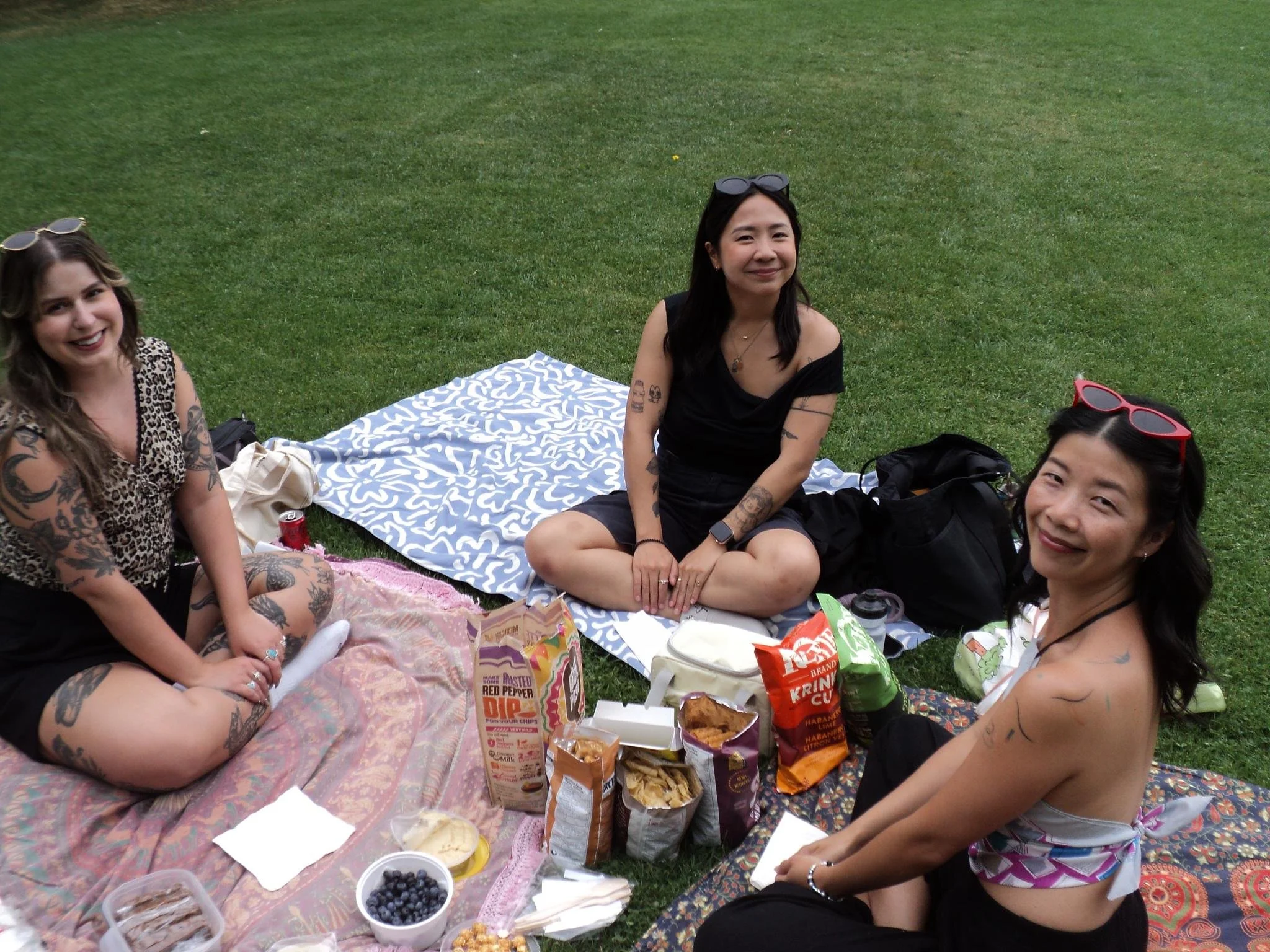
Decipher team hang and a heartfelt send-off for Chloe

Figure 3. Decipher team hang and a heartfelt send-off for Chloe ✿

Here are some practices for building imagination!

 ☆·•. When we stop filling the space, we make room for possibility. One creative practice I often share with clients is to intentionally sit in boredom for a few minutes each day. Not to force productivity or to create something beautiful to share with the world, but just to notice whatever comes up.You might be surprised to find that the spontaneity that emerges in these moments can feel a lot like tapping into our imagination. Creativity, new perspectives, and even a deeper awareness of our surroundings can emerge in the very moments we are constantly trying to fill, avoid, or distract ourselves from.

Boredom creates space for something to emerge from nothing. It gives us room to wonder, imagine, and play with possibility.

☆·•. If you cannot be with boredom (like if it's highly uncomfortable for you), try morning pages / free-flow writing (inspired Julia Cameron) or any stream-of-consciousness writing done first thing in the morning. It's to mimic and practice the act of expressing with a beginner's lens instead of activating inner critic and perfectionism. Or craftivism, invite your community to intentionally craft together, share notes, build a space for intimate social change.

☆·•. Build an imagination practice by going on dates with nature. Our imaginations are rooted in the natural world. Being outside in nature puts us into a state neuroscientists call soft fascination, in which our mind is at ease, we feel immersed in our surroundings and we have the cognitive freedom to daydream. 

Deliberately going outside before sunrise just to hear the dawn chorus. Forest bathing to reconnect to a different pace when we are ‘feeling behind’. Or timing your walk during blue hour to experience liminality: a threshold between worlds. 

Liminal spaces can loosen our usual patterns of thinking and make room for reflection, storytelling, memory, and possibility. The softer, dreamlike quality of the light may help us access a more imaginative state to soak in the unwinding of the natural world from the day.

 ☆·•. Reform, resist, build, heal! When we imagine different futures, beyond what the systems want us to surrender/feel imprisoned by, we are actually engaging in transformation. 

 Reform by expanding beyond the limits of what is currently available to us, resist by directly confronting systems of oppression, build new institutions and relationships that reflect the world we want to inhabit, and heal by tending to individual and collective trauma while making room for joy, rest, and connection. These are interconnected practices invites us to imagine, create, and participate in a more just and life-giving world.

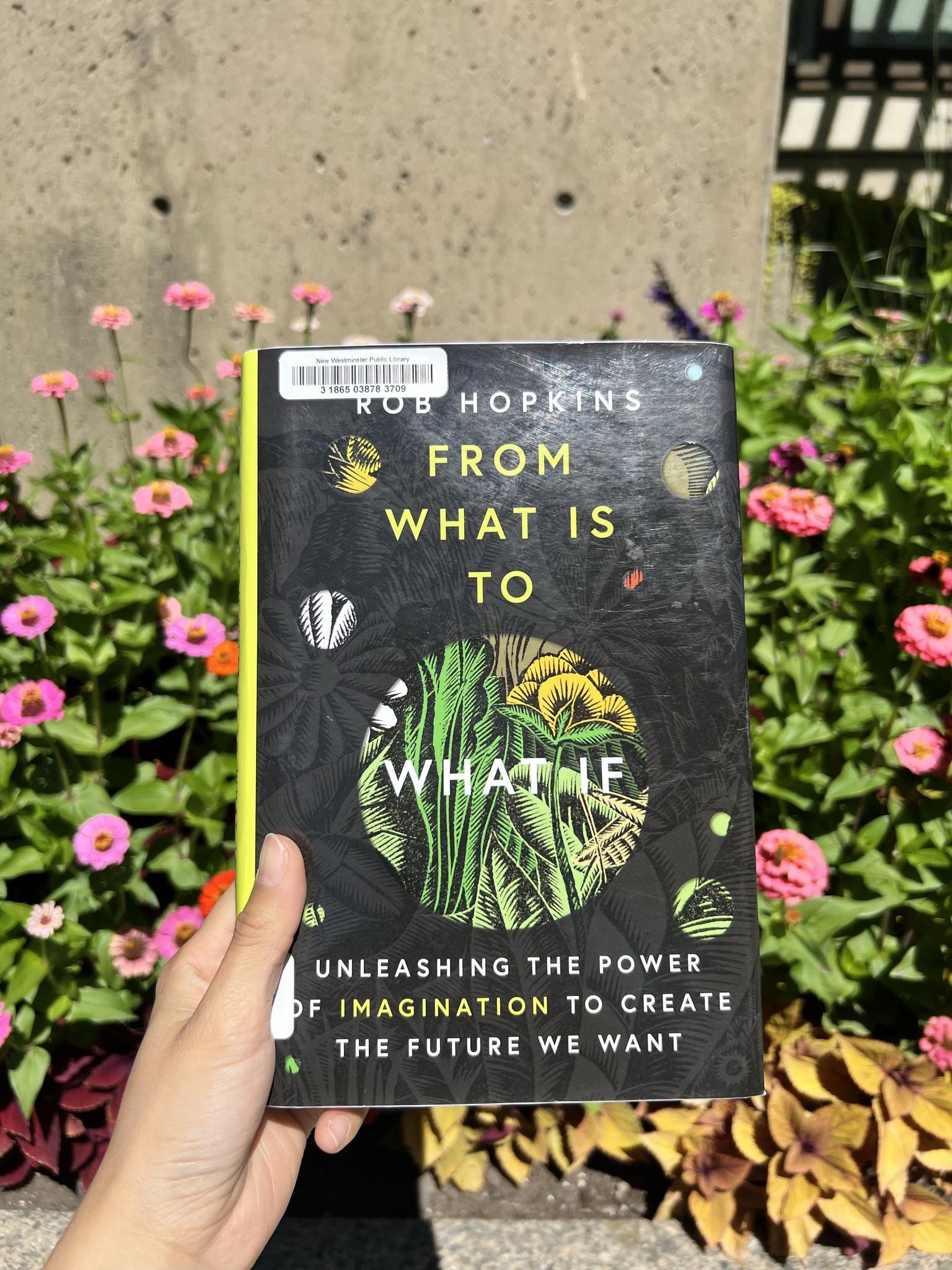
Figure 4. one of my summer reads

This blog post was inspired by my recent summer reading of From What Is to What If by Rob Hopkins, alongside my own reflections on the role imagination plays during precarious times as I know a lot of us are navigating uncertainty. This is the rare experience where I explored ideas in one go without stopping and doubt. I believe that this is a little gift from the universe to share this writing to you.

Last thoughts before I sign off:
• Imagination is and will always stay resilient.

• Imaginative play, creativity, and inventiveness are always choices we can return to; they are always there for us

• We just need to make space for them… and when we do, they begin to grow again.

Imagination carries a strong, spontaneous energy that control and certainty do not always approve of at first. 

Perhaps that is exactly why we need it.


Rooting for your creativity, resistance and joy First name / friend,

Linda ♡


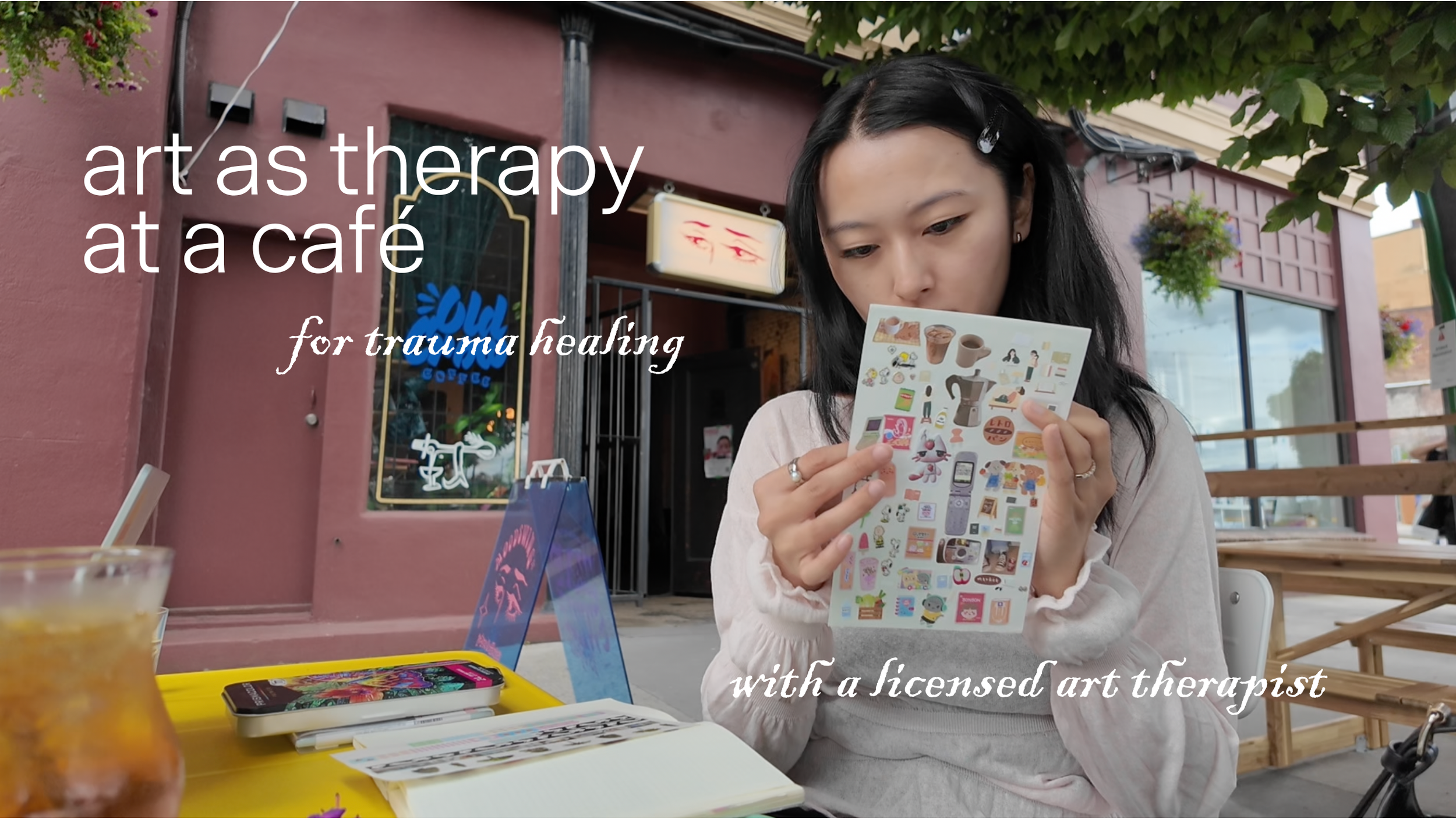
Art therapy prompt for trauma healing (video)


Explore a gentle art therapy prompt designed to support trauma healing, emotional processing, and self-reflection. In this video, you'll create an "altar of suffering and joy" using therapeutic art to deepen self-awareness and reconnect with your creativity.


Art as therapy prompt for trauma healing
 

Written and filmed by Linda Lin, RCC RCAT

Sometimes we find ourselves visiting the altar of suffering more often than we visit the altar of joy and curiosity, when really, we get to choose which altar to walk toward.


Both altars are important to visit. The movement, weaving in and out of the altar of suffering and joy/curiosity, is what supports trauma healing.

In this video, we touch on:

✦ joyful art materials
✦ reflective questions when making art
✦ the art as therapy experience
✦ how to process with your artwork
✦ the importance of the 'milieu'
✦ trauma healing via creative expression
✦ the ETC: Expressive Therapies Continuum

This therapeutic art prompt may help you:
• process emotions
• practice self-compassion
• reconnect with your inner world
• hold grief and curiosity
• unblock creativity without needing to figure everything out
• heal perfectionism: making marks, releasing feelings in a safer way

So go grab your sketchbook, some found art materials, sit at a place of your choice and let's make some art for your wellness!

Important note: This would make an excellent creative prompt that don’t necessarily require you to draw/paint it. Feel free to visualize this through a meditation, build a metaphor or a sculpture, make a song or poem or dance…any creative way to bring this practice into your weeks ahead!

If you're curious about art as therapy for healing but aren't ready to begin 1:1 art therapy, Rooted in Ease is a self-paced, creative online course designed by an art therapist, Linda Lin 林诗云, and co-hosted with Leah's Fieldnotes 魏若然.

Through eight workshops, you'll explore art therapy–inspired prompts, somatic mindfulness practices, and reflective conversations to begin healing your relationship with money and ease money anxiety.

Hoping you make space to unleash that creative voice of yours into the world! ☆

Linda


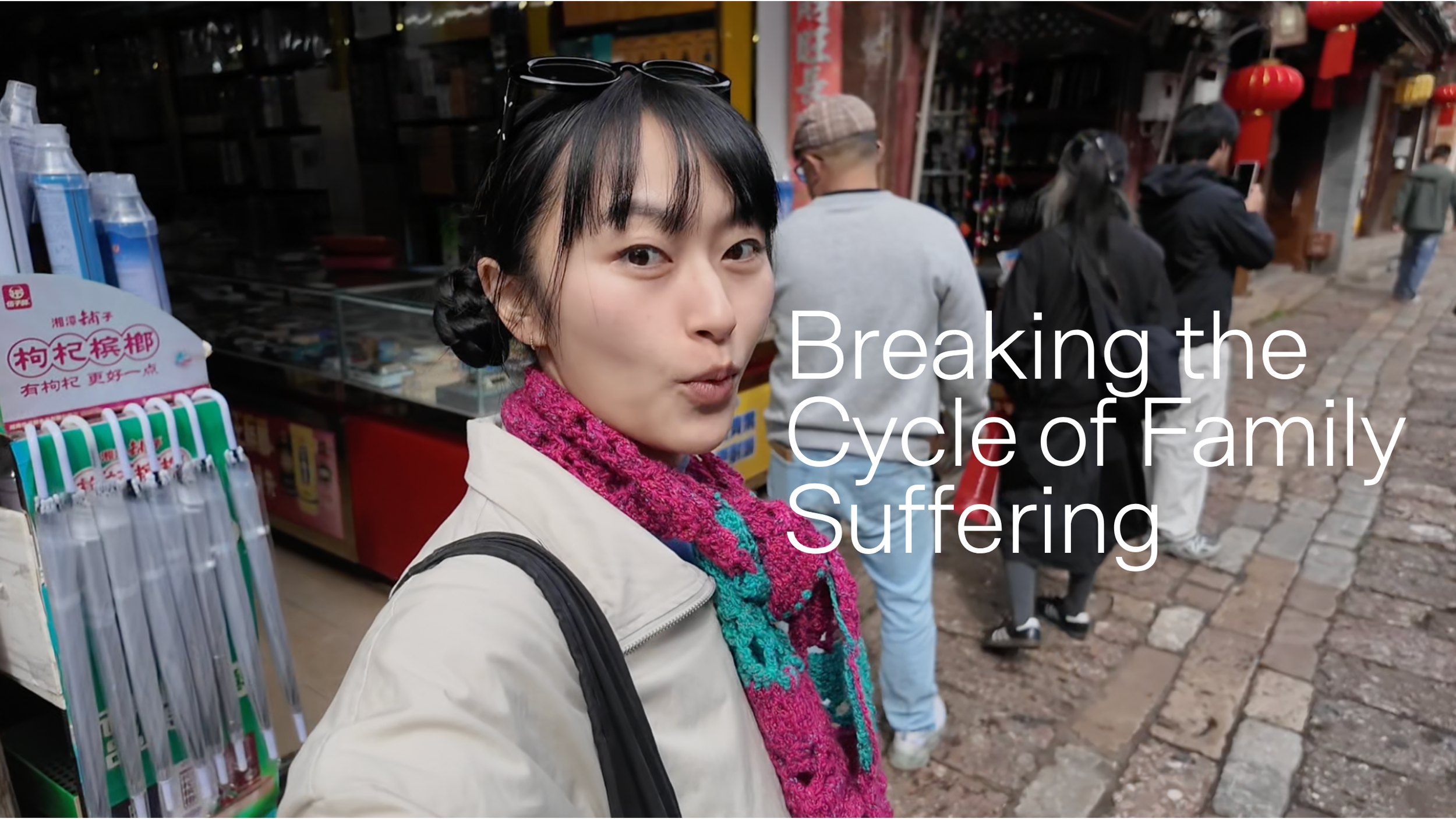
Breaking generational cycles: familial love vs. suffering (video)


For those who enjoy longer-form content to pair with my newsletters and blog posts, I launched a YouTube channel where I'll be talking through topics I'm exploring and sharing in a different format.


An Ethnography of Familial Love

Written and filmed by Linda Lin, RCC RCAT


This blog post reflects on the complexities of familial love. What it takes to address and heal intergenerational wounds. What if intergenerational work isn't learning to demand more, but learning to be with each other in ways that don't always come from a place of fear or suffering?


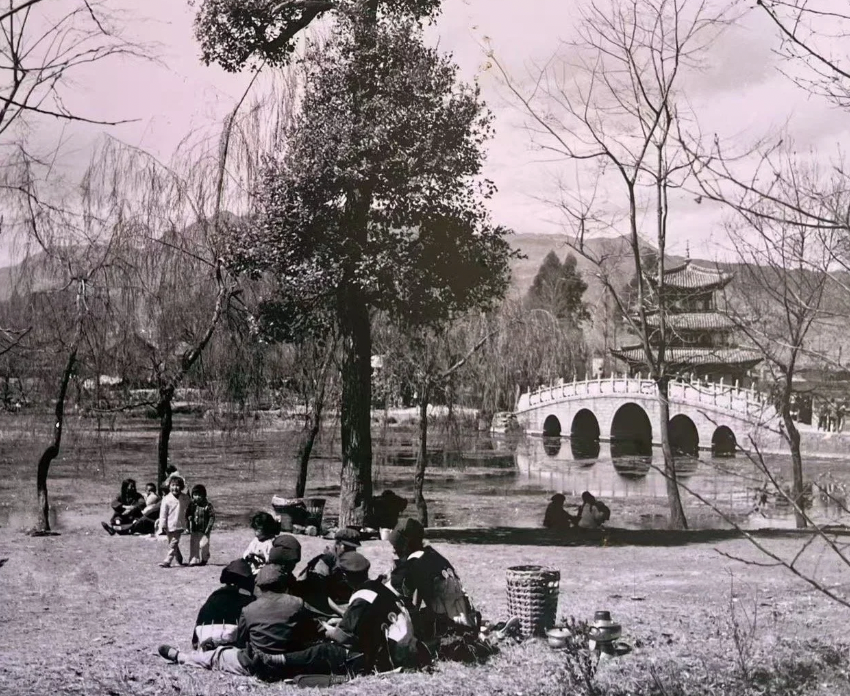
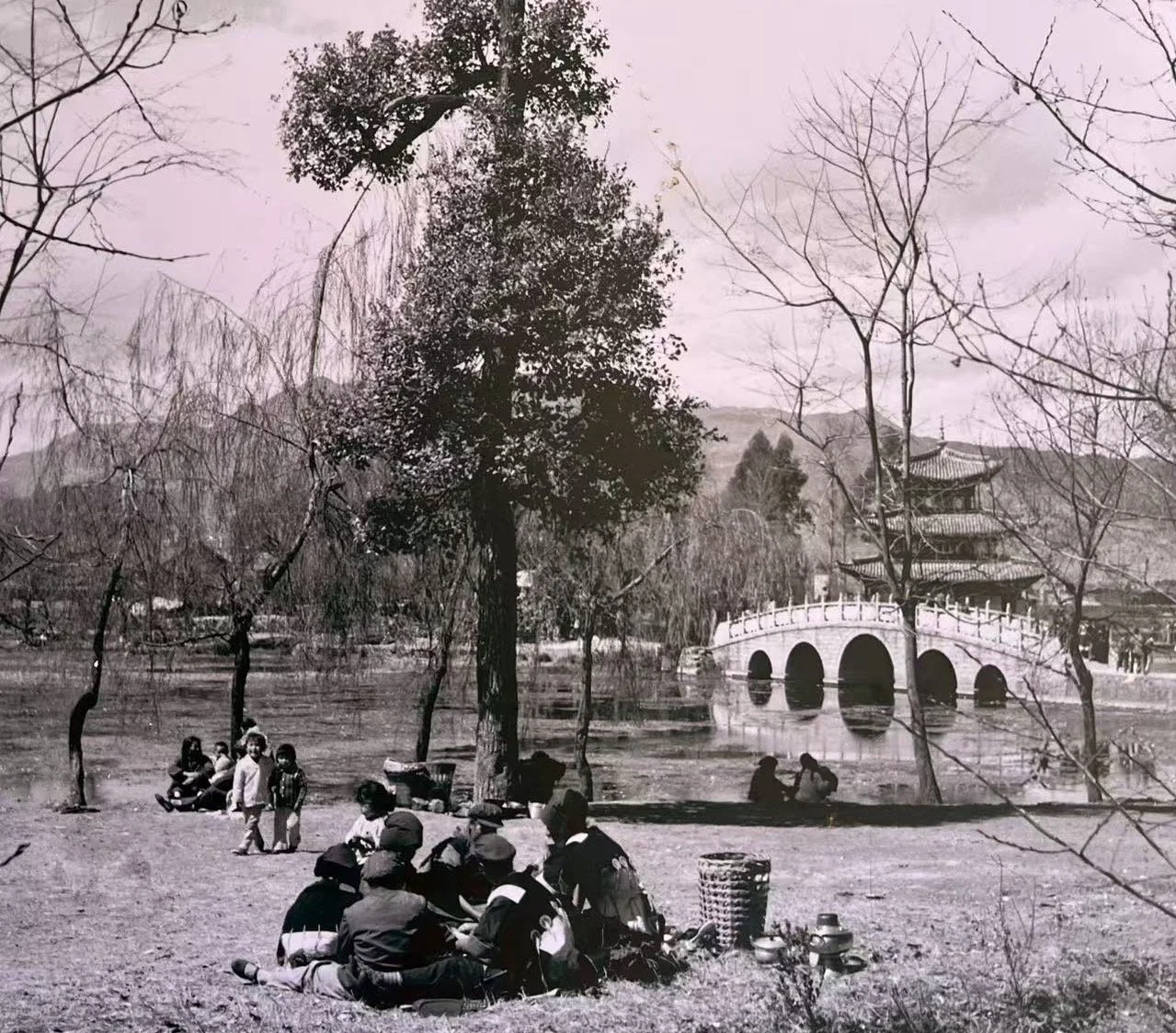
Black Dragon Pool / 黑龙潭, Lijiang, Yunnan 1960s

Figure 1. Black Dragon Pool / 黑龙潭, Lijiang, Yunnan 1960s


Back in March this year, I revisited Lijiang in Yunnan province, China. It's on the edge of the country that not many folks are aware of, next to the borders of Myanmar, Laos and Vietnam. I've been holding this trip close, wondering how to share intergenerational insights I gathered from my lineage who happens to be part of a well-known indigenous clan (aka. an ethnic minority).


I come from a family where the torch passed down through the past 4-5 generations has been one of peace-keeping, by not speaking up, or taking up too much space. They specialize in secret-keeping, zipping their lips on opinions, feelings and views. Which I always found difficult to understand.


It was my second time visiting. The first time, I promised my extended family I would do my best to bring my mom and sister back with me.


My mother left Lijiang before she turned 1, fleeing with her family from danger. She never returned until this year, nearly 65 years later. My sister, too, hadn't stepped foot in China for almost 20 years. So there was an unspoken pressure and hope among the relatives who had stayed that this homecoming would be a meaningful one.


They welcomed us with open arms, with more generosity and warmth we imagined. They made me feel like I belonged to this family and this lineage, even as so much of its history, language, and traditions remained unfamiliar to me…having born and grown up overseas. I couldn't help but feel like both an insider and an outsider despite their efforts.


I arrived with fresh eyes, like an ethnographer, eager to learn about the Naxi people (纳西族), my mom's ethnic minority/indigenous clan, and the stories and conditions that shaped our family.


What I found out about my family and their responses surprised me… in ways that were more complicated than I expected.

 
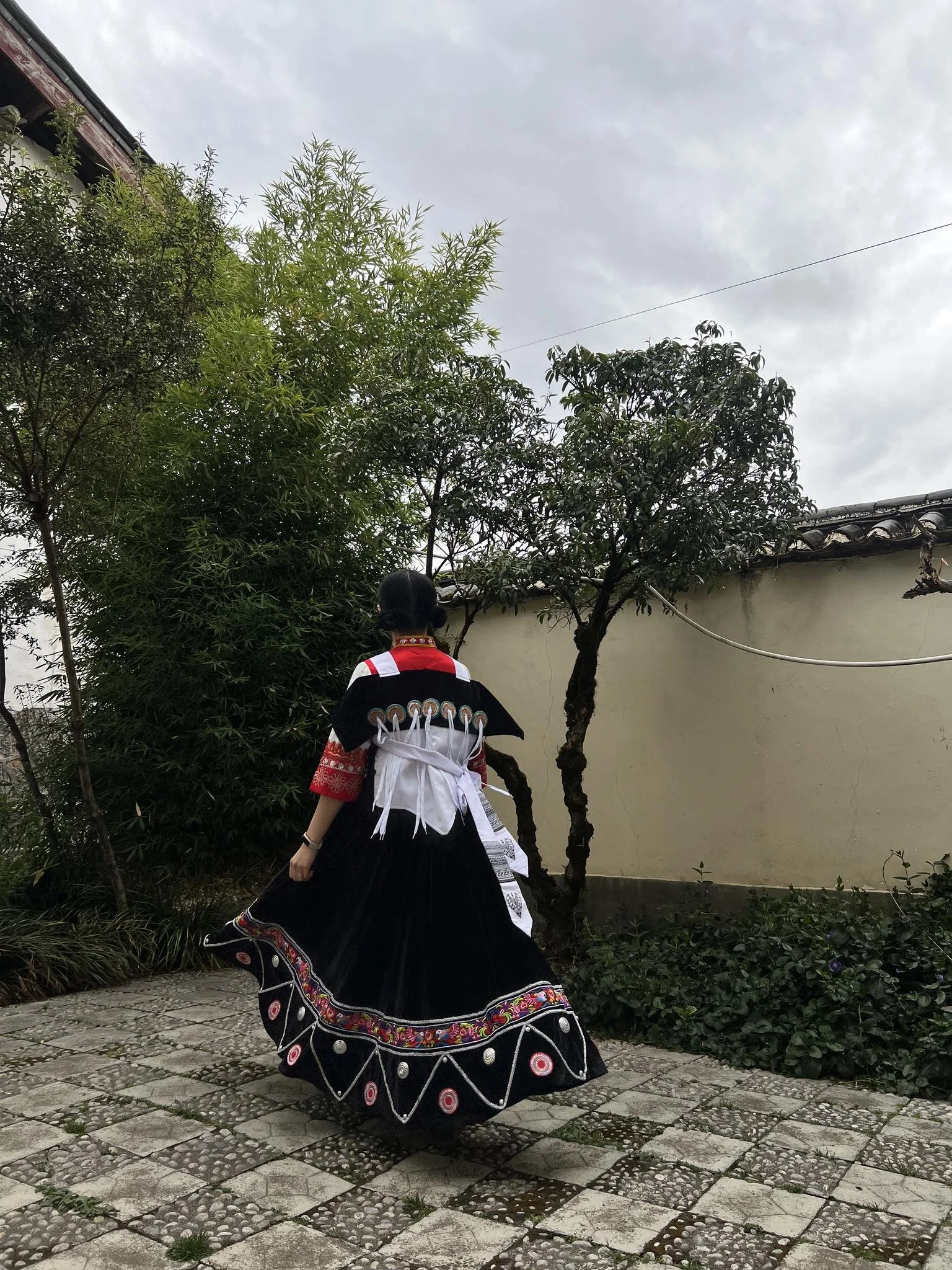
Linda) in a modernized traditional Naxi outfit twirling in a LiJiang courtyard

Figure 2. Me (Linda) in a modernized traditional Naxi outfit


Intergenerational grief and history

My uncle from Lijiang brought my sister and I to a courtyard of Lai family mansion which now belongs to the government. I noticed a weighted tension with each step. He shared that my great-grandfather once worked and lived with the family, as a doctor treating villagers, prominent and affluent, before everything changed in the late 50s. 


My family was exiled to a horse shed overnight. My great-great-grandmother was severely punished to death, after being turned in by a family member whose name we don't speak. They sold furniture and rugs for pennies. My grandmother sold tea eggs on the streets and was forcefully separated from my grandfather before fleeing with her children (one of them being my mom), teaching them to hold their tongues, because speaking up could mean fatal consequences.


It's been difficult to feel the full weight and messages of intergenerational grief: layers of confusion, lost dreams, autonomy, erasure, anger, sadness only show up in hues. To be frank, I can't predict when or if this kind of grief will ever be completely processed in the bloodline.

 
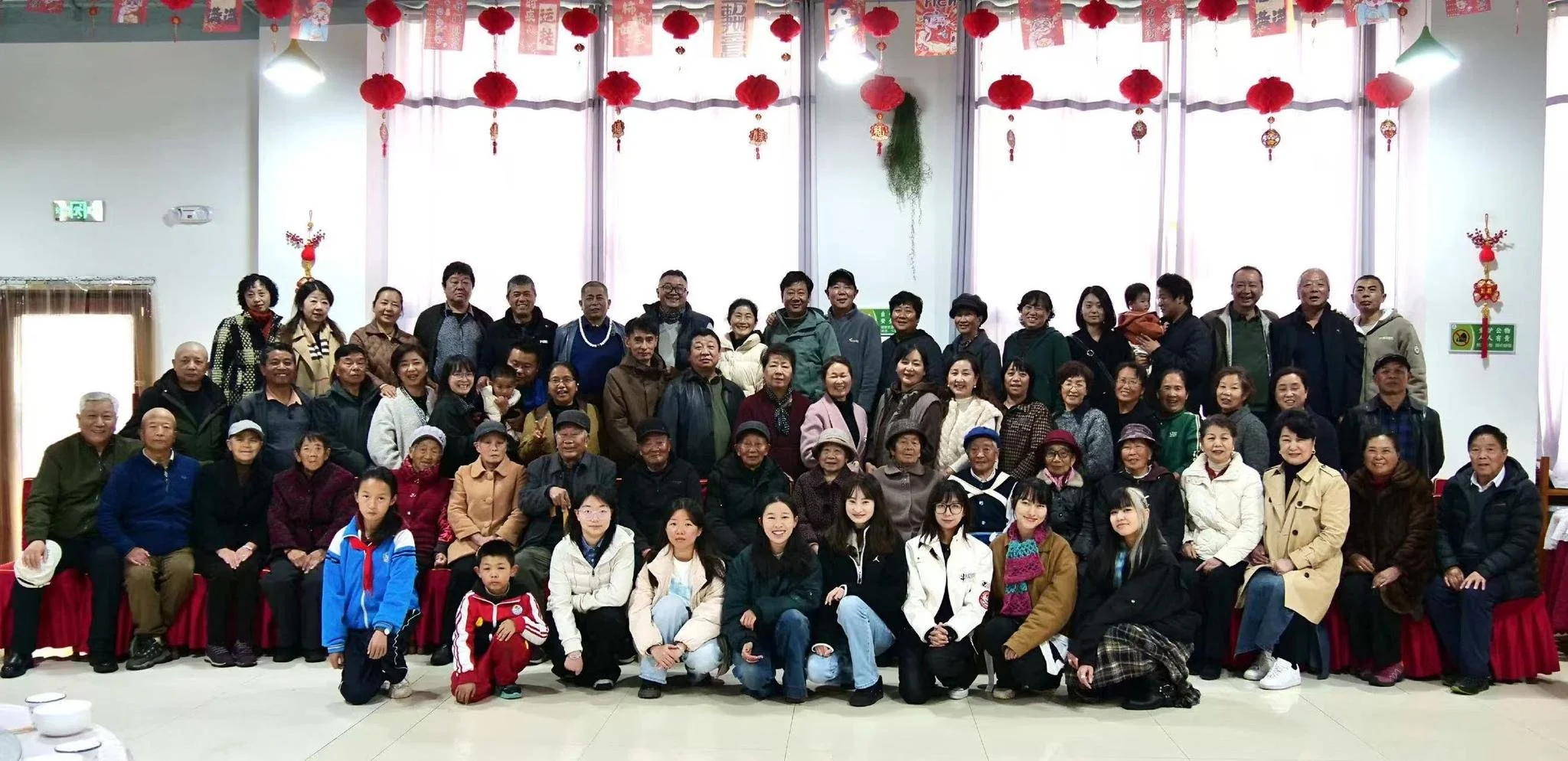
80 family members from LiJiang Yunnan China

Figure 3. 4 generations of Lijiang family welcoming us


I was stunned to see 80+ close and distant relatives show up to welcome my sister, my mom, and I. They showered us with warmth, their time, the best food, stories of each home and sites tied to our lineage. Although all of them holds different politics, different worldviews, different ways of healing, they centered in on familial love. There was something beautiful in that: being in the diversity together rather than needing everyone to agree to a degree first. 


Money anxiety

I noticed a pattern that most of the family members have 'superstitions' or anxiety around money, either rarely bringing it up at all, or sharing the sentiment that they shouldn't ask for more to be able to live well. That whatever they get is what probably what's best for them. 


This showed up when they asked me what the current climate living outside of China is like – asking with fascination and curiosity. I could send that they wanted to share they'd like to also go on fun trips outside of their province or country and explore but would shut the fantasy/dream down before it could be a topic of interest.

There's this confusing, guilt-like feeling showing up: wondering if their efforts toward community-building, instead of voicing/chasing their raw hopes, were what allowed me to come back to Lijiang, to go on these trips, from a foreign place of privilege, distance, culture.


Looking to heal $ wounds in a self-paced, creative, online space? Check out Rooted in Ease! (8 workshops incorporating art as therapy prompts, somatic mindfulness practices, conversations to start healing $ anxiety)

 
A foreigner's insights on Lijiang, with mention of Lai family from LiJiang Yunnan.
 

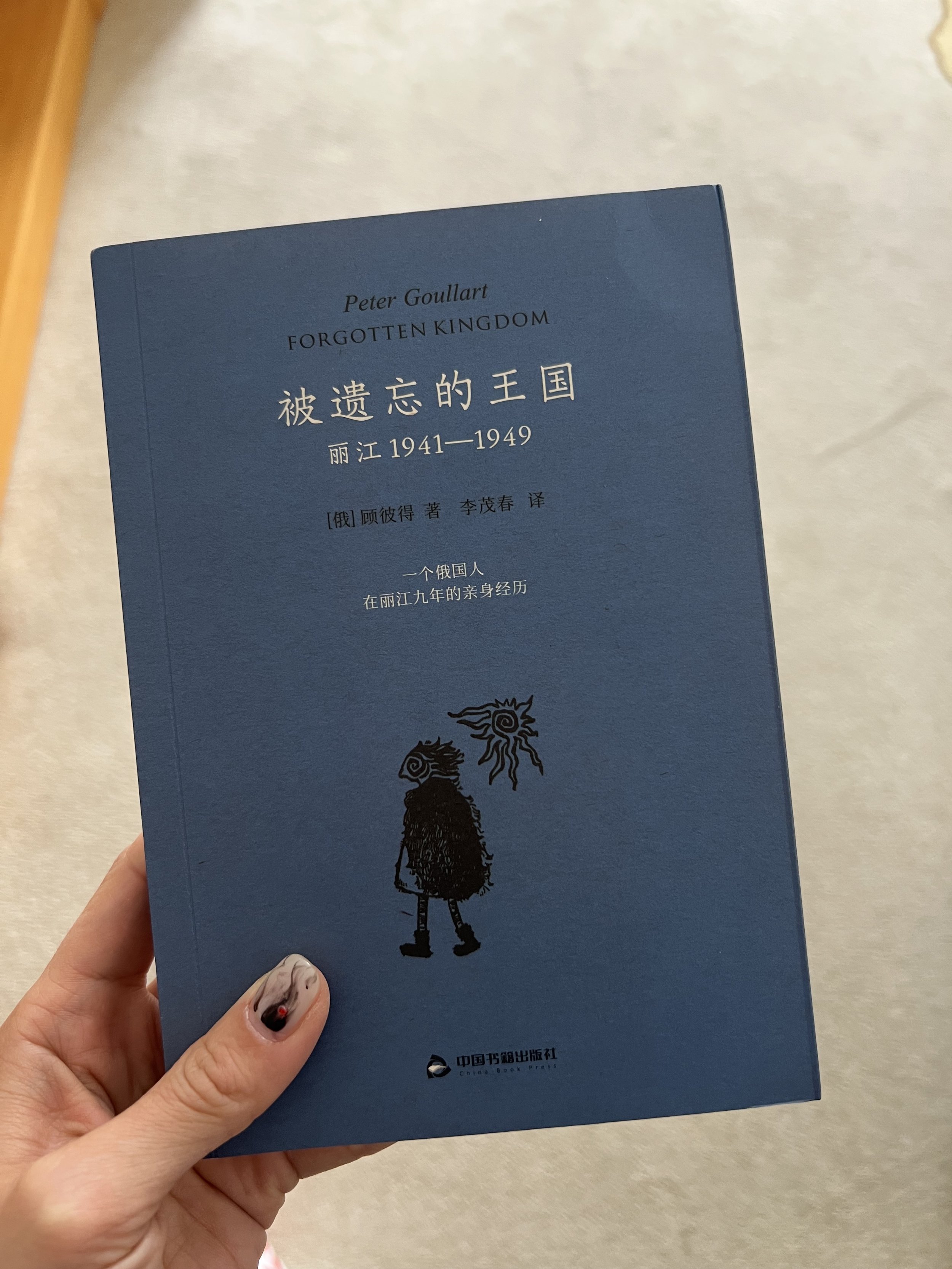
Figure 4. A foreigner's insights on Lijiang, with mention of my family clan (this book was banned for 50 years)


It's both of this and the other

I was told there were 3,000+ descendants of my family lineage still living across Yunnan province. This is proof that despite everything that hurt them, they survived the best way they knew how. Hardship and commitment was the social glue holding thousands of people together across a province. 


It's moving and sometimes hard to believe that most of the lineage stayed loyal through peacekeeping, not to share too much: of the very good and the very bad. This familial bond, by circumstances none of them could control, if I'm honest in dissecting it, is both a blessing and a curse for their relationships.


The things that help with survival can later on come at a cost. My mother have always been a private person. She learned early that endurance, ducking her head down, focusing on education/work would get her the peace and security she needed to survive. I watched her grow into her adulthood rarely advocates for herself, asks for more, or deviating from that lane.  

I asked my mom more questions than she probably expected, really challenging her…

Questions like,

“What's your view on money?”
What do you think about your family here?"


Reconnecting after being nearly 65 years apart, her responses came short, like interviewing a stranger. At first that really frustrated me. I wanted to pry like Oprah in the 90s asking questions with a sense of expectation of a certain kind of charged response or gossip.

 
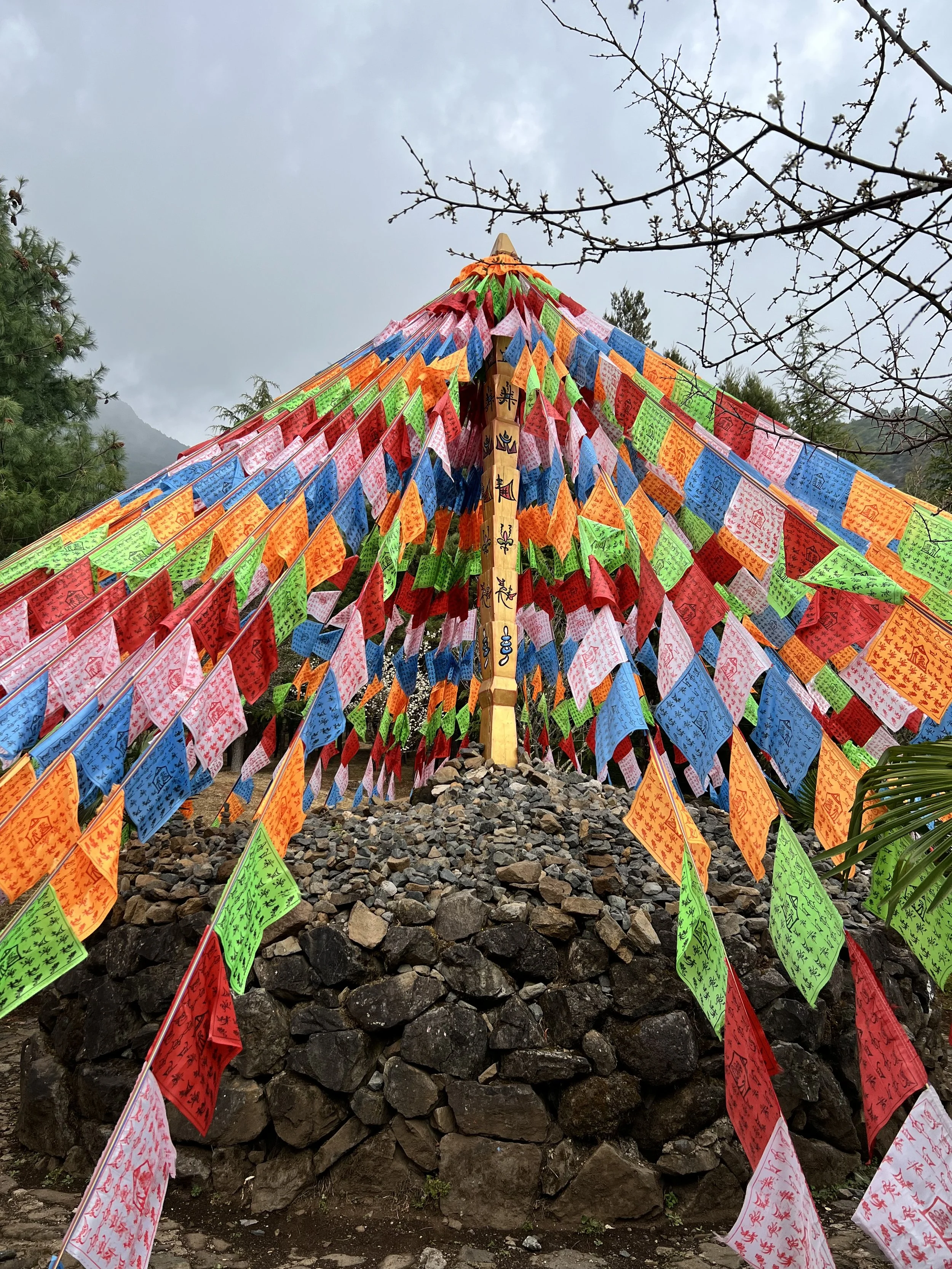
A Naxi prayer burial with Dongba script, the only hieroglyphic pictograph that is still in use in the world today. from LiJiang, Yunnan province, China
 

Figure 5. A Naxi prayer burial with Dongba script, the only hieroglyphic pictograph that is still in use in the world today. (Note from Linda: this is Indigenous resistance!)

Attachment of outcome = suffering


I realized that not getting the responses I expected and wanted is a form of suffering on my end. It illuminated just how much it can take to address hard things. I see things a bit differently now. Those short answers were her genuine reflections. It made more sense once I learned that before her identity as Naxi was treated as something to hide rather than celebrate and that her childhood was a difficult period to recall and process. I can understand why she never returned to Lijiang, and it's fortunate that she eventually did this time. 


I realized being an ethnographer means to go in with reflexivity, humility (which is straightforward to practice in my role as a therapist but extremely hard when it comes to my family), experiencing the subjective nature of learning one's cultural and generational experience, making room for both their childhood view of the world and the adult one, then translating these moments into insights. This practice and its embodied values are humbling to how I'm learning about my lineage and intergenerational healing.


What if intergenerational work isn't learning to demand more, but learning to be with each other in ways that don't always come from a place of fear or suffering? 


Transparency and sharing dreams still aren't natural to me…yet. I have been conditioned growing up to hold my tongue instead of speaking of my dreams and hopes, my inner most truest thoughts, of joy and of suffering, especially if it has to do with family. What's allowed have been topics that are socially acceptable, in the family and in the dominant culture, and only after I've already processed them privately. It's a niche, calculated kind of showing up.


What if we let familial love be honest in its unpredictability, confusing, messiness, instead of needing it to be certain? 


What if we trusted in ourselves that we could create boundaries and ways of relating that support us, without leaning on the family bond to hold everything, and trusted that doing so would be okay, not unsafe?


Art as therapy prompt: The altar of curiosity vs. the altar of suffering

[ I will be creating a video on making this art prompt very soon! Stay tuned! ]

(Important note: This would make an excellent creative prompt that don’t necessarily require you to draw/paint it. Feel free to visualize this through a meditation, build a metaphor or a sculpture, make a song or poem or dance…any creative way to bring this practice into your weeks ahead!)


A client of mine shared something that's stayed with me this month: that we may be visiting the altar of suffering more often than we visit the altar of joy and curiosity, when really, we get to choose which altar to walk toward


Choosing is available to us, again and again. Curiosity can be the new tool that carries the torch of healing generational trauma from a place of love, joy and wisdom.


I'd like to think that bringing my family together, listening to their stories they so humbly shared with me, and writing out what I am learning is how I'm beginning to break the cycle of suffering and into familial love and joy.

Let me know your thoughts if you’ve been dealing with the complexities of intergenerational family dynamics.

Until next time,

Linda


Art therapy prompt for building consistency ↔ self-trust (video)


written and filmed by Linda Lin, RCC RCAT

For those who enjoy longer-form content to pair with my newsletters and blog posts, I launched a YouTube channel where I'll be talking through topics I'm exploring and sharing in a different format.


Since when did the word "consistency" start to feel like a threat? Somewhere between entering school age and trying to be a responsible adult, consistency started feeling like an obligation I'd already fallen behind on. It turned into a chore that feels meaningless, too difficult to even attempt. Like our dreams just stopped getting along with our capacity. There's this lingering disappointment of not living up to the version of ourselves we thought we were rooting for.


When we let ourselves down.

I am noticing a lot of us are struggling with consistency and the energetic toll it takes to adapt to life. Building a pace that fits you, specifically is getting harder and more ambiguous to find in a world with rapid changes, artificial intelligence, and end-of-stage capitalism. 


This topic is feeling tender and I often find myself and people I come across committing to too many things, and not able to commit to the course of action we need to actually do to take care of us.


In this newsletter we get into:

.✦ ݁˖ the relationship between consistency and cultivating trust within ourselves
.✦ ݁˖ unpacking / pacing consistency
.✦ ݁˖ “taking the path least taken” as a way to challenge and build consistency
.✦ ݁˖ art as therapy prompts to help build trust and confidence for consistency


Consistency is how we gradually create the conditions where trust becomes possible.


On another note, self-trust can be built from consistency. Trust in ourselves, like listening and understanding our capacity what we actually have time for, what will actually move the needle and support us.


There's something in psychotherapy I have been working with my clients on. I always remind folks that we learn from each other, that our brain has an innate feature of neuroplasticity: where we can update our beliefs, expand our worldviews, adapt and navigate the world more freely when we feel safe enough to do so, throughout our lifetime. 


When the conditions are trustworthy, new habits and ways of being actually stick and make sense in the body, not just the mind. Leading us to embodiment. Consistency is how we slowly create the conditions where trust becomes possible.


adrienne maree brown writes about something that rhymes with this in Emergent Strategy: "small is good, small is all". What we practice at a small scale sets the pattern for the whole. Every tiny, mundane showing-up counts and accumulates into something important. Safety and repetition build trust and consistency, together, they are building blocks of forming neural pathways that heal and support us.


Additionally, how we treat our own consistency (self-perception) is how movements treat their members. How we let ourselves rest is how communities learn that rest is allowed. The personal and the political are running on the same pattern!


Practicing an honest relationship with our own capacity isn't a detour from the work. It might actually be where the work begins…


Consistency, when paced well, builds trust.


To be transparent with you, trust tends to build brutally and slowly. The way we hyper-monitor inconsistencies like our job depends on it, distrust in incongruence doesn't back down easily, and anxiety shows up because it feels threatened. It's hard to know when to forgive our own inconsistency, like when the goals we set the night before didn't pan out the day after. :(


To start building a less familiar neural pathway, we could begin by allowing ourselves to dream about what we actually want to experience.


ideal land 🏰 

High energy plans could look closer to what we desire in ideal land. If I were to wave a magic wand, what would your most desirable, idealized outcome actually look like? Ideal land lets us imagine: if anything were possible, what would that be like for you?

Daydreaming, or intentionally practicing imagination to sort out what we want, is not supposed to hurt us. I say that because I'm aware of how many of us are afraid to even imagine what we want. It comes up a lot in the therapy room.


nice to have 🫧 

When we have a bit more in the tank, we can start to think about what would feel supportive as we move through something hard. Not what we should do, but what would actually be nice to have there. If we could name even one small comfort to bring into a difficult task, what would it be? How do we want to feel in the process?


necessities 🪞 

Permission to be consistent is where self-trust begins. Giving ourselves that permission means letting go of the need to do it perfectly.

When we're low on energy, in survival mode, just coping, sometimes the most grounding thing we can do is show up in small, consistent ways.

Part of that is learning to ask: what is actually necessary right now? What is the bare minimum that helps us move through this state rather than fight it? (Some things clients have found helpful are below.) We're not asking for much here!


There is no permanence in these states, like we don’t always find ourselves in ideal land. 


What this practice is for: 

If your usual neural pathway is to doubt in your ability to be consistent with anxiety hijacking your perspective, this practice is literally the opposite of that. We are noticing what your actual energy is capable of, and tapping into what it would be like if you could attempt at a difficult task to support you. 


“The best plan is one you will actually do”


As someone who wears a lot of hats day-to-day: therapist, group practice founder, clinical supervisor (training to be approved), participant of peer groups sharing ideas, hiring and outreach, eldest daughter, long-term partner, parent to my twin dogs... somewhere in there is also a person who needs to lots of rest.

When I'm burning out, I find myself revenge bedtime procrastinating, in attempt to reclaim back the time I didn't get to support myself during the day. Then waking up the next morning realizing I won't be able to complete the goals I thought I could the night before.


What I am learning (slowly, imperfectly) is that consistency has to be embodied before it can be planned.

We have to start with honesty about our actual energy capacity, not our aspirational capacity.


This is something I wish all of us can start to believe: the best plan is one we'll actually do.


Tips from YOU!


This past month I asked people what they do to rebuild consistency after something unexpected: a mental health episode, illness, a life transition, grief. Some common threads came up: when things get hard and the unknowns pile up, people return to spaces that feel like a routine anchor, somewhere familiar to land. They go back to debriefing with someone safe. And name what is energetically taxing, which is its own form of honesty. People return to the fundamentals: being gentle with themselves, easing up on the pace, going slower than they'd like to go.


Here's your Art As Therapy Prompt:


I think art as therapy can help us find our way back to what we truly want, and what kind of consistency we can actually sustain. Below is an art as therapy prompt from your friendly neighbour art therapist.

Feel free to draw, journal or meditate on this directive.
 

Ideal / Nice / Necessary (pairs with the three states of energy capacity)


Create three distinct spaces on a single page. Label them however feels true to you: ideal, nice, necessary; or high, medium, low; or dream, okay, enough. Then fill each space with imagery, colour, words, texture, or feeling. 


What does each state look like in your body?

What are you asking of yourself in each one? If it starts to feel overwhelming, try to make a frame or border to contain the expressions.

We aren’t here to resolve them but to allow them exist.


Thanks for creating with me .✦ ݁˖

Linda