Posts in Reminders
Art therapy prompt for building consistency ↔ self-trust (+ video)


written and filmed by Linda Lin, RCC RCAT

For those who enjoy longer-form content to pair with my newsletters and blog posts, I launched a YouTube channel where I'll be talking through topics I'm exploring and sharing in a different format.


Since when did the word "consistency" start to feel like a threat? Somewhere between entering school age and trying to be a responsible adult, consistency started feeling like an obligation I'd already fallen behind on. It turned into a chore that feels meaningless, too difficult to even attempt. Like our dreams just stopped getting along with our capacity. There's this lingering disappointment of not living up to the version of ourselves we thought we were rooting for.


When we let ourselves down.

I am noticing a lot of us are struggling with consistency and the energetic toll it takes to adapt to life. Building a pace that fits you, specifically is getting harder and more ambiguous to find in a world with rapid changes, artificial intelligence, and end-of-stage capitalism. 


This topic is feeling tender and I often find myself and people I come across committing to too many things, and not able to commit to the course of action we need to actually do to take care of us.


In this newsletter we get into:

.✦ ݁˖ the relationship between consistency and cultivating trust within ourselves
.✦ ݁˖ unpacking / pacing consistency
.✦ ݁˖ “taking the path least taken” as a way to challenge and build consistency
.✦ ݁˖ art as therapy prompts to help build trust and confidence for consistency


Consistency is how we gradually create the conditions where trust becomes possible.


On another note, self-trust can be built from consistency. Trust in ourselves, like listening and understanding our capacity what we actually have time for, what will actually move the needle and support us.


There's something in psychotherapy I have been working with my clients on. I always remind folks that we learn from each other, that our brain has an innate feature of neuroplasticity: where we can update our beliefs, expand our worldviews, adapt and navigate the world more freely when we feel safe enough to do so, throughout our lifetime. 


When the conditions are trustworthy, new habits and ways of being actually stick and make sense in the body, not just the mind. Leading us to embodiment. Consistency is how we slowly create the conditions where trust becomes possible.


adrienne maree brown writes about something that rhymes with this in Emergent Strategy: "small is good, small is all". What we practice at a small scale sets the pattern for the whole. Every tiny, mundane showing-up counts and accumulates into something important. Safety and repetition build trust and consistency, together, they are building blocks of forming neural pathways that heal and support us.


Additionally, how we treat our own consistency (self-perception) is how movements treat their members. How we let ourselves rest is how communities learn that rest is allowed. The personal and the political are running on the same pattern!


Practicing an honest relationship with our own capacity isn't a detour from the work. It might actually be where the work begins…


Consistency, when paced well, builds trust.


To be transparent with you, trust tends to build brutally and slowly. The way we hyper-monitor inconsistencies like our job depends on it, distrust in incongruence doesn't back down easily, and anxiety shows up because it feels threatened. It's hard to know when to forgive our own inconsistency, like when the goals we set the night before didn't pan out the day after. :(


To start building a less familiar neural pathway, we could begin by allowing ourselves to dream about what we actually want to experience.


ideal land 🏰 

High energy plans could look closer to what we desire in ideal land. If I were to wave a magic wand, what would your most desirable, idealized outcome actually look like? Ideal land lets us imagine: if anything were possible, what would that be like for you?

Daydreaming, or intentionally practicing imagination to sort out what we want, is not supposed to hurt us. I say that because I'm aware of how many of us are afraid to even imagine what we want. It comes up a lot in the therapy room.


nice to have 🫧 

When we have a bit more in the tank, we can start to think about what would feel supportive as we move through something hard. Not what we should do, but what would actually be nice to have there. If we could name even one small comfort to bring into a difficult task, what would it be? How do we want to feel in the process?


necessities 🪞 

Permission to be consistent is where self-trust begins. Giving ourselves that permission means letting go of the need to do it perfectly.

When we're low on energy, in survival mode, just coping, sometimes the most grounding thing we can do is show up in small, consistent ways.

Part of that is learning to ask: what is actually necessary right now? What is the bare minimum that helps us move through this state rather than fight it? (Some things clients have found helpful are below.) We're not asking for much here!


There is no permanence in these states, like we don’t always find ourselves in ideal land. 


What this practice is for: 

If your usual neural pathway is to doubt in your ability to be consistent with anxiety hijacking your perspective, this practice is literally the opposite of that. We are noticing what your actual energy is capable of, and tapping into what it would be like if you could attempt at a difficult task to support you. 


“The best plan is one you will actually do”


As someone who wears a lot of hats day-to-day: therapist, group practice founder, clinical supervisor (training to be approved), participant of peer groups sharing ideas, hiring and outreach, eldest daughter, long-term partner, parent to my twin dogs... somewhere in there is also a person who needs to lots of rest.

When I'm burning out, I find myself revenge bedtime procrastinating, in attempt to reclaim back the time I didn't get to support myself during the day. Then waking up the next morning realizing I won't be able to complete the goals I thought I could the night before.


What I am learning (slowly, imperfectly) is that consistency has to be embodied before it can be planned.

We have to start with honesty about our actual energy capacity, not our aspirational capacity.


This is something I wish all of us can start to believe: the best plan is one we'll actually do.


Tips from YOU!


This past month I asked people what they do to rebuild consistency after something unexpected: a mental health episode, illness, a life transition, grief. Some common threads came up: when things get hard and the unknowns pile up, people return to spaces that feel like a routine anchor, somewhere familiar to land. They go back to debriefing with someone safe. And name what is energetically taxing, which is its own form of honesty. People return to the fundamentals: being gentle with themselves, easing up on the pace, going slower than they'd like to go.


Here's your Art As Therapy Prompt:


I think art as therapy can help us find our way back to what we truly want, and what kind of consistency we can actually sustain. Below is an art as therapy prompt from your friendly neighbour art therapist.

Feel free to draw, journal or meditate on this directive.
 

Ideal / Nice / Necessary (pairs with the three states of energy capacity)


Create three distinct spaces on a single page. Label them however feels true to you: ideal, nice, necessary; or high, medium, low; or dream, okay, enough. Then fill each space with imagery, colour, words, texture, or feeling. 


What does each state look like in your body?

What are you asking of yourself in each one? If it starts to feel overwhelming, try to make a frame or border to contain the expressions.

We aren’t here to resolve them but to allow them exist.


Thanks for creating with me .✦ ݁˖

Linda


I went analog for 30 days as a therapist who struggles to rest (+ video)


written and filmed by Linda Lin, RCC RCAT

For those who enjoy longer-form content to pair with my newsletters and blog posts, I've just launched a YouTube channel where I'll be talking through topics I'm exploring and sharing in a different format.

I hope this newsletter finds you in moments where time feels like a meadow, or where you’re nestled somewhere you really like.


This time last year, my friend Leah challenged me to take a full month off work while we were creating our healing money anxiety art therapy course. The relevance of this exposure alone shook me. We travelled to China together, but I couldn’t honour the non-working part.


Then, an intrusive thought that was supposed to pop in and out, came true: Decipher was in crisis. Our studio was reported to be flooded by rainwater 3 days after I left for my break. I put on that leadership hat as the practice founder and parentified eldest daughter, replying to bureaucratic calls, took on some clients on the whim, 4am in China Standard Time. The anxiety voice insisted that I had to fulfill these roles and expectations to get through this. My mind locked in by crisis managing even though I was trying really hard to take a break.


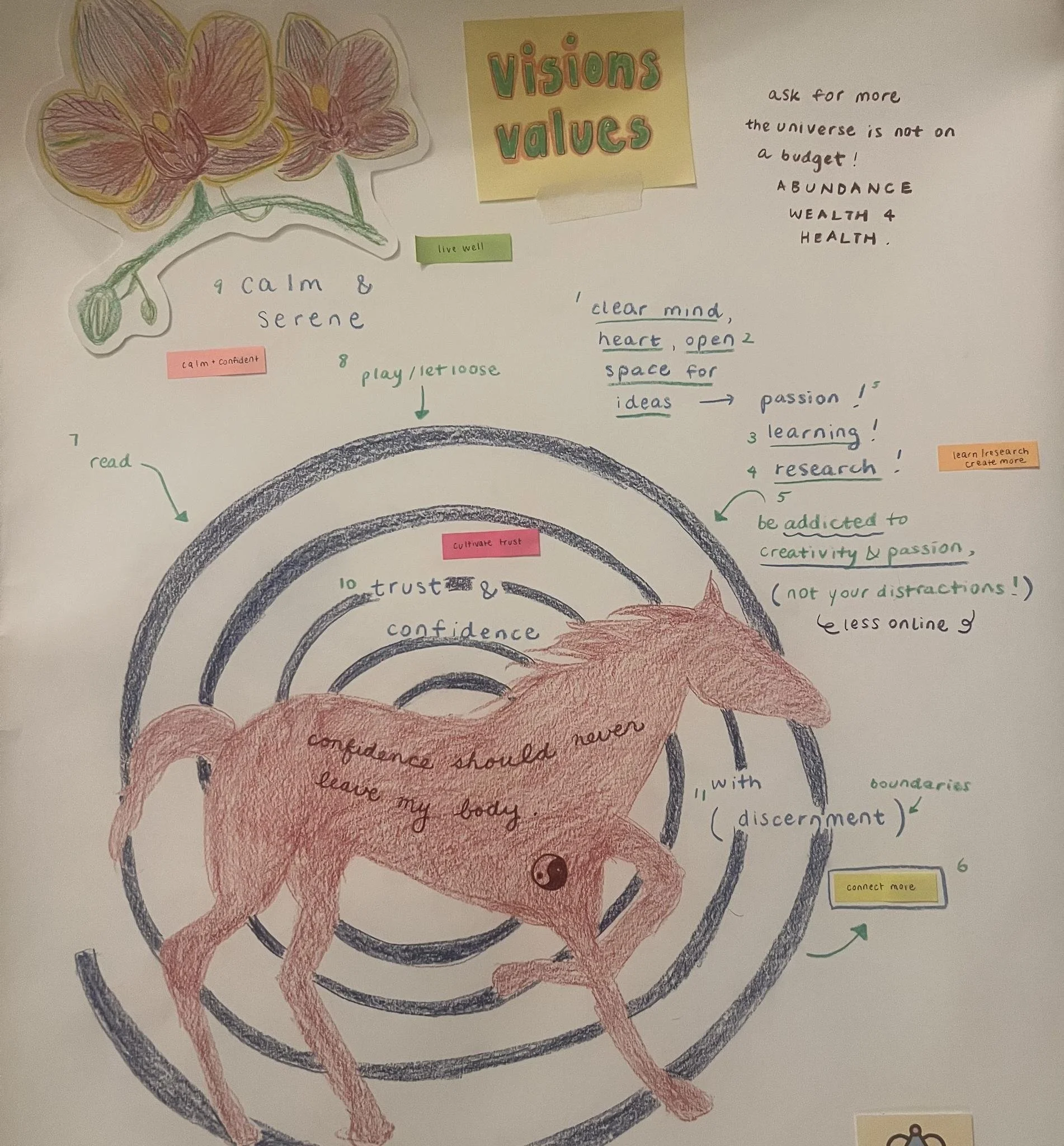
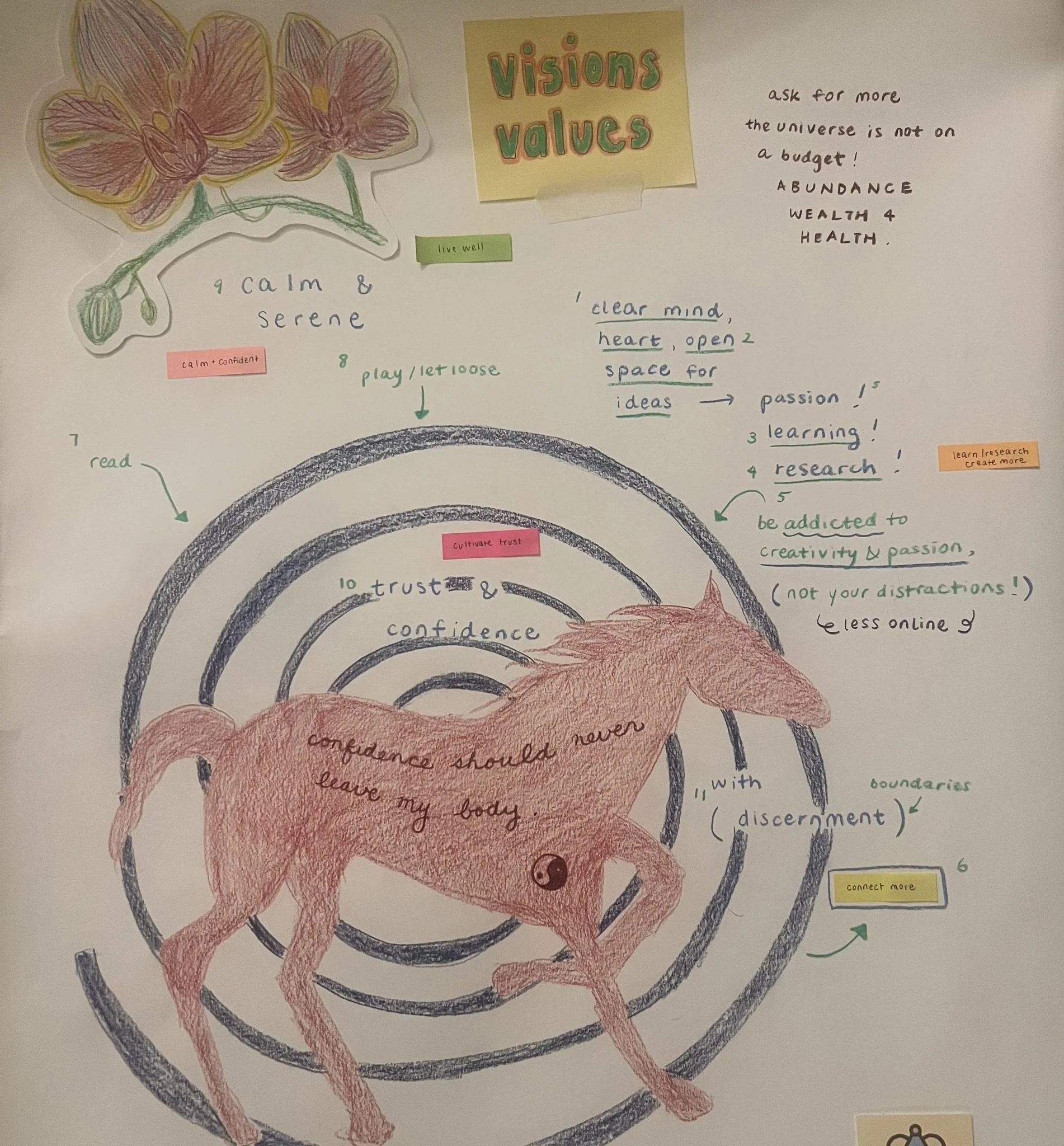
In major contrast, one of the essence goals that made it onto my 2026 bingo card was to go analog. On my bingo card, I had written that I wanted to take two months off work (!!), wean off screens, and spend more time with analog media like filming for fun, and returning to things I really love → liberating imagination and creativity, unlocking maps of the world, and taking in philosophical pauses.


"Nature does not hurry yet everything is accomplished" - Lao Tzu

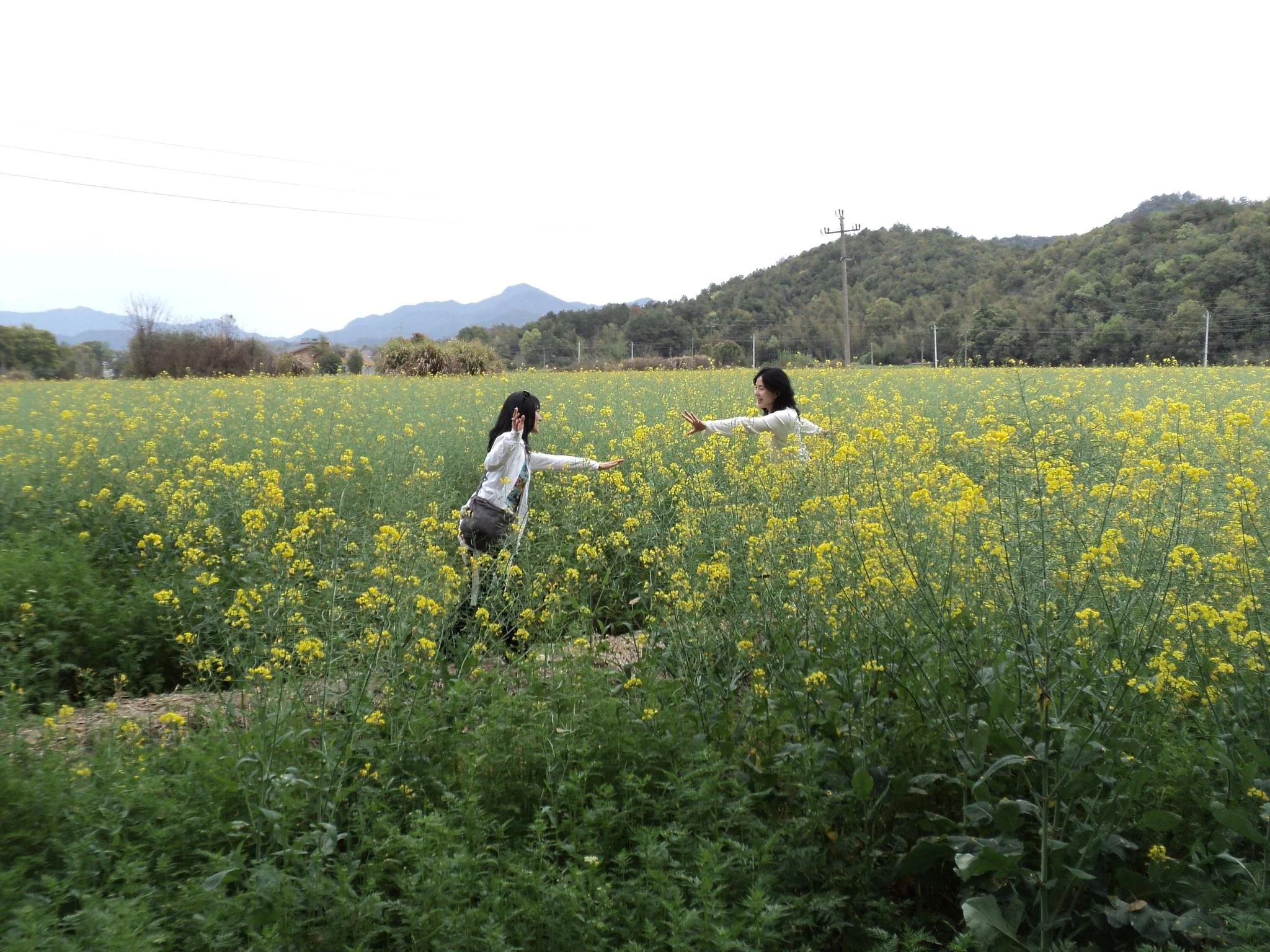
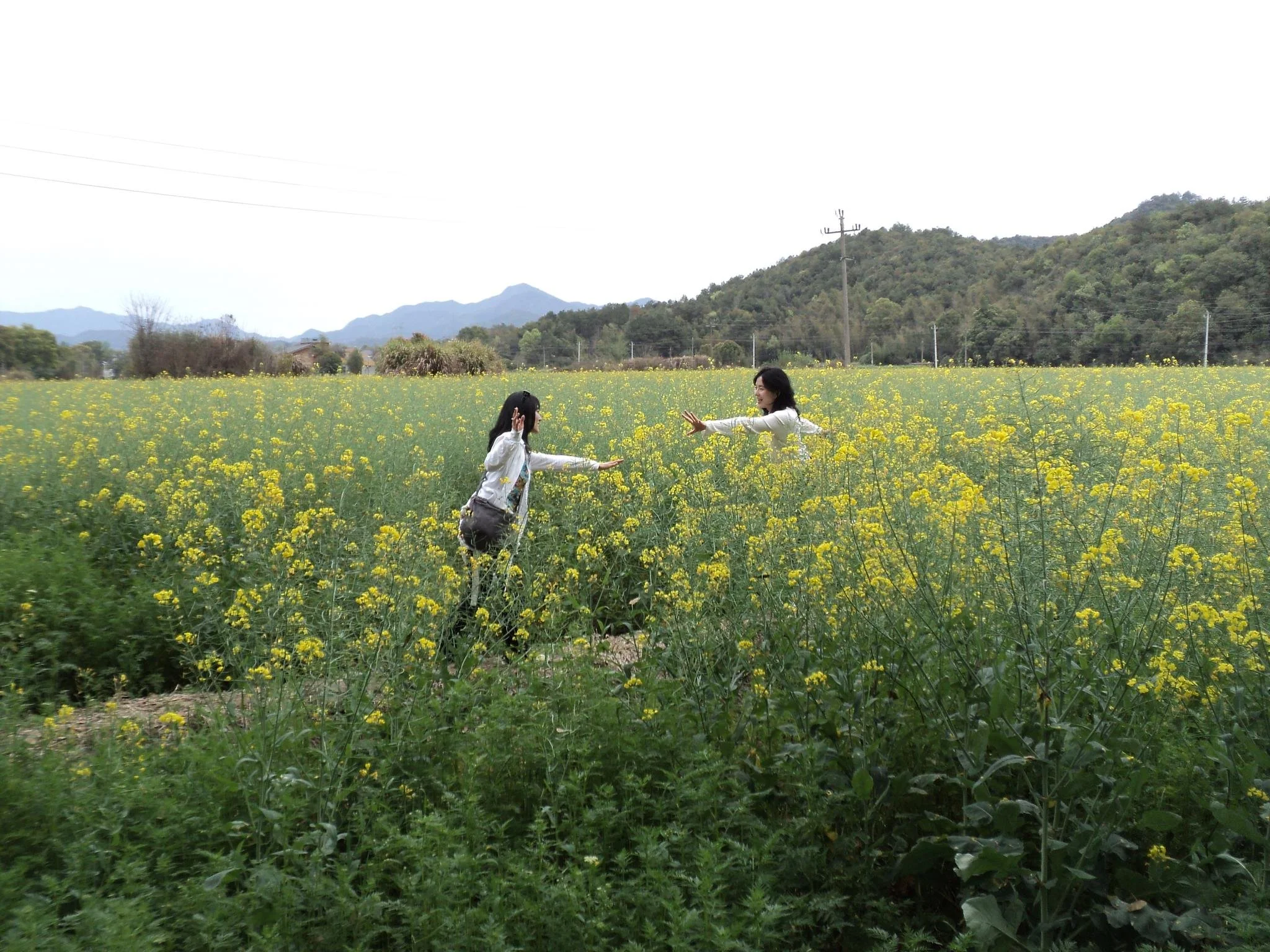
Fig.1 among a field of canola flowers in Jingdezhen

So what happens on a full month on analog?

There was more of whatever this feeling is: "the next step appears because we moved, not because we tried to make sense of it first” and building on roles outside of being a therapist.


Procedural learning. I didn’t consciously notice it during my break, but after last year’s office flood incident and after co-creating a course on healing money wounds, going analog naturally helped me step out of crisis responding rooted in fear. I fully stepped out of my usual role of monitoring emails and everything happening back at home. This allowed my body to implicitly learn that not everyone and everything is dependent on me, and leadership doesn’t look like constant vigilance.


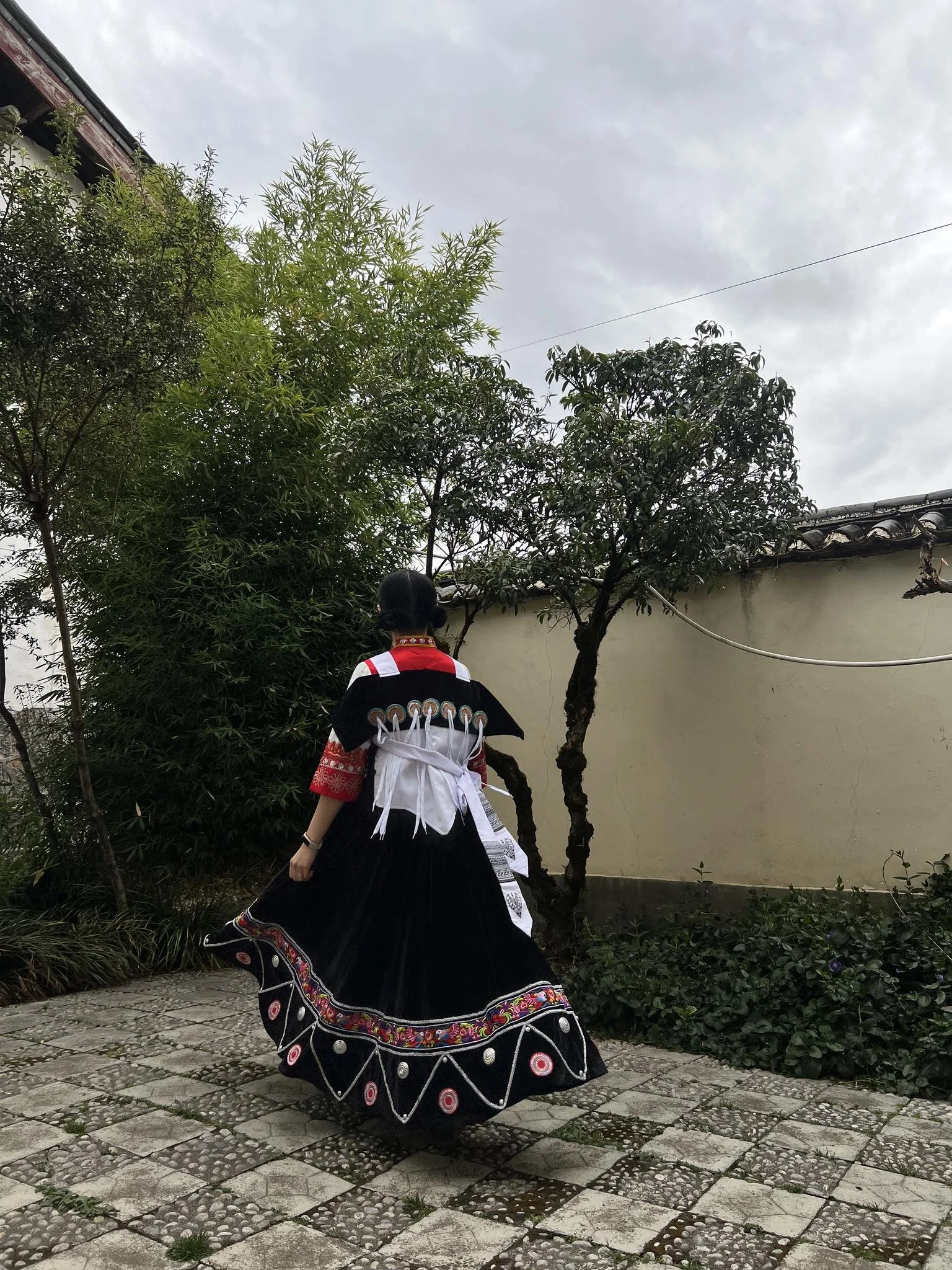
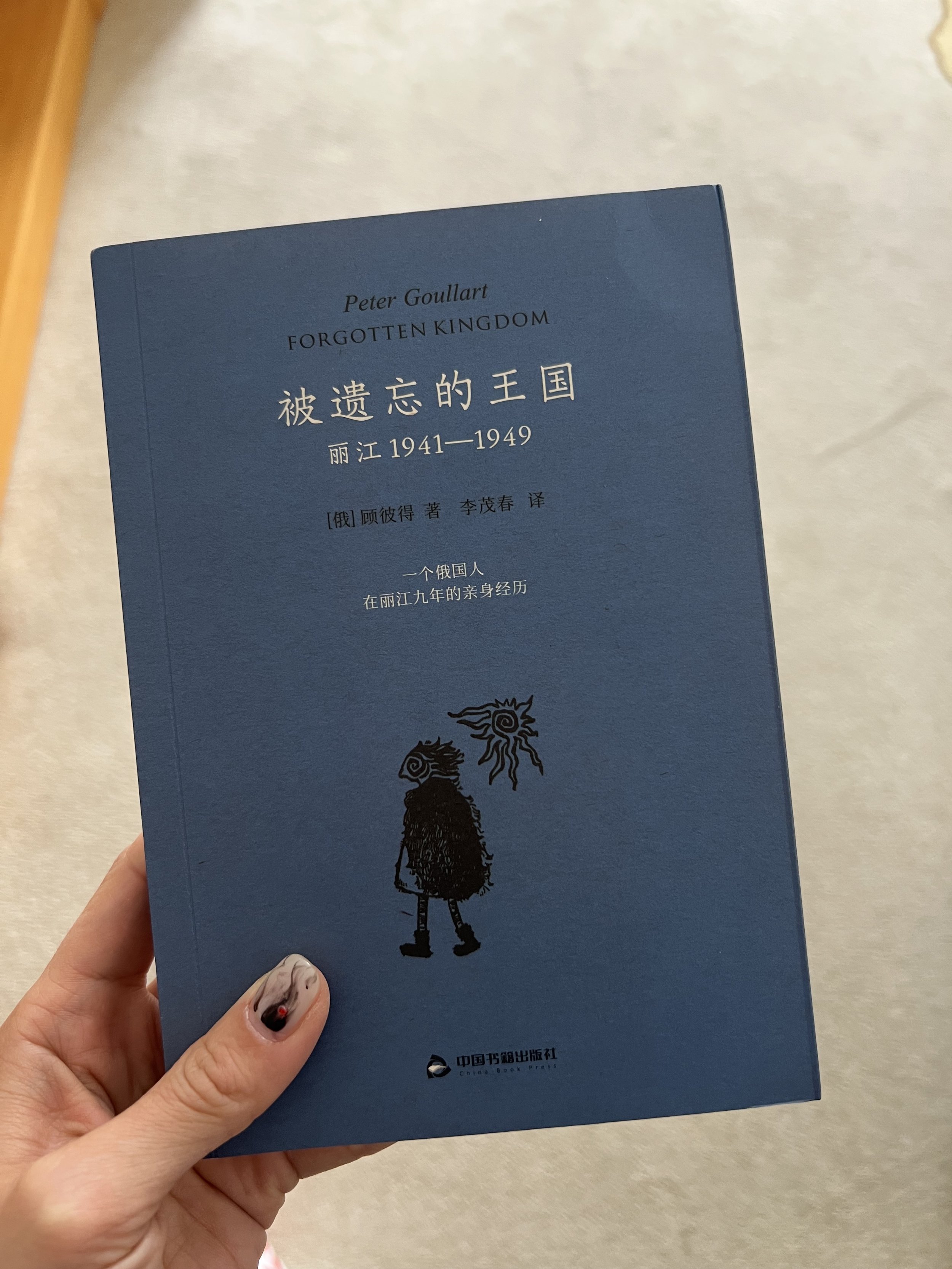
I’ve always loved philosophy of culture and in ethnography. Arriving in Lijiang, Yunnan, for the 2nd time (my 1st was last year), I interviewed my mom, who had finally returned to her birthplace for the first time in over 60 years (after years of me urging her to reconnect with her roots). I dug up books and history around my family's lineage (a NaXi clan from Lijiang) who lost their wealth during the cultural revolution and ethnic minority cleansing. Hence complex money wounds and inherited anxiety. More of this in the upcoming newsletter!


Going rogue/off screens helped me see the world in another way. Like adopting rituals that support me to experience the flow and pace I’ve been craving. From fight and flight → rest and digest, without binary lines.

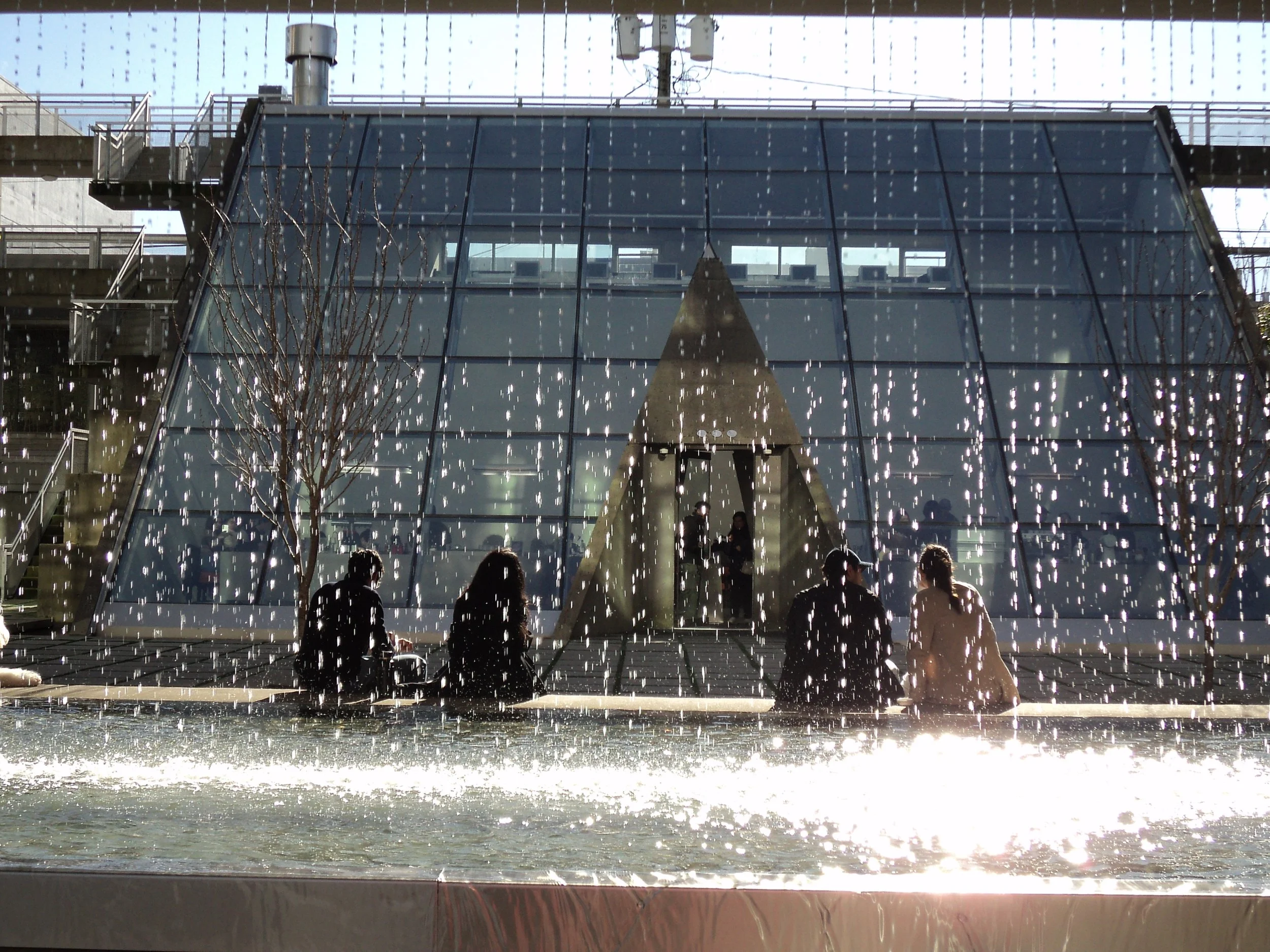
Fig.2 West Lake, Hangzhou — golden hour on the water

The month was full of creative, liberating moments like doing things just for fun! I noticed my creative voice sparking with more confidence (stepping out no matter how dressed up I am, dancing midway when a song gets stuck in my head, cracking jokes without filtering). There was less pressure to take things seriously or shape myself around a specific image or identity (like a “therapist” or “the older sister”), or to meet the demands of the algorithm. In these moments, my attention feels like it is sacred and actually belongs to me again.


Going analog helped me create glitches in the system. Capitalism handed all of us a bag of rocks and told us “this is the kit we need to survive”. Grasping onto internalized strategies like ableism, production and optimization over welfare, fatphobia, or taking time here on Earth too seriously… aren’t things I actually value. They’re inherited. Forcefully fed. Learned and rehearsed from a place of fear. Even though internalized thoughts will still appear through the course, I can discern what's mine more clearly and that makes the time I spend with myself so much easier.


I felt the depth of this: diligence without context isn't discipline, it's constant numbing and busywork. The goal was never to optimize myself into exhaustion. It's always been ease, alignment and a slightly unhinged feeling of being genuinely, embarrassingly alive.
 

This month felt like a different pace: a kind of attention and a life that doesn’t need to be constantly monitored to be lived. I honoured this principle, "说到做到" translation “following through with my promises” throughout the walk.


I don’t think going fully analog is the point. 

I’m more curious about what parts of this I’ll carry forward.

And for now, that’s enough. 😌


Putting these feelings into words for you, in case you haven’t already named them for yourself.


Thanks for tuning in, friend ✮⋆˙


SMART goals are not suitable for personal development


written by Linda Lin, RCC RCAT


FEAR is the number 1 theme I’ve been witnessing throughout therapy sessions these days. 


A lot of us are going back to survival mode, while the western world of psychology calls this ‘dysregulation’. Whether it’s dealing with sudden major life transitions, many times out of our control, to the rapid changes of living in the world today, fear comes up hard and fast.


As a client calls it, "honestly our brain is just a meat sac with electricity".


Our brains get mushy and our feelings feel complicated when fear shows up. I see us grabbing at straws, searching for immediate relief, for answers, solutions, quick fixes as we navigate this territory. Then we try to cope with everything at once, and we end up self-sabotaging or freezing in overwhelm when things don’t go the way anxiety wants them to.

It doesn't have to be like that. 

Life shouldn't feel THIS complicated.

Here's how I am facing feelings like fear!

(in relevance to dealing with 2026, year of the fire horse)


1. Reminding myself, feelings aren't facts.


What if we didn't treat feelings, fear, rage, disgust, contempt, irritation, dislikes as verdicts? 


Imagine what it’d be like if we didn’t treat feelings as hard labels, like “this is just who I am” or “this is how things will always be”, but as guidance we can listen to, not obey.


Feelings always signal what matters to us.
They point to our unmet needs, unclaimed desires, and the ideas or beliefs we never consciously chose.

Kinda like when we're driving and we see a sign (the feeling) that says “slippery roads ahead”. This doesn't mean that we are bound to slip and fall so we gotta turn around and go home. We can drive or walk through with care, be mindful to go a little slower, or stay on parts of the road that feel safer.
 

I'd like to believe that feelings are always trying their best to guide us toward what hurts, what matters, and what needs care. They’re asking for our attention and trust.


At its very core, feelings want us to remember that we matter — that we are deserving of understanding, even when listening to this might change everything we once believed.


Pause for a moment. Take a breath.

Notice how these words land for you before you continue reading.


ᯓ :ִ ࣪✩ ݁∶⊹˖ᯓ⭑ᯓ :ִ ࣪✮ ݁∶ ᯓ :ִ ࣪✧ ݁∶

2. Practice the art of decision making.
 

Act before courage feels perfect. What if we focused on honesty instead of busyness, or the pressure to make everything “just right,” as if we were performing for a critical audience?


Building awareness. When we slow down, we can see ourselves more clearly like our values, desires, what we care for, and the unique energy we bring into the world. 


Part of presence building is slowing down and taking courage toward attempting. We don’t have to go far or move fast. The focus is more of that simple noticing and listening to what we need in the moment.
 

Practices like art journaling, using stickers and prompts, bibliotherapy and building in small rewards or celebrations, like a Big Paper Planning Day, have helped me build the courage to simply start. 

3. Your goals need to be neuro-informed!


Hate to break it to ya but did you know SMART goals increases fear and anxiety?

SMART goals may sound clear, functional, reasonable and responsible (due to surviving under a capitalist system)
…but people find that SMART goals work hand in hand with their anxiety and cognition instead of our energy and noticing what is happening in the present moment. 

An example like, “I have to go to the gym 5x this week.”
Our brain will do this thing by adding extra rules with it. 
“No matter what.” 
“Push harder than yesterday.” 
“Okay now increase the sets by 5%.”
Before we know it, the goal stops feeling motivating and we can't put ourselves to actually do it.


So why does demanding X amount by a certain time, in a specific way, make us anxious and self-critical?

It’s similar to how we overcomplicate our art, writing, and projects. We are trained to take pride in being driven by anxiety, perfectionism, the need to “look busy,” thinking that more effort will better ourselves so that we could finally meet our goals. 

Deep down, we know that all that pressure, all that busy-work rarely moves the needle and most often than not, we become frozen by overwhelm and FEAR.

That's because SMART goals originated from a place that was NEVER meant to be used for personal development! ( ˶°ㅁ°) !!

SMART goals started as a management tool for organizations and the C-suite. It wasn’t built for emotional well-being since the beginning, but to keep employees in check.

Did you know? The A in SMART originally stood for Assignable, not Achievable 😒 That’s why they land so cognitively, cold, performance-obsessed when we apply them to day-to-day goals we have for ourselves. 
 

For many of us, SMART goals lead to disappointment, lower self-esteem, and spike our anxiety. Say we’re low in energy, but we set these goals when we were high in hope. The same SMART goals can then make us feel disappointed, “not good enough,” or “inconsistent” when life doesn’t go exactly as planned.

TLDR; SMART goals weren’t made in accommodation to emotional wellbeing, neurodivergence, context to our current energy level, or to nuances and sensitivities, and when times are multi-faceted (feeling collective despair as an example).

4. Our identity builds when we see ourselves as consistent.


When we show up consistently, even in small ways, our sense of self starts to feel real, and fear becomes less relevant. Self‑perception forms when we are a certain way because we have acted that way repeatedly. 

Like when we set boundaries consistently, and it strengthens the way we see ourselves, while sustaining our relationships. A win-win-win!?!

Research shows that when our actions align with our values on a regular basis, the brain strengthens neural pathways that reinforce our self-image over time. Consistency isn’t about perfection, it’s about building a reliable story of who we are.

5. Simplify everything with essence goals.


Essence goals sound almost too simple, but they actually work. Instead of overcomplicating life with logic and overthinking, they guide us back to what really matters: our values and desires.


This is what essence means to me ↓

Essence is unwavering in self-advocacy and protection with unconditional acceptance of our values. 
Essence brings deep attunement like the way nature and land show up. Like a grounded tree or a portal accessing our intuition. 


I’d like to imagine that our essence has been with us our whole life.

 Essence goals are adaptive, discerning, and handles nuances. They focus on how we actually want to feel, live, and move through the world.

Instead of pushing past our capacities, we practice honouring our emotional reality!


Examples can look something like this:

“Move in ways that make me feel alive and strong this week.”

“Show up for my community with presence and solidarity.”

“Unplug easily and celebrate after each workday.”


So here’s to more moments of tuning into your innate wisdom (which is backed by science btw.ᐟ.ᐟ ) to support your emotional wellbeing.


Always in your corner,
Linda ♡