Doomscrolling is making you feel more alone


written by Linda Lin, RCC RCAT

Doom-scrolling was officially added to the dictionary in 2020. It has been a cultural phenomenon since.

And we’re fed 4,000–10,000 ads a day.
No wonder our average screen time are shocking at the end of each week (let alone another person if they saw).

Let’s be real, this constant stimulation taxes our executive function (our memory, focus, decision-making) and keeps our bodies in a continuous state of high alert.

“Staying informed” is more disconnecting than landing informed.

Engaging in the digital realm is rocky and exhausting in 2025. Like holding one too many deep dives into gaps in knowledge, where my mind stays eerily wired to every subculture at once. 


A truly overstimulating space.


How much can my mind hold at once? With so much content that's unfiltered and never really thought through, I see myself stuck in an echo chamber, picking up whatever the algorithm feeds me.


It's not all in your head.

Dominant cultures — the ways we uphold individualism, ableism, consumer-driven capitalism, the “work myth” that success equals happiness, gender norms like weddings and having kids, hating and cancelling certain groups of people, or conforming our bodies and identities to fit in — keep us isolated and fearful of each other.


Much of this comes from how the digital space itself is intended and structured, rather than any failure on our part to “use it correctly.”
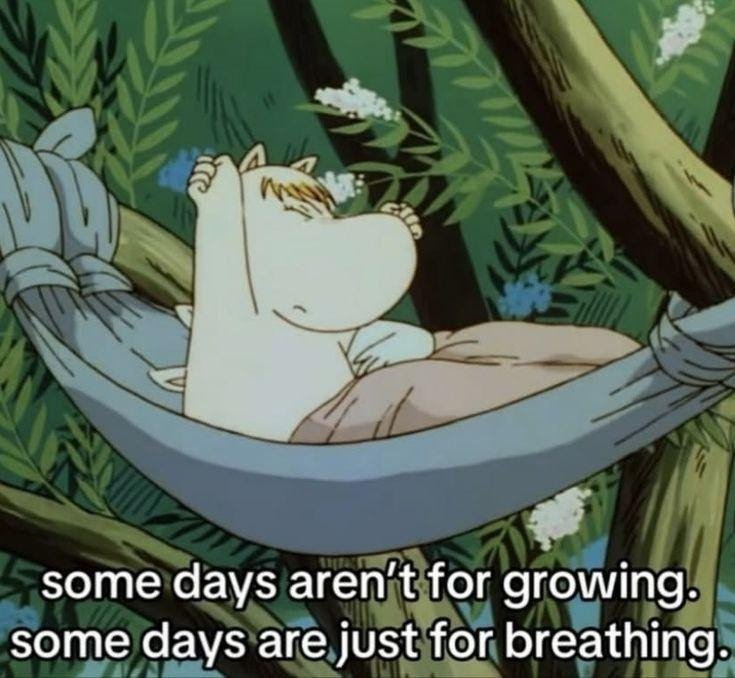


Despite the sense of predictability doomscrolling can bring while times are hard and uncertain, it also…


• Makes me wired on the dominant cultures and trends
Consumerism, capitalism/urgency, what is happening in the world and in specific spaces/VERY niche groups so that I won't get 'cancelled'. That I stay 'radical', 'up to date' enough on 'better ways to show up' because as a human, I just want to connect and belong somewhere.


• Subconsciously tries to make myself palatable, attracting to most rooms I enter while fearing to be deeply loved or misunderstood. My human need to stay safe, and avoid threats like rejection.


• Ruins my relationships: it's the diagnosing and replaying every interaction after taking in opinions/content that I deemed in that one split second it spoke to my issues within a current relationship. It exacerbates my fear of being a burden, feeling burnt out already so I can't make room for inconvenience or vulnerability, and alas, choosing to stay isolated.


Sometimes dives into more info through intellectualizing which isn't all that helpful. Going down a rabbit hole of diagnosing myself and scrolling through everyone else's stories often pushes me into extremes — thinking in black-and-white, with thoughts like “everything, everyone, no one, others all have, I'm the only one, I should, I have to…” It's easy to get caught up in the highlights, fast info dumps, and all the emotionally charged hooks online.

• Builds distrust instead of believing I can do hard things: like taking the next step and processing painful experiences like loneliness and not being understood. After all, motivation and clarity isn't something we start with, but something we generate.


It's a brain that's depleted yet craving ease, turning to short term relief instead of what truly helps me in the long run. 


Coming up with prescriptions that are accessible, resonating and convenient can be hard! And it needs to speak to the nuances I'm dealing with. 


Below are some things I am doing instead of doomscrolling and pleasing the algorithm. P.S. I am taking my own prescriptions!
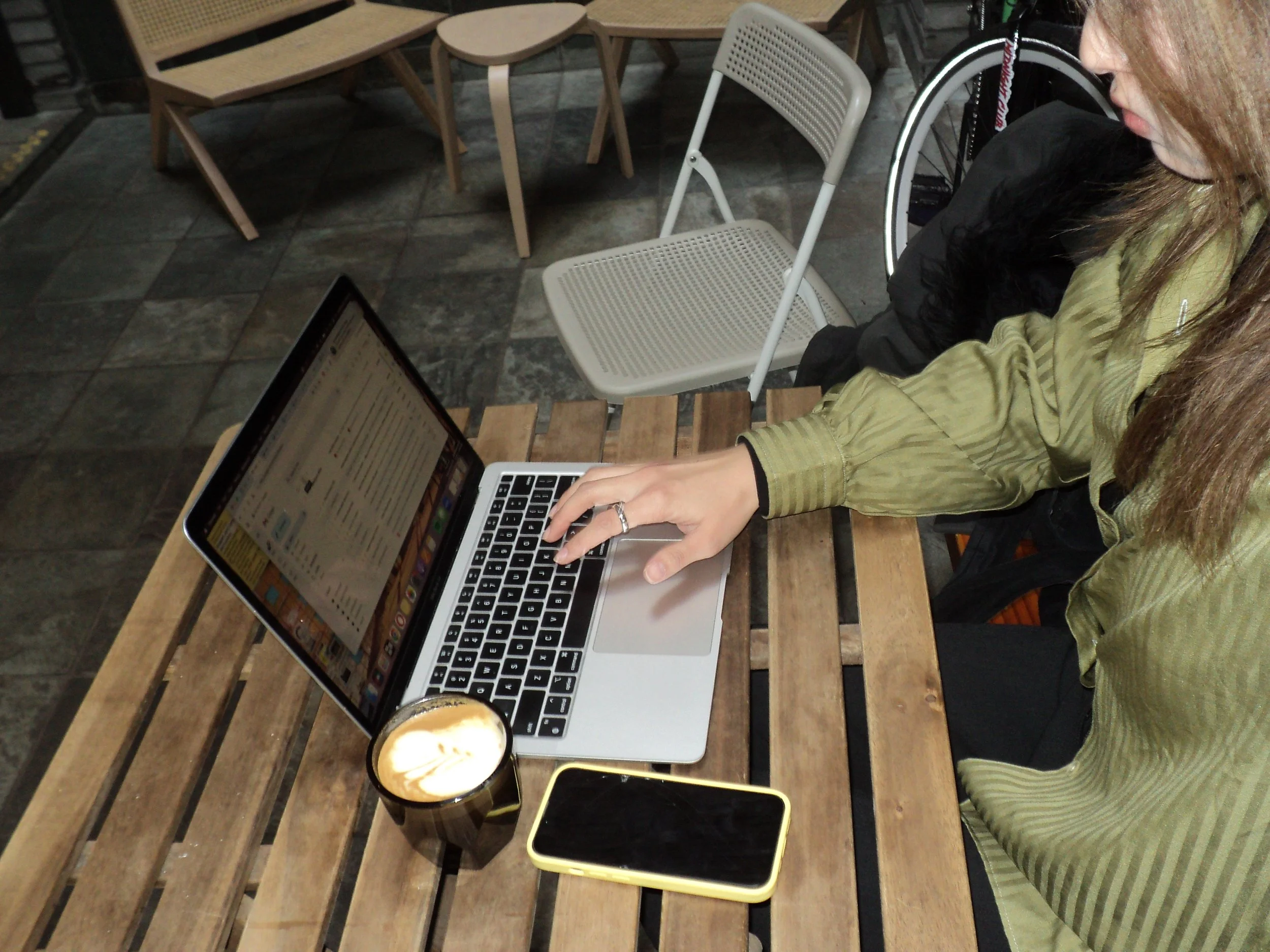
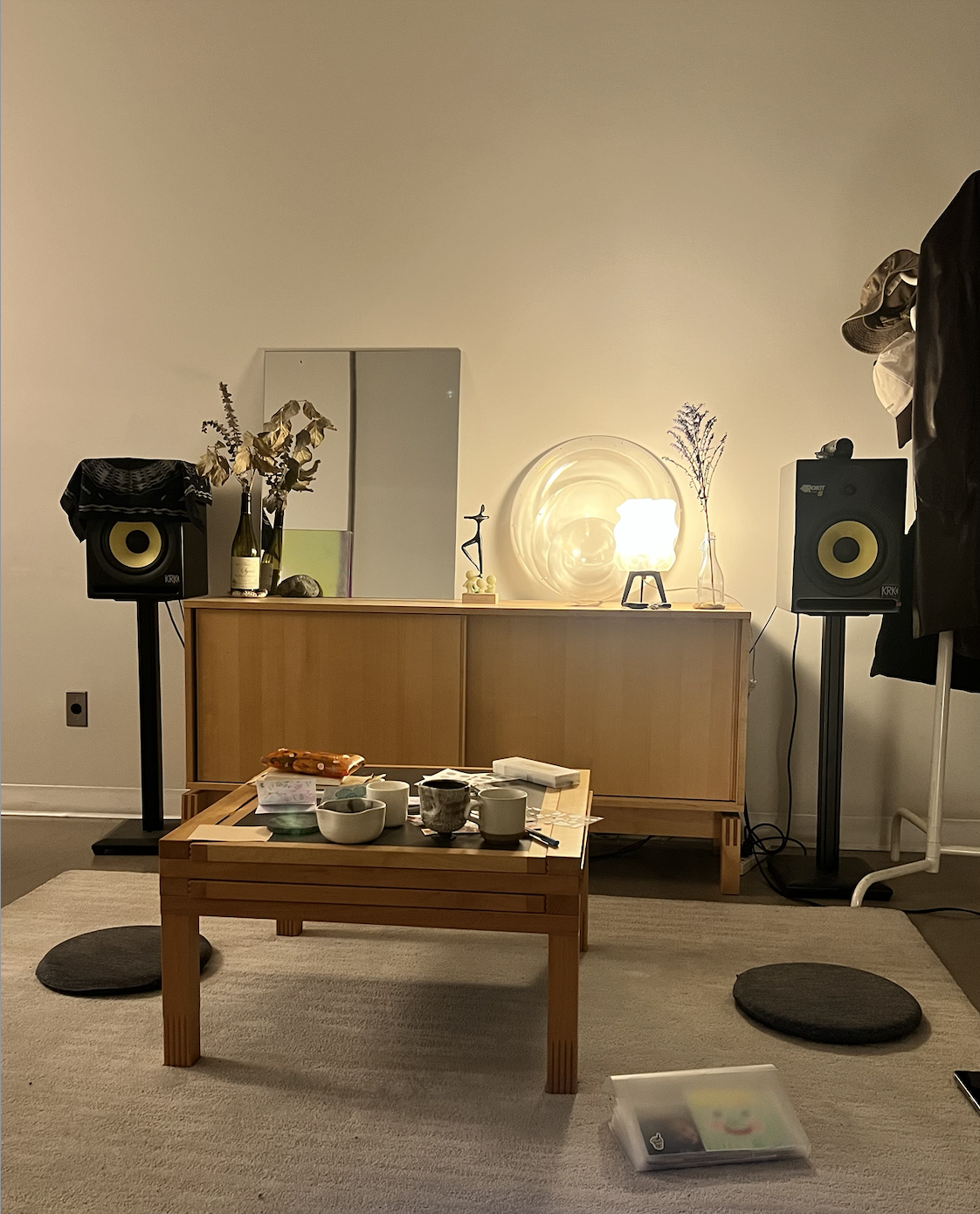
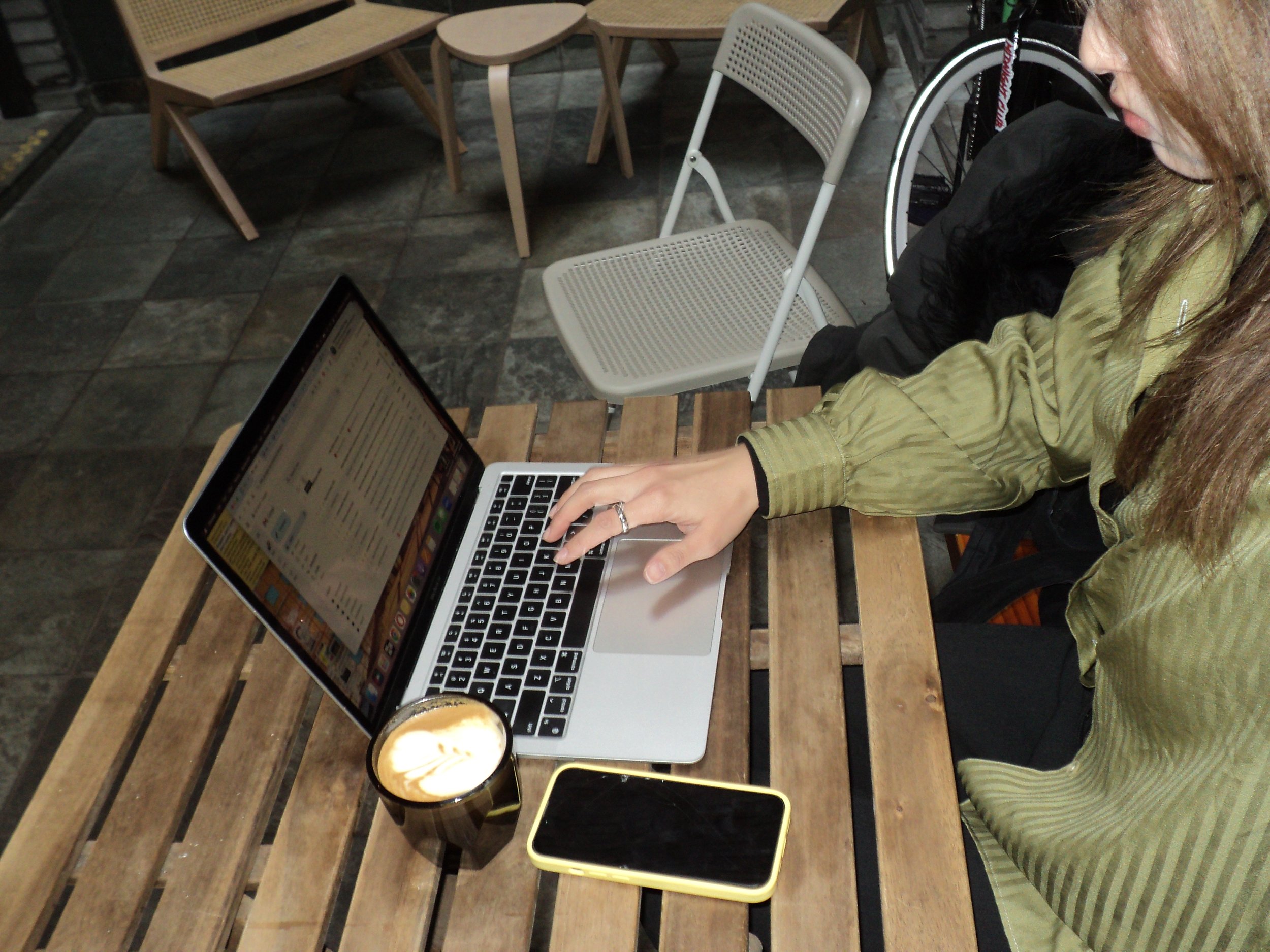
digital camera photo of an asian woman's right hand hovering on the keyboard of laptop with a cup of oat milk latte and her phone.

Here is what I am doing instead of doomscrolling 


…because we feel better once we do it.


(FYI - as the list goes on, it may get harder to practice)


𖥔 Choosing other screens that are comforting: calming games, an old drama for nostalgia, a podcast / longer form content that isn't overstimulating, or putting on a playlist (maybe that's why so many of us are listening to jazz)


𖥔 Movement: deep stretches, trying out new classes with friends, autumn walks with dogs are my top 3 faves at the moment! I've been visiting a new (dog)park every weekend, unlocking/uncovering more of the city.


𖥔 What I Deserve: instead of looking to belong somewhere or reaching a subculture in my doomscrolling journey where I can feel like someone's speaking on what I'm going through, I am practicing being intentional towards understanding myself and what I deserve with hard things I'm going through.


𖥔 2 items that prompt me to just start. Getting out of bed and brushing my teeth to start the day. Getting an emotional support drink with my laptop for admin work. For myself, every creative project starts with a pen and paper. This combo is like my 2nd brain, documenting shower thoughts, placing them somewhere where I can revisit and even notice themes like writing this newsletter!


Here are some pen and paper prompts:

* Stamp cards! Rewarding myself and celebrating after doing X amount of hard things! Stickers are involved.

* Document one memorable moment from your day. Looking back at these moments reminds your future self of the value of being present


𖥔 Invitation to 'doing nothing': they say, 15 min a day of boredom is medicine to finding meaning. It's so hard to stay bored but I do notice it creates a gateway to slow down and notice my body. It's like a workout session for my attention span. And I'll know the training is working when doomscrolling in rapid pace becomes “weird” to me.


𖥔 Art journalling and conversations in a 3rd space. A community center, library, park, field, cafe, lounge area of a building or coming to our creative workshops (happening weekly now / see below!) have been points of connection away from just relying on the digital space. If you're feeling sad, lonely, or stuck creatively, being in a 3rd space can really help. It's a chill space if you're looking to make friends!


freedom of expression // freedom from perfection

I hope in the colder months we invite in duality. Softening while staying engaged. Resting while remaining aware. It's a time to do less, but that doesn't have to mean consuming more.

May this season remind us that we can log off and still be connected to what matters.


Thanks for tuning in,

Linda ♡
 
 
Reassurance Seeking? Here's why Validation is making it worse.


Does this sound familiar? If you live with anxiety or OCD, you probably know that feeling of needing someone to tell you everything’s okay. You ask, they answer, you feel a little calmer… and then, a few moments later, the doubt washes back up.

The difference between reassurance, validation, and understanding it can be a real game-changer for managing anxiety episodes and symptoms of OCD.

Many clients with symptoms of OCD come to therapy thinking they need validation or only work on reframing thoughts, but what they’re really doing is seeking reassurance which brings them in another OCD spiral.

While reassurance can feel comforting in the moment, it often keeps us stuck in the anxiety loop, reinforcing anxious thoughts over time.


Validation vs. Reassurance: what’s the difference?

Validation

  • Your feelings are seen and understood.

  • Example: “Yeah, that makes sense. I get why this is scary.”

  • Important: Validation doesn’t mean you have to do what your anxiety or trauma urges you to do.

Reassurance Seeking

  • One of the big five behaviours that keep anxiety stuck:

    • Avoidance

    • Reassurance seeking

    • Distraction

    • Substance use

    • Compulsions

  • These behaviours give short-term relief, but in the long run, they strengthen anxiety and reinforce OCD patterns.


Satisfy OCD or walk away?

When OCD symptoms hit, you have a choice: feed the compulsions… or step away.

Walking away is a practice from Exposure and Response Prevention (ERP) which is a highly effective OCD treatment. ERP helps you face anxiety without giving in to compulsions, allowing your nervous system to gradually learn that fear isn’t permanent.


Habituation: learning to let fear pass

Resisting compulsions helps your brain and body learn that fear is temporary. Think of it like watching a scary movie scene over and over. It gets less intense with time. Anxiety and OCD works the same way.

Quick experiment: stare at your ceiling for 10 seconds and wish it would fall on you. It won’t. Thoughts don’t make things happen — even when OCD tells you they might.


Ways to walk away from OCD compulsions:

  • Pause before acting: First step is awareness by calling out OCD and Anxiety. Take a moment to slow down.

  • Practice duality and be gentle: “I notice the urge to do familiar compulsion. It’s okay to do this hard thing and feel anxious while doing it.”

  • It’s all about Exposure and Response: Gradually face triggers or fears without performing your usual compulsion. Start small and work your way up. Please work with a trained therapist on ERP (Exposure Response Prevention) as an approach before trying it on your own.

  • Stay present whenever you can: Practice mindfulness and grounding by observing intrusive thoughts without judgment.

  • Engage with intention: Focus on meaningful activities — not to escape anxiety, but to reconnect with life and the present moment.

  • Remember it’s about practice. Just because you succeeded once doesn’t mean it will go away forever. Seeing yourself doing the compulsion again is part of healing.

Tip: Need a therapist who understands anxiety and OCD and can guide you through the spiral? Check out our therapist directory to find support.


The core of obsession and compulsion

The heart of OCD and anxiety work is learning to build up tolerance of emotional discomfort now so you can feel calm later.

Reassurance might feel good temporarily, but validation, patience, and practice are what truly help anxiety lose its grip.


Therapy Options That Help

  • Exposure and Response Prevention (ERP): which is a branch of Cognitive Behavioural Therapy (CBT).

  • Eye Movement Desensitization and Reprocessing (EMDR): Useful when past experiences or trauma contribute to anxiety or OCD patterns. EMDR helps process distressing memories so they no longer fuel compulsions.


Friendships: choosing each other in a culture that doesn't


from our newsletter, written by Linda Lin, RCC, RCAT

Growing up my grandma who raised me always said, “friendships and learning to connect with others help us cross the bridges of life” 🪷 ୧ ‧ ˚ (this is roughly translated to English)

A couple of decades later, I find myself circling back to her wisdom, because building connections and friendships is active resistance to capitalism and individualism. Friendship is a refusal of a culture that tells us to stay polished, self-contained, hyperindependent, and endlessly ‘productive’.


But here’s the question, how do we actually build real friendships when we’re swimming in a culture that glorifies capitalism, perfectionism, and even buying into community, when it's dressed up as 'self-respect'?


via Pinterest

-`♡´- -`♡´- -`♡´- -`♡´- -`♡´- -`♡´- -`♡´- -`♡´- -`♡´- -`♡´-

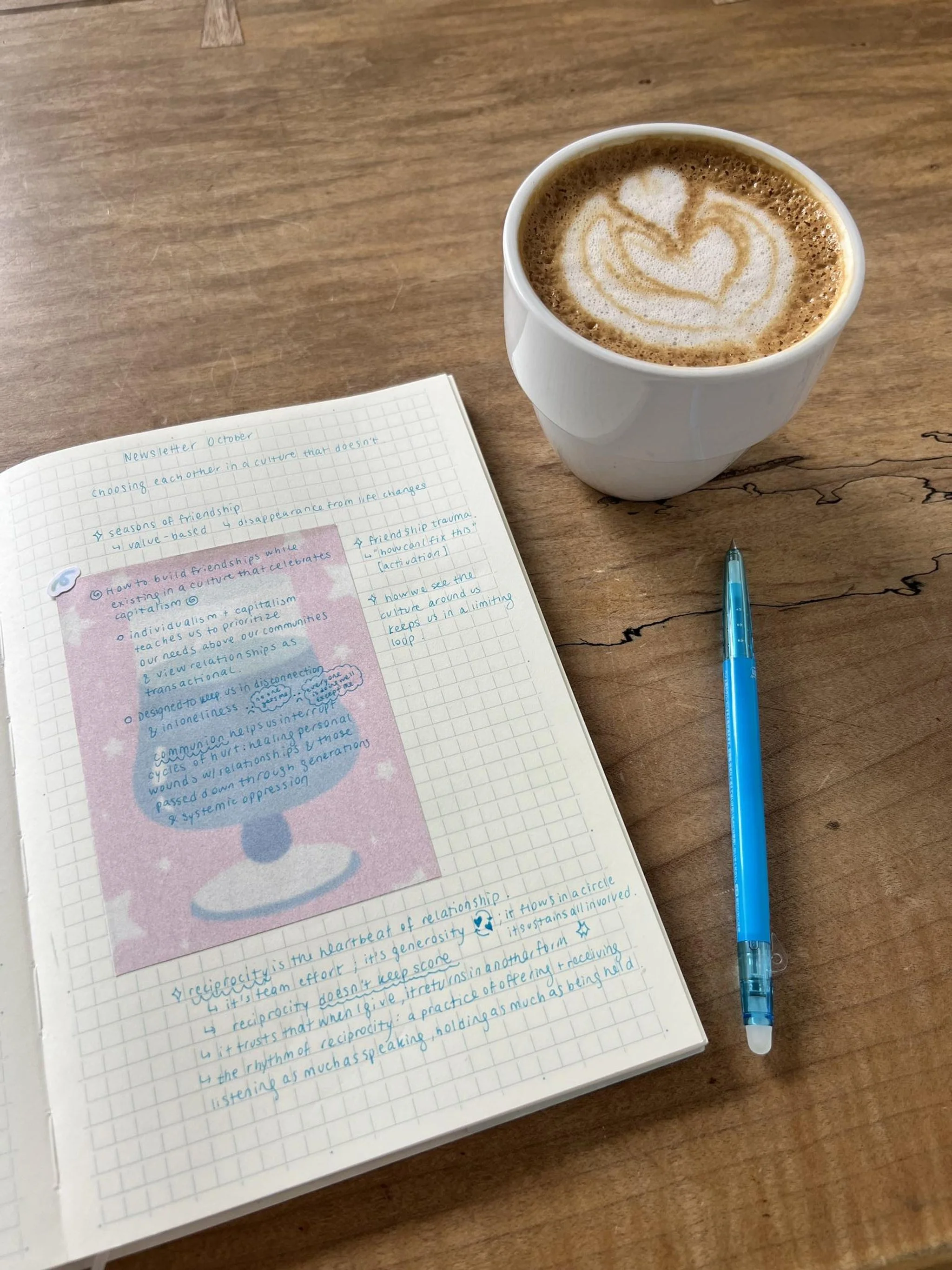
Reciprocity is the heartbeat of relationship.

Robin Wall Kimmerer reminds us that reciprocity is the heartbeat of relationship. The Earth offers us gifts—berries, shade, clean water—not so we can hoard them, but so we can learn the joy of giving back. Reciprocity flows in a circle, isn't one-sided, sustaining everyone involved. It also reminds me of generosity, a value my mother taught me.

When we strive to live in the rhythm of reciprocity instead of keeping score, we learn to offer, and make room to receive. 

We make listening as important as speaking, holding as important as being held. 

 Reciprocity doesn’t keep score; it trusts that when we give, it returns in another form, in another season.


-`♡´-  -`♡´-  -`♡´-  -`♡´-  -`♡´-  -`♡´-  -`♡´-  -`♡´-  -`♡´-  -`♡´-  

sleepover and zine making a friend~

Prioritize connection > productivity! 

Individualism and capitalism teaches us to prioritize our needs above our communities and view relationships as transactional.

It's literally designed to keep us in disconnection and in loneliness.

There were so many days when I find myself after a full day of work and feeling so exhausted to make plans with people who support my nervous system and would interrupt these cycles of anxiety.

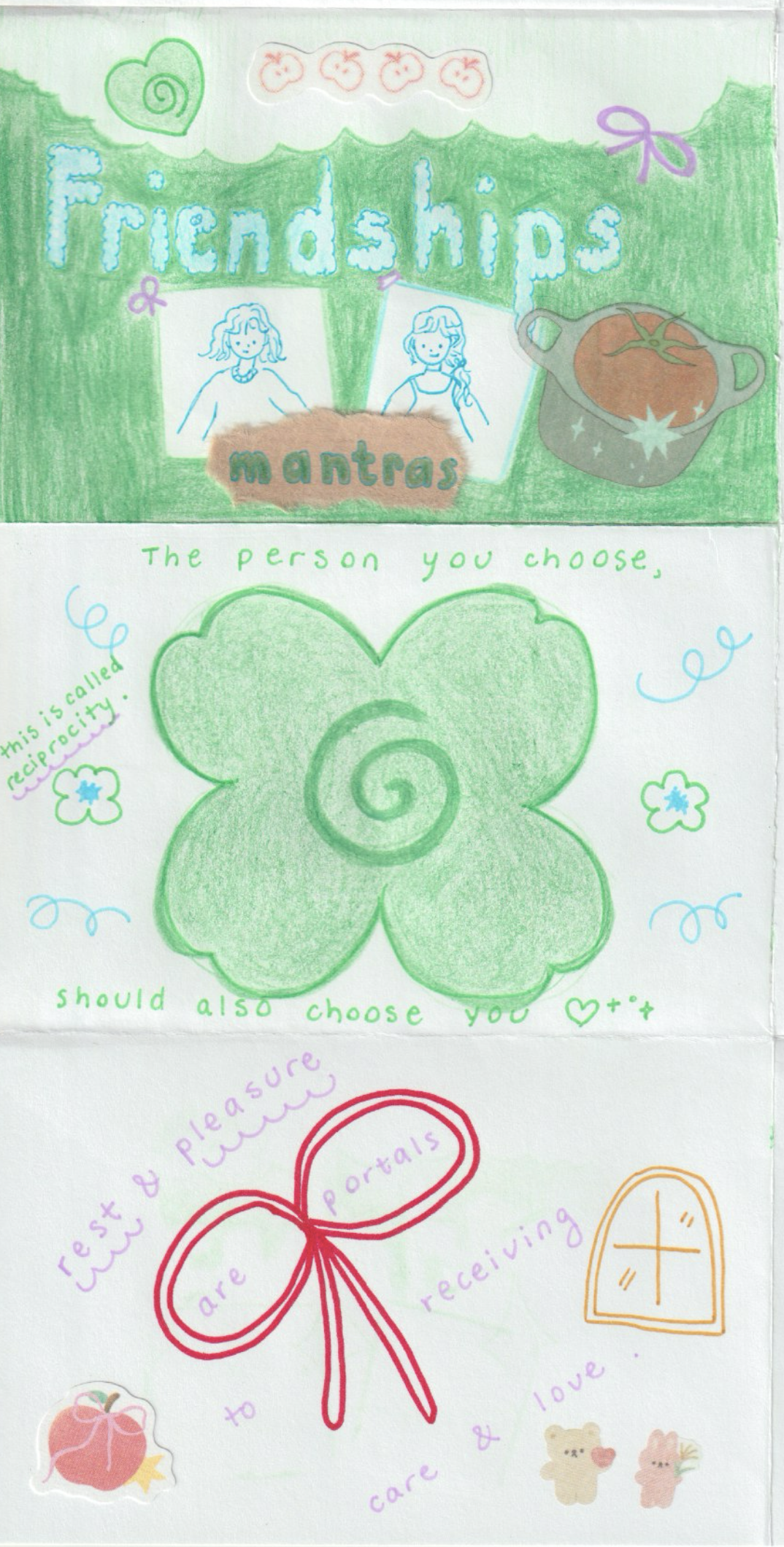
snippet of my friendship mantras zine!

✦ ‧₊˚ ⋅✦ ‧₊˚ ⋅✦ ‧₊˚ ⋅✦ ‧₊˚ ⋅✦ ‧₊˚ ⋅✦ ‧₊˚ ⋅✦ ‧₊˚ ⋅✦ ‧₊˚ ⋅✦ ‧₊˚ ⋅✦ ‧₊˚ ⋅

Rest and pleasure are portals to receiving care and love

Especially when we are trained/conditioned to work, serve, and over-function, choosing rest, joy, pleasure, and time with friends is a way to restore love’s presence in our lives. Communion helps us interrupt cycles of hurt: healing personal wounds with relationships and those passed down through generations and systemic oppression. 

Prioritizing our needs is not above our relationships (capitalism/individualism) nor is our relationship above our needs (relational trauma/wounding).

✦ ‧₊˚ ⋅✦ ‧₊˚ ⋅✦ ‧₊˚ ⋅✦ ‧₊˚ ⋅✦ ‧₊˚ ⋅✦ ‧₊˚ ⋅✦ ‧₊˚ ⋅✦ ‧₊˚ ⋅✦ ‧₊˚ ⋅✦ ‧₊˚ ⋅

via Pinterest

⊹₊。ꕤ˚₊⊹⊹₊。ꕤ˚₊⊹⊹₊。ꕤ˚₊⊹⊹₊。ꕤ˚₊⊹⊹₊。ꕤ˚₊⊹⊹₊。ꕤ˚₊⊹⊹₊。ꕤ˚₊⊹⊹₊。ꕤ˚₊⊹


Communion is the antidote to loneliness and alienation! 


Communion counters loneliness and alienation. Our culture reinforces individualistic behaviours, which shape how we maintain—or let go of—relationships, like the drifting or disappearance of friendships in adulthood after life changes such as moving away, starting a new relationship, landing a new job, or having a child.


bell hooks reminds me in Communion that true connection invites us into intimacy, belonging, and presence. 


I’ve been practicing little ways of stepping off the hamster wheel, where I prioritize friendships and relationships instead of letting the system dictate my pace. I’m learning again and again that connection can be one of our greatest sources of nourishment and healing.


When we slow down enough to be with a friend, we’re pushing back against the myth that our value lies only in output.


Whether it’s cooking a meal together, walking or playing at the park, or even having an adult sleepover (SO fun), friendships are how we choose connection over keeping score, competition, and the endless busyness capitalism asks of us. 𖦹


⊹₊。ꕤ˚₊⊹⊹₊。ꕤ˚₊⊹⊹₊。ꕤ˚₊⊹⊹₊。ꕤ˚₊⊹⊹₊。ꕤ˚₊⊹⊹₊。ꕤ˚₊⊹⊹₊。ꕤ˚₊⊹⊹₊。ꕤ˚₊⊹

So here's to choosing each other in a culture that doesn't.


₊˚🍏 ྀ౿ written by yours truly, Linda


Community building events coming to Decipher this Fall/Winter!


monthly TEAR CLUB! (anti-perfectionism) with Chloe, our art therapist .ᐟ.ᐟ ˚⊹


✮ weekly OFF-SCREEN HOURS art therapy drop-ins with our interns coming soon .ᐟ.ᐟ ⋆˙⟡


A space where we can build community, make art, and connect more deeply with yourself and the world! Think of it as a group therapy session, but in a fun, casual, community-focused way, away from screens and winding down from our week.


Also a perfect activity for rainy days with a friend or two in our studio located in downtown ‘Vancouver’.

Check back soon for updates!


Fall/Winter community & art therapy workshop schedule! ✏️
 

monthly TEAR CLUB! (a soft space for inner child-like joy) with Chloe, our art therapist / counsellor.ᐟ.ᐟ ˚⊹

✮ weekly OFF-SCREEN HOURS digital detox drop-ins with our interns, Nikki (art therapist/counsellor-to-be) and Michelle (counsellor-to-be) .ᐟ.ᐟ ⋆˙⟡


Need an artist date ASAP? No idea where to go on a rainy weekend? 


Join us at tear club! with Chloe: ​Welcome to tear club!a monthly, soft-guided, open studio style collage workshop. Every month, we will connect with our inner child-like joy, with the Sanrio character, Pompompurin as our cheerleader for November!


​why tear club? ✂️✨

A lot of us want to slow down but don’t always know how.


the purpose of tear club is to…

⭑ calm/connect with your nervous system to reduce stress levels.

⭑ spark creativity + problem-solving skills!

⭑ build social connections + feelings of joy outside of work/capitalism.

⭑ embrace our imperfections with curiosity instead of pressure.

📅 Upcoming: Sunday, Nov 23rd @ 1:30pm - 3:30pm

​🎟️ Tickets: $20 ; 6 spots max! Save your spot

​📍Location: Decipher Counselling Art Therapy Studio
Room #316, 402 W Pender St, Vancouver

🍎 About the Facilitator:

𖦹 Hi, I’m Chloe! Currently taking on new clients for individual therapy sessions!
𖦹 Qualifying counselling art therapist + art school grad
𖦹 Avid Sanrio fan + recovering perfectionist
𖦹 tear club! is my way of mixing nostalgia, comfort + the healing power of art.

Follow Chloe's art on Instagram @hichloekwok and if you’d updates on future art therapy workshops, check out @deciphercounselling or visit our website.


Lately we’ve been feeling how hard it is to be human in a world that never stops. 

Notifications, deadlines, the pressure to always be available and productive. We’re constantly connected, yet more disconnected than ever.


Off-Screen Hours is a space to step away from the noise. 

To rest, make art, and heal in community.

Intentional breaks from screens and the grind of constant doing, slowing down long enough to feel present again. ˚⊹


⊹ ࣪ ˖ Series 1: Digital Disconnection explores how technology shapes the ways we connect, communicate, and care for ourselves
 

Nov 14 → Algorithmic Lonelinessisolation in the age of constant connection (1 spot left)


Nov 21 → Digital Ghosts what remains of us in digital spaces, and releasing what no longer serves us (4 spots left)


Nov 28 → Lost in Transmission — what gets lost in digital communication: the emotions and presence screens cannot carry (5 spots left)


Expect gentle art making, reflection, and conversation as we find our way back to ourselves and each other. ˚⊹


📅 When: weekly Fridays 3-5pm starting on Nov 14th.
🎟️ Tickets: $20 / workshop [coupons on lu.ma]
📍 Location: Decipher Studio B [room 317 - 402 west pender st.]
max 5 participants | masks encouraged


Your facilitators:

Nikki Hayashi (she/her), a mixed-race, neurodivergent, and queer practicum counselling art therapist grounded in intersectional feminism + narrative therapy. Helps you reclaim the stories that feel most true to you.
 

Michelle Jeong (she/her), a queer, neurodivergent, chronically ill practicum counsellor and eldest daughter of Korean immigrants. Brings warmth, curiosity, and 10+ years of supporting survivors & folks navigating trauma.


We believe rest is resistance, and that healing happens together.

✨ Come as you are. Take a breath. Log off for a while. 🌳