Posts tagged grief
Community anguish and AI: the grief we haven't named yet


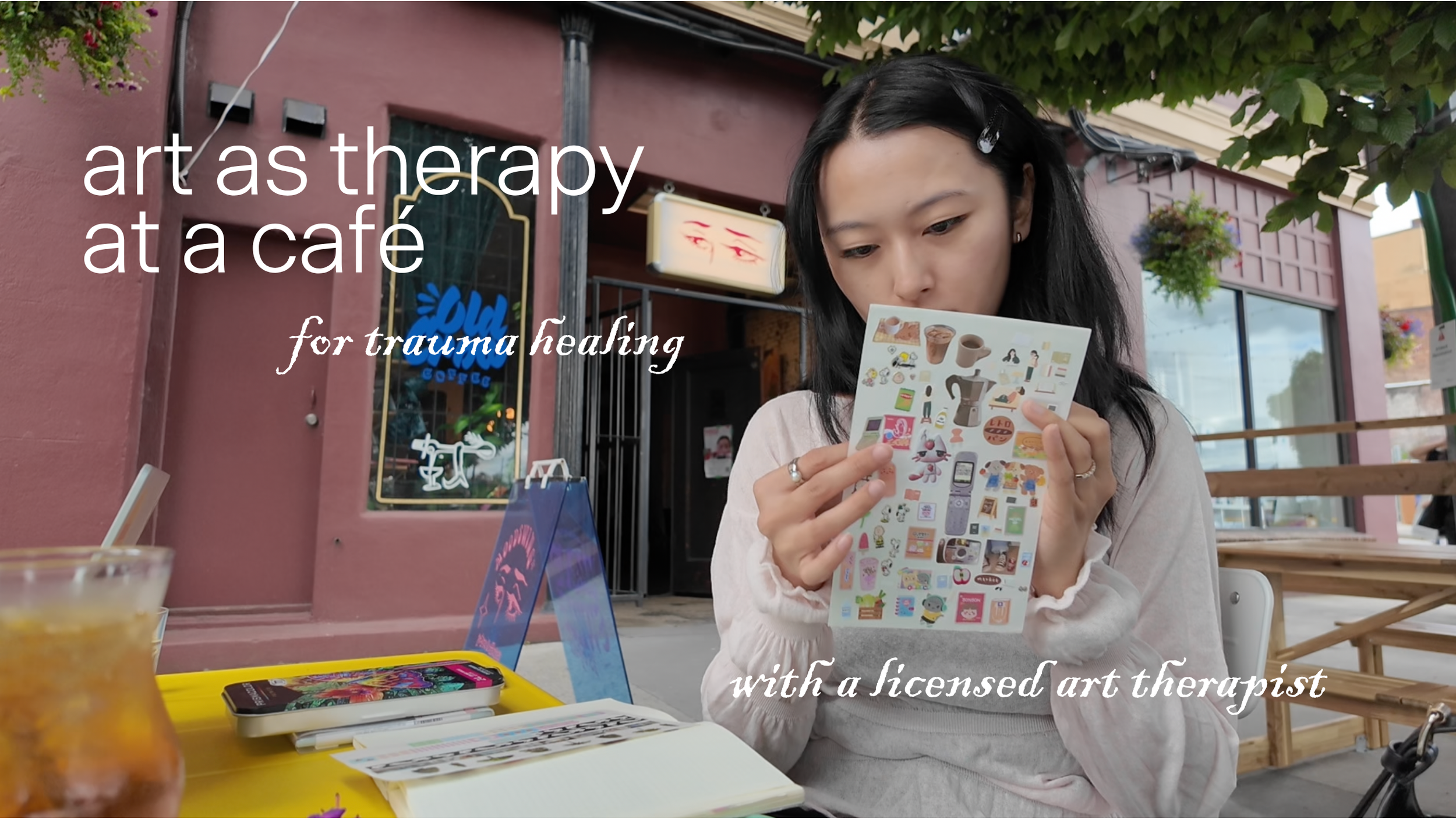
written and filmed by Linda Lin, RCC RCAT

For those who enjoy longer-form content to pair with my newsletters and blog posts, I've just launched a YouTube channel where I'll be talking through topics I'm exploring and sharing in a different format.

Since 2019, something feels like it has shifted societally and relationally. Not to dampen the mood, but it feels important to name. In the therapy room, we’ve been witnessing deep feelings of nihilism, resentment, and disconnection. There’s been so much ghosting instead of closure or generative feedback, and more counter-relational ways of coping that seem rooted in fear.


We seem to be moving toward a culture where loneliness is managed through posting rather than personally reaching out. There’s such a fear of being alone, or of worst-case-scenario loneliness, yet many people still feel profoundly lonely within their relationships and communities.

Relationships, limerence, and the search for belonging and community already feel difficult to navigate. And now there are new Instagram features (like previewing stories without ‘seeing it'; create multiple story audiences, story rewatch insights…) rolling out that honestly scare the shit out of us. What do you mean there’s a paid version of IG where you can make a story appear like it’s for all your followers, while actually singling it out for the one person you’ve lost sleep over?


With so much of our lives happening digitally, passively, there’s a growing disorientation, grief, and a kind of anguish around how we relate to each other, and whether the versions of ourselves that knew how to belong still exist.


In this post and video, we're sitting with a question: how do we return to being genuinely relational? Things like tolerating feedback, knowing when to set boundaries, and being willing to move through the messiness and discomfort that real relationships ask of us.


This past month, I held many conversations with peers, friends, colleagues exploring relational patterns we're seeing in the therapy room and beyond, bringing in discourse on artificial intelligence and relationships. These talks sparked both grief and a sense of relief in me. Grief and relief in finally having a container to hold and express these reactions, a similar feeling to a canvas sturdy enough to carry all the layers we want to express.


“Avoidance is a way to stay close to the fantasy while staying far from the truth. You want a peak, the how-to, but you don’t want to be the one who does it (first).” – Care from Erotics of Liberation


What is the thing that never gets said?

Something interesting about this era we're in, whether we like it or not, is how both artificial intelligence and digital proximity can offer a kind of artificial sense of security. Artificial intelligence is a prediction model, generating responses based on patterns of what is likely. With AI, there's comfort in the idea that there is always an answer. But when we use it as a mediator in relational conflict, or as a response to feel like we are desired and right about something… the response it generates is shaped by the context we give it, drawn from patterns in its training and what's publicly available, rather than from immediacy. 


Immediacy is when we practice naming what the air feels like between us, right now. When we speak to the pattern of how we're relating: what's alive in the room, what's being carried but not said. It's making space to address the space between: the tension, the coldness, the defensiveness, the avoidance.


What opens from immediacy is a spectrum of feelings, warmth, closeness, connection, care. The willingness to name what's hard is what makes room for what's tender.


That awareness, reciprocity and attunement, and courage to take something so subtle seriously, is what builds trust between people.


In the relational realm, when things feel uncertain and we don't have the spoons to meet that uncertainty, a deep fear can surface. A fear of rejection, of not being wanted, of being truly seen in a vulnerable way. We start to experience emotional mind games, where it becomes unclear who holds the ball and whose court we're in.


This spills into how we sense belonging too, and how we numb out or sidestep responsibility when relationships get strained. In an era of artificial proximity, how do we resist that pull toward desensitization? How do we stay genuinely open to each other when so much of our connection is simulated? Can we choose to stay more intentionally, more carefully, and keep building something real even when it gets hard?


As our team member Natasha puts it, it takes less than two minutes to reply to a friend, and we can do it from anywhere: in bed, on a walk, or on the toilet. It just takes some getting used to.


The challenge is how we stay in the here-and-now and trust our own knowing. I want to offer a gentle nudge: we carry so much more context than we give ourselves credit for, and the brain builds neuroplasticity when we challenge it to hold nuance, as we do when we navigate relational concerns.

Thanks for tuning in, friend ✮⋆˙


Gifts of Grief Through Art as Therapy


from our newsletter, written by Linda Lin, RCC, CCC, RCAT

Underpaintings and impasto paintings* always reminded me of the history an artwork holds:

The layers upon layers of buried marks, hidden tries, vibrant stories and editions within a painting (aka. an experience). 

They remind me of the dimensions and depth of heartwork, that can capture the sad and longing parts of grief and their gifts of creation and fulfillment that comes with heartwork.

* Underpainting is referred in traditional art as a thin wash or layer that you build on your image; playing with tones, to create depth. 

Impasto painting is a technique in which paint is applied to a surface in a thick and textured manner, creating a three-dimensional effect.

Map of Grief / Gifts of Grief

Here’s your art therapy prompt:


In this practice, we will be tending to underpainting and impasto painting not as techniques, but as encouragement to make marks on a fresh blank canvas, revisit and build on our images as a container for your emotions. 


Here are the materials you will be playing with:

Your choice of paint**: watercolours, acrylic paint, gouache or oil

Your choice of pencils/crayons: pens, pencil crayons, watercolour pencils

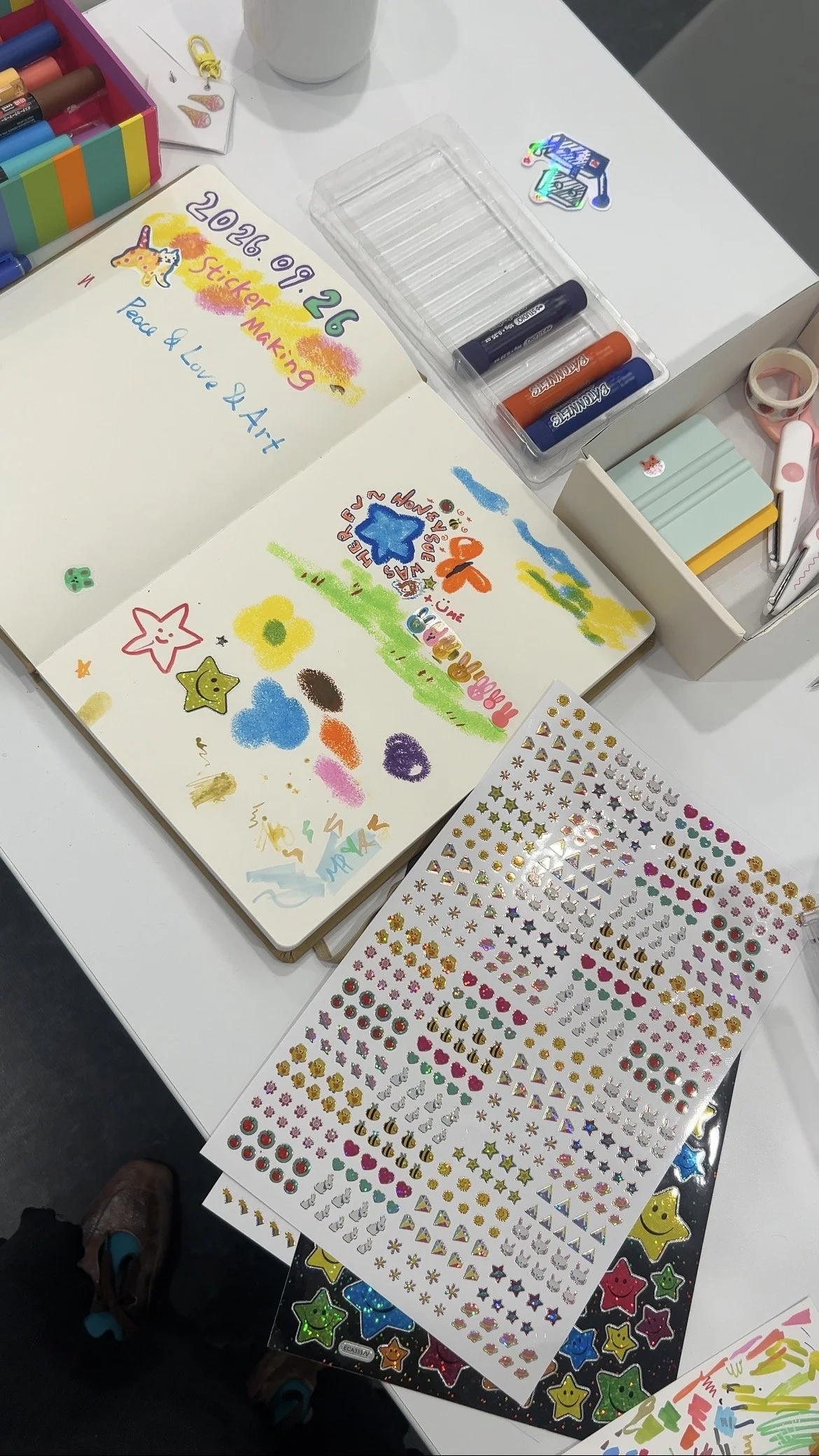
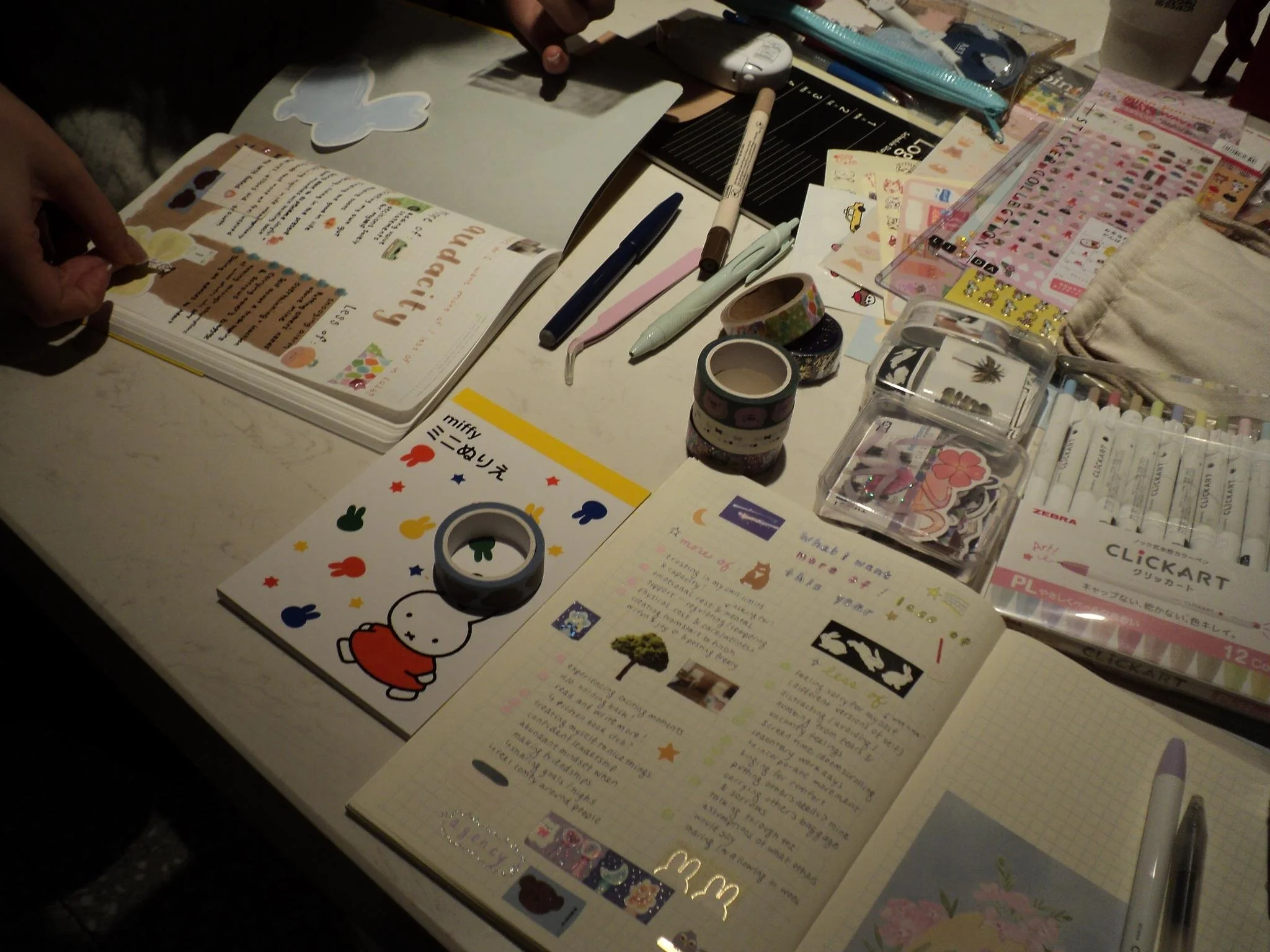
Your choice of materials that represent gifts: cool stickers, sparkly gel pens, dried pressed flowers, glitter, etc. 

Part 1: A Wash ⽔ (water)

• Start off with a thin wash of your choice of paint as a base. 
• Let it dry.

Part 2: Depth ⼟ (earth)

• Layer on with additional washes, or working your choice of pencils/crayons, add onto your image to create interest or depth. 

• You may choose to play with symbols and metaphors in mind throughout this process.

• You can add as many layers as you wish.

Part 3: The Gifts ⼼ (heart)

• Hopefully this is a fun and enjoyable part: add on your coolest stickers, draw with sparkly gel pens, glitter, to represent the gifts of heartwork. 
• Play with symbols and metaphors in mind and let your unique processing run free!

• You may even choose to revisit the image again and again to add or edit more layers and insights.

˚ ༘♡ ⋆。˚

**Please note that the more fluid the paint is, the less control you may have with the medium of choice. With this in mind, choose what you currently have emotional capacity for. Work with water-based paints with water-based pens and pencils or oil-based paints with oil-based crayons.

A flock of birds flying towards the orange sunset in Anime style.

After you finish your art piece…

In a notebook or on a piece of paper (it can be on the back of your art piece too), scribble and note down anything that is within your capacity to reflect on from this exercise.

Here are reflection questions for you:

• Were there any moments of slowing down, points in time yearning for attention from you?


• If resistance showed up: can you name what tried to protect you from going into this exercise or going into points of your grief that may be too big to handle in the moment. You are welcome to draw the resistance out too.

How did that go for you? If you wanted to share your artwork or thoughts, feel free to email me at linda@deciphercounselling.com.

Save this art therapy prompt and know you don’t have to complete this and take parts of the prompt if it lands well for you. If you know someone who may need this, sharing is caring :)

Thanks so much for being here.


You are Not an Imposter. You're just Dealing with Grief.


"Imposter syndrome is a manifestation of the imposter system. Break free from it, for you are the true architects of change." 

- Angela Davis


To you with a body trying to survive in a world where diet culture and transphobia still exists… 


To you with a parental figure who neglects your emotions instead of honouring them…


To your younger self who didn't have the language or resources to see and react properly to what was going on…


To you who experienced hurt, so strong, that you have had to step away, numb from presence in order to survive and keep floating on…


To you who have lived through painful experiences, dodging threats, tone policing yourself to the point where you filtered too much of your true self out and you are left with an imposter identity that you can't even recognize…


You're not an imposter, you're just dealing with grief.


Grief demands our presence and shows us that we are indeed human. That our heart is working/doing their job. 


It's the essential part of heartwork: a practice connecting us fully to what we value and addresses our competency to understand and stand by what we are going through. 


Grieving and heartwork offers us the gift of choosing our humanity above all else: choosing decisions that are for us, not just the sake of avoiding conflict or ensuring ‘safety’ in face of a concern or threat (aka our good friend, fawning).


Heartwork, grieving and reacting properly to what had happened/is happening around me, addresses the very points that supports me to clarify and stay true to who I am.


"We are not imposters in our own struggle.
Our voices, our experiences, and our pain are valid and necessary."

- Assata Shakur


I hope grief and heartwork can become your ‘roman empire’ 


💭🏛️🕊️🏹✨


… the way it keeps you pondering on the daily and fascinated by it's magnificence
 

˚ ༘♡ ⋆。˚


Resources on Grief:

These are based on my personal journey which can look very different from yours. I’m sharing this list with any of you who may need a place to start. 

Many of these resources are from folks I work with and friends who shared them with me over the course of my journey.


Words:

Gabbes Torres’ pdf on grief and trauma
Time is a mother - Ocean Vuong
The Wild Edge of Sorrow: Rituals of Renewal and the Sacred Work of Grief - Francis Weller
What my Bones Know - Stephanie Foo
Falling Back in Love with Being Human - Kai Cheng Them


Watch

“Everything Everywhere All At Once”
“Turning Red”
“Undone” (TV series)
"The Farewell"
“Inside Out”
“Riceboy Sleeps”


˚ ༘♡ ⋆。˚

 
Therapist Reflections Since the Pandemic


Abled-supremacy is real, and it’s right in front of our faces.

It’s been almost 3 wild years of this unprecedented change in our lives: for many, losses, feelings of isolation and difficulties in emotional/mental/physical health; changes in finances, career, and missing relationships of our loved ones around the world has been extremely painful. The way we relate with one another has become so different and at times, disorienting to our foundations. Abled-supremacy (ableism) is becoming so obvious with part of it being through the effects of the pandemic.

“A cornerstone of being disabled in an ableist world is isolation.“ - Mia Mingus

In August, I caught coronavirus. I am not immunocompromised, yet it took me nearly 2 months to feel like myself again- after losing hearing from my left ear from that duration of time. If you have experienced internalized ableism when being sick, you will know how unkind and unforgiving you can be towards yourself. You may experience washes of shame and rage that can only be ‘replaced’ if you were to coerce yourself to be ‘productive’: by overriding your body’s need to operate on rest to reach some sort of equilibrium.

When we don’t talk about ableism or wear our masks during an ongoing pandemic, we contribute to the erasure of our disabled kin and reject parts of us that aren’t within the ‘norm’.

Although I am someone who has been actively trying to wear my mask and carrying a hand sanitizer in my bag at all times, it has not been easy and many times discouraging when I want to advocate for others around me to do the same or when I’m questioned by others around me whether I am sick when I bring my mask along.

Ever since mandated masks and social distancing has been lifted, many of us returned to blatantly erasing and gaslighting the immunocompromised, sick and disabled community, away from existence. We have lost our way and abandoned our disabled kin.

We have been rejecting ‘disabled deaths for abled life’ and this is a direct commentary towards part of us we reject that aren’t within the norm.


”No institutions exist to help us survive—we survive because of each other” - Leah Lakshimi Piepzna, Samarasinha


I’ve been taking in the words of Mia Mingus, Leah Lakshimi Piepzna, Samarasinha and Talila Lewis and many more disabled justice-oriented activists who have been helping me find ways to create space and center in the wisdom of our SDQTBIPoC (Sick Disabled Queer Trans Black Indigenous People of Colour) community.


For the curious reader:

I hope you can recognize and call out your internalized ableist voice and challenge it.

I hope you get to find a community of folks who can acknowledge abled-supremacy, genuinely respect you including validating your experiences, and accepting all parts of you. Because collective healing and mutual aid can shift difficult and unbearable moments.

I hope you connect to parts of you that had been or has continuously been rejected and erased.

I hope you can be in solidarity and listen to our sick and disabled kin and be led by those who know the most about these systems and how they work - from leadership of those most impacted.


With warmth,

Linda