Written by Linda Lin, RCC RCAT
Notes on the attempt and journey of building a room of your own when you’re dealing with sensitivities and burnout. Why a beautiful journal can feel too nice to write in, what Frida Kahlo kept within arm's reach of her bed, and why half my suitcase is full of healing tools. Perhaps healing tools are simpler than we think. Perhaps we can start building before anyone hands us the key.
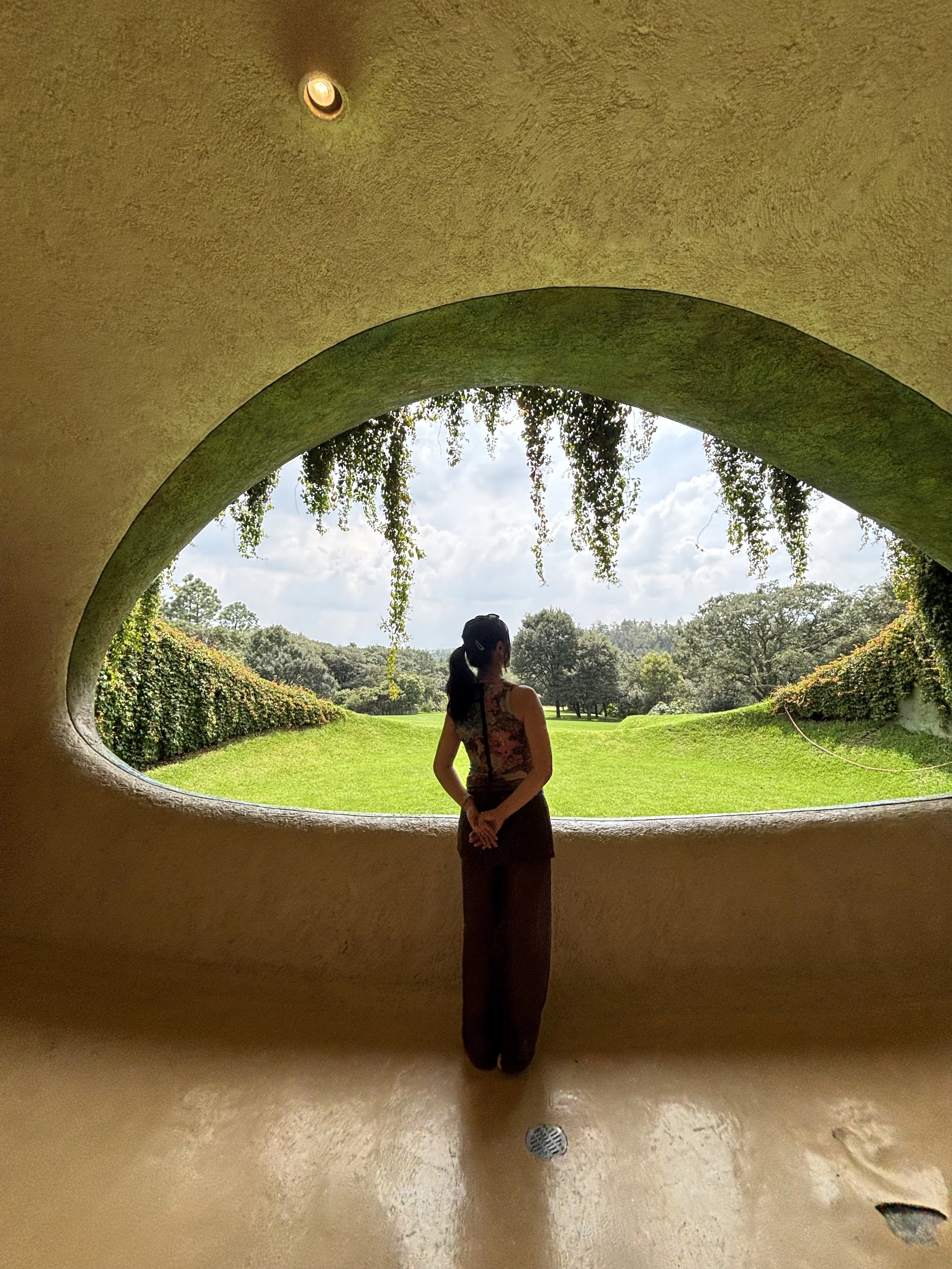
Figure 1. a portal in CDMX
Adopt ideas! Don't shop!
My social media feed has been filled with well-curated journalling ecosystems: where buying the beautiful journal becomes a way to identify our style and vibe. But then the page feels too nice for messy, untamed, un-uniform ideas.
I used to write on sticky notes and paste them into my journal because I had a hard time adopting ideas and for them to take up space on a blank page. It was about whether I felt allowed to let thoughts, feelings and ideas exist without editing or wrapping them up nicely first. I was hardcore judging and wondered whether my voice delivering these ideas was enough. But the ideas weren't the problem.
Pulling something from nothing we can grasp onto is a literal superpower! It's so easy to have circulating ideas that don't belong to anyone yet, saved like recipes, shelved, or that come through my body, then get forgotten.
Finishing a video feels like that relief when we close all the open tabs after a big project. The tabs are like branches of ideas, streams of consciousness I wish would move from draft to filming to editing on schedule and without obstacles (except they never do).
In TCM, too much thinking is said to tie the body's energy into a knot; ideas that keep circling are like food we can't digest. So the act of getting them out of my head, onto a page or into a video, helps the knot loosen.
I've been calling my creative process building a room of my own. Most tasks I'm figuring out on the daily were never guided or taught in school and are curated from trying. I've noticed how much accessibility matters, and how personal my tools need to be when building the art kit: stickers, imagination, joy, and carving slots into my day.
World building and resisting trauma can become all-consuming when we don't take breaks. So a reminder, to me and to you: healing isn't linear, we don't have to process it all at once, and there shouldn't be this pressure to do it all in one lifetime.
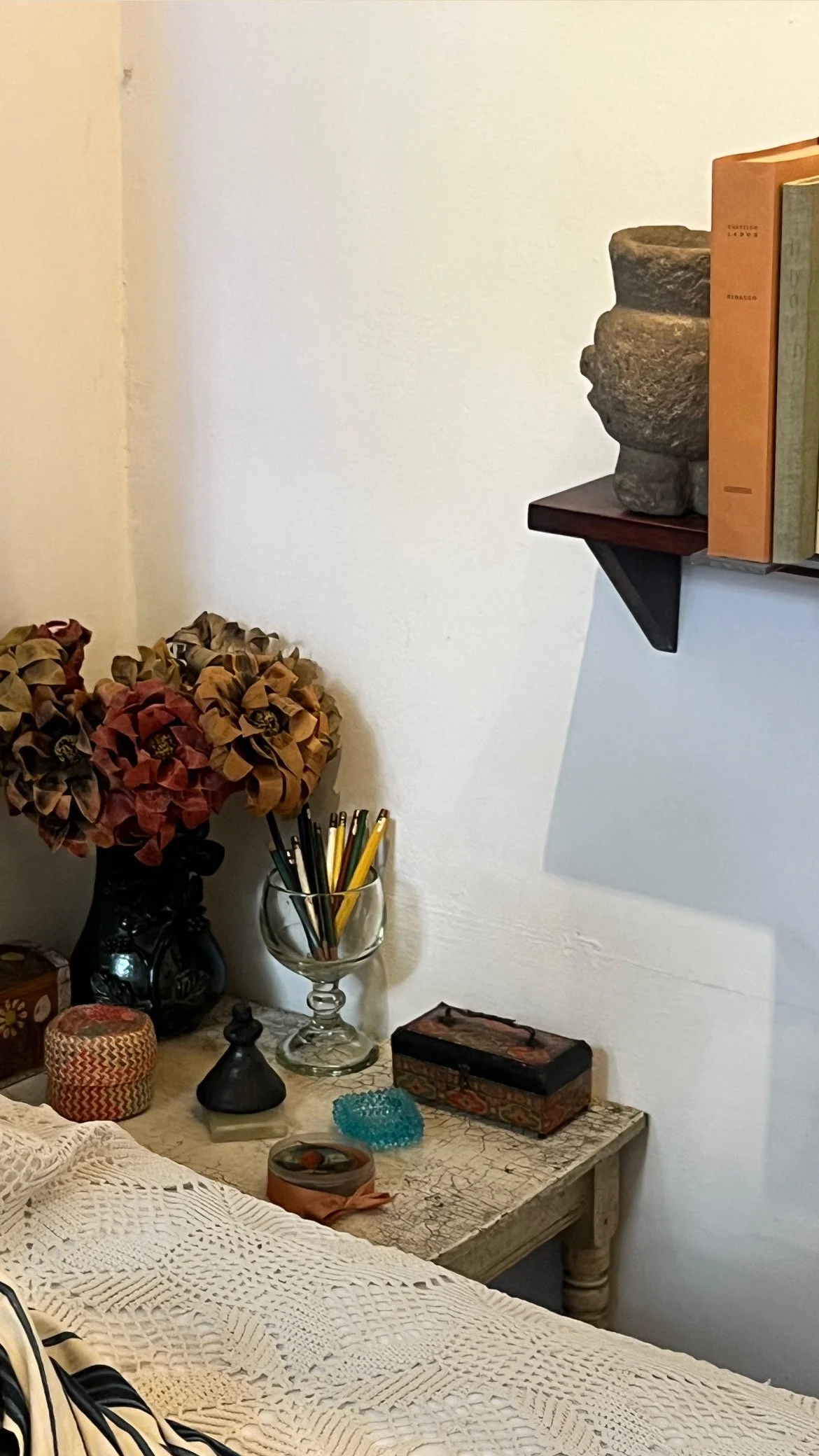
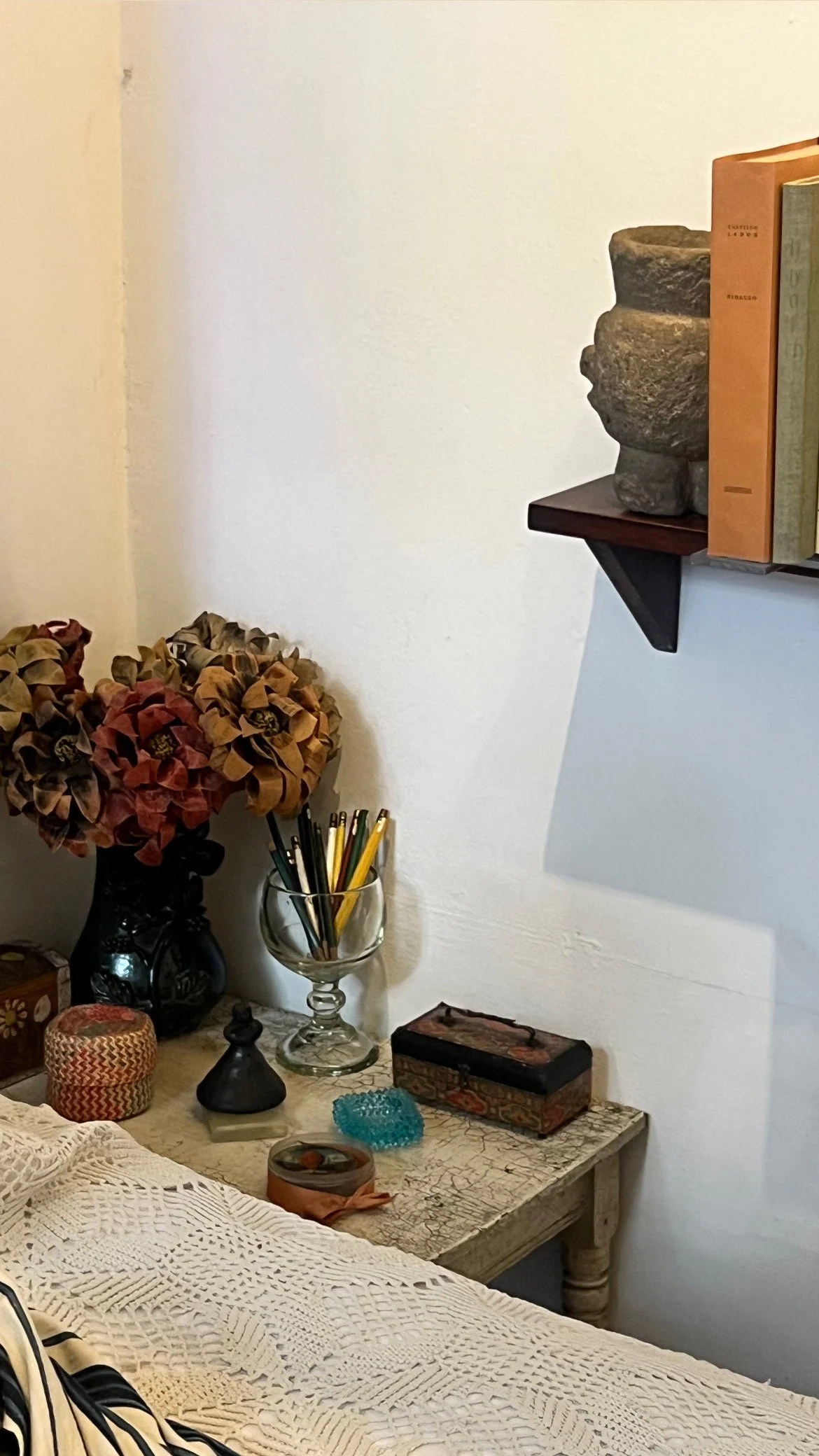
Figure 2. Frida's altar
Woolf's room to Frida's altar
"Lock up your libraries if you like; but there is no gate, no lock, no bolt that you can set upon the freedom of my mind."
Woolf was writing for women to notice the resources they need to build up: money, autonomy, choice. What gets overlooked is what happens in survival states, where resisting systemic oppression doesn't look like access to a private room, and when we can't advocate or fight for safety. Many of us were conditioned to believe that taking up space, or voicing our ideas at all, were risks. Which is why I think the building of a room (even if it's in our imagination) is already an act of agency!
The small room is what we build while the locked one is still being denied to us. I'm not saying stickers are enough. I'm saying we can start building before anyone hands us the key.
When I imagine building a room of my own, it's building anchors: safe corners, practices, visualizations for when I'm feeling lost or flustered, stuck inside systems that would rather I stay that way. Anchors help me pace and ground myself whilst healing in a world full of uncertainty.
(see figure 2 above)
Frida Kahlo's bedside altar stayed with me. I visited the Casa Azul, her home in Coyoacán that is now a museum, and I was taken aback by how simple her altar was. No expensive art materials, no one-of-a-kind leather journals, or rare healing stones. There were just a few pencils and paintbrushes in a glass jar.
Frida spent long stretches confined to bed since 18 yrs old. There's a mirror installed under the bed's canopy and an easel made so she could paint lying down where many of her self-portraits began there. Her creative life was built within arm's reach. It seems she knew what mattered to her and kept it close.
Seeing her altar, I started reflecting that tools for healing and creativity don't always need to be planned, comprehensive or elaborate. We don't need to curate everything, know exactly what could happen, or have training in every practice.
Perhaps we don't need to get everything ready before we begin. What matters more is starting to build how accessible, personal and joyful our tools of healing feel.
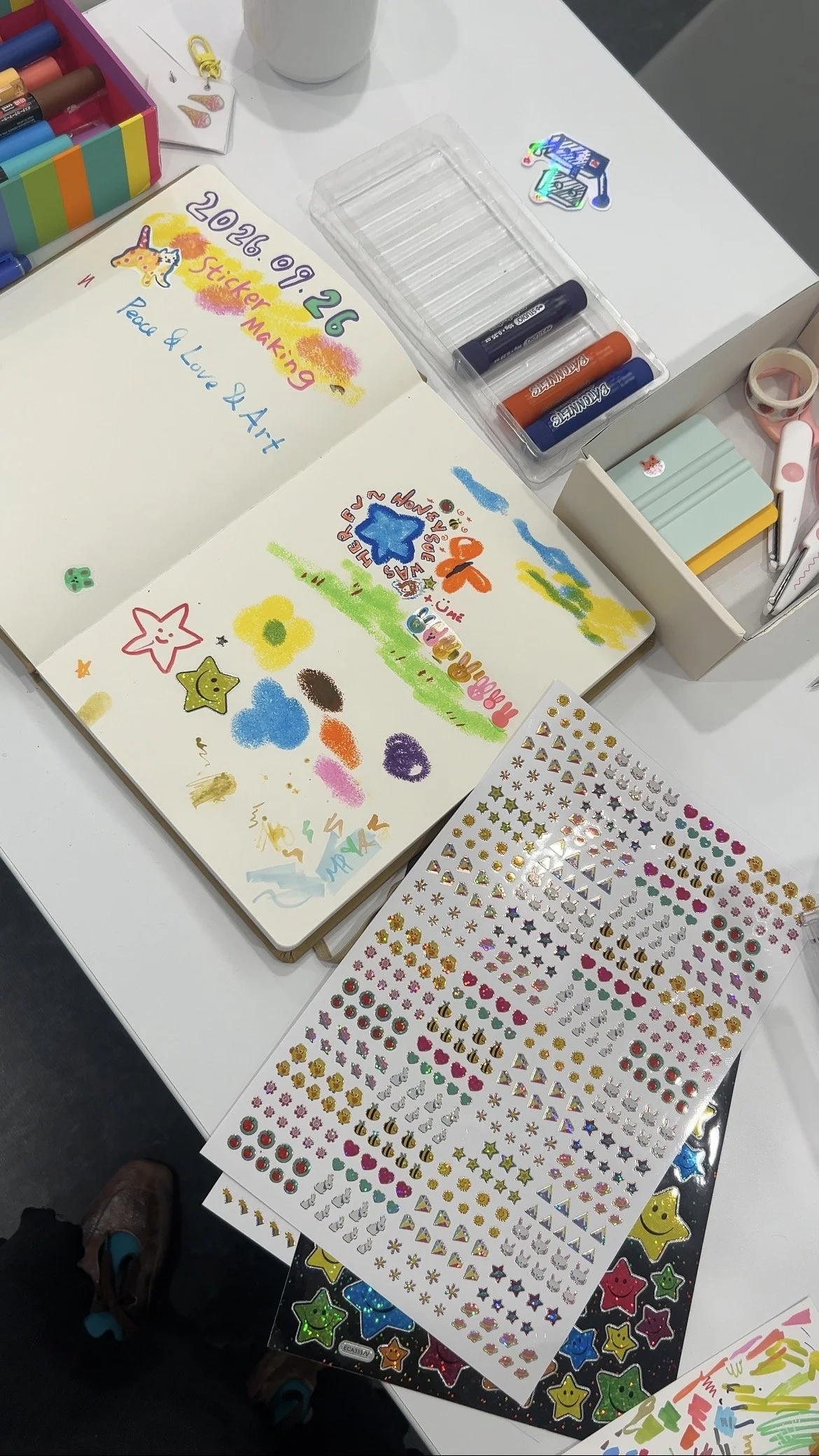
Figure 3. Super Sweet Art's sticker making workshop!
Building a room I want to go to at the end of a long day.
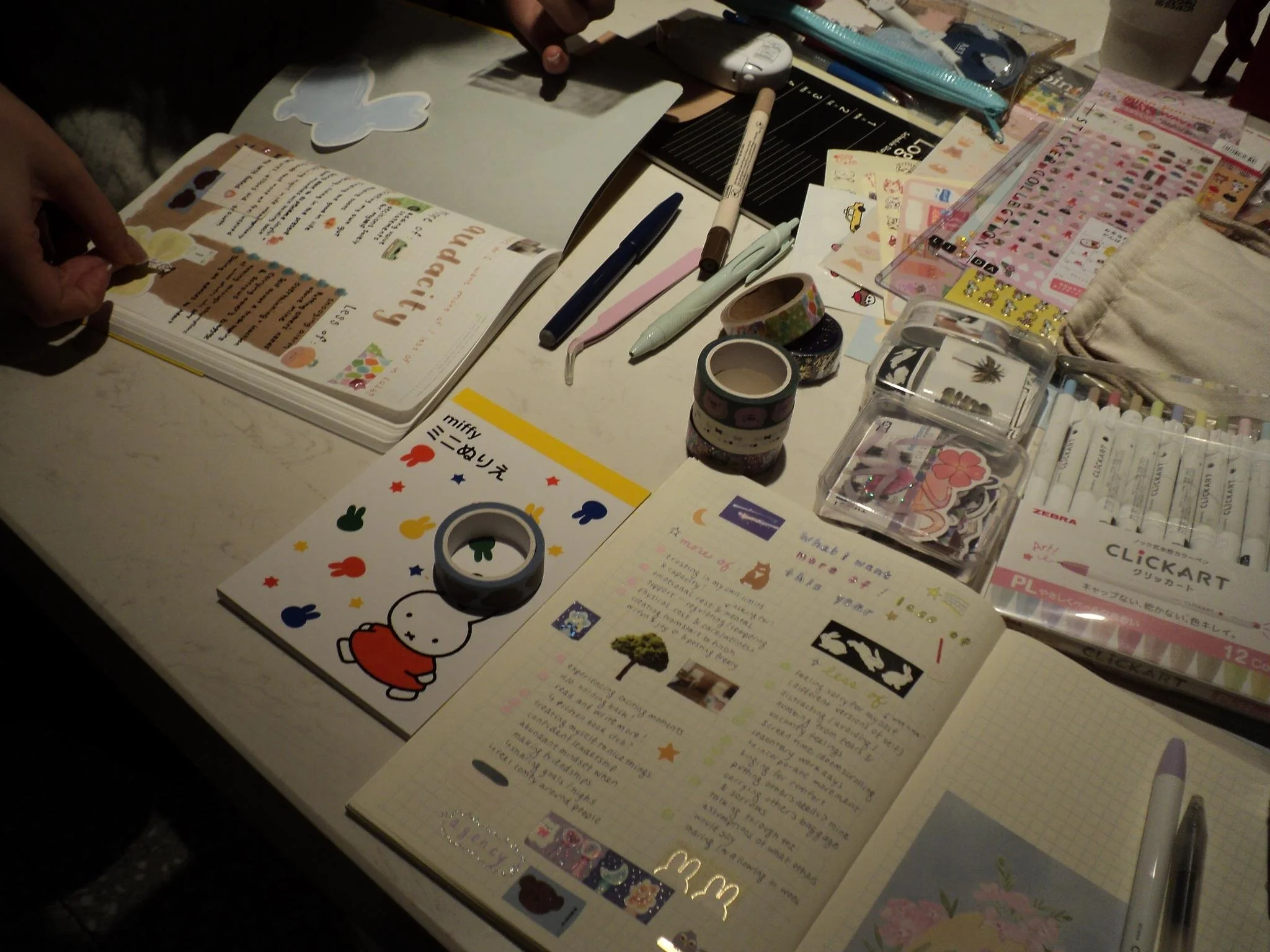
Healing tools look different for everyone! Mine includes stickers, recurring symbols in my life, lived experiences, thought leaders, witnessing my clients' attempts and growth, sharing my small and big dreams, and half-formed ideas that may/may not turn into opportunities.
Maybe these are also healing tools. There isn't always a locked room, a whole evidence-based approach, or a collection of things I think I should have. There is what I already have on hand, and it helps me remember my joy and resistance.
⊹₊˚‧︵‿₊୨ᰔ୧₊‿︵‧˚₊⊹⊹₊˚‧︵‿₊୨ᰔ୧₊‿︵‧˚₊⊹⊹₊˚‧︵‿₊୨ᰔ୧₊‿︵‧˚₊⊹
This coming week, I'm flying to the French countryside, ride a sleeper train, and facilitate art therapy workshops at a retreat tucked into the pine forests of the southwest. It's my first retreat (facilitating and as a participant) and my first sleeper train, ever. I wouldn't have believed this would be possible if I didn't write down "co-planning a big project like a retreat" on my bingo card earlier this year.
What do we even call this feeling of something existing after manifesting it? This portal feels both chaotic and like coming home to what I've been desiring.
Just so you know, half of my suitcase is filled with art supplies to share with 12+ folks, and the items taking up the most real estate are sticker books (that's right, it's plural), washi tapes, cute scrapbook paper and a newly discovered gem: paint sticks from the dollar store.
I'm signing off for now because I really have to start packing (we are working with half of a suitcase after all). In our next newsletter, we will be exploring "joy is not the reward for healing" and maybe some BTS on what I'm bringing with me on the retreat.
I hope you anchor in lots of self-check ins often and with each other, drink the yummiest, comforting drinks as we transition into colder months. I'm rooting for healing, connection and joy!
With gratitude and wonder,
Linda ♡