Posts in Insight
The Fear of Being Seen


from our newsletter, written by Linda Lin, RCC, CCC, RCAT

For a long time, I didn’t believe in the joy and ease of sharing my work.

To be real with you, I’ve been on the verge of stepping away and battling with my ideas and creativity ever since I started Decipher 5 years ago.

Choosing to recommit and act on my ideas again and again: stretching industry barriers around how a therapist ‘should’ show up, facing parts of myself I tend to avoid or reject, like money anxiety and asking for help, adapting to changes in our world, and considering the visibility of Decipher.

 
If you’re anything like me, maybe you’ve noticed how the journey back to our imagination can feel unsupportive and self-betraying at times. Just when we want to begin something new or return to something meaningful, instead of meeting ourselves with softness, we default to harshness. Like why are we getting so hard on ourselves for even trying?


How is it that the very moment we want to access our presence and power, judgement, pressure, control, fear show up?


So in this blog post, our mini research question is:

"Whose imagination are we living in?"


On a personal level, I think of this quote by Audre Lorde: 
 

“In the cause of silence, each of us draws the face

of her own fear — fear of contempt, of censure, or

some judgment, or recognition, of challenge, of

annihilation. But most of all, I think, we fear the

visibility without which we cannot truly live.”


The fear of being seen shows up when we’ve learned to censor ourselves before anyone else gets the chance to. It shows up when the guarded protector part of me is activated. It doesn't pay attention to what actually nourishes me. It's what happens from living under harmful systems designed to cut us off from ourselves.


But facing the soul-crushing parts of the world asks something different of us. It calls us to slow down, to zoom out from the noise, to tune in to what really matters, and to show up with presence.

Those who monopolize resources, also monopolize our imagination


Let's just lay it out. I NEED you to pay attention to where your attention is going. 

We have to get crystal clear and pursue dreaming and building on our imagination. 

 We need to deprogram from the capitalism and the AI-chokehold it has on our psyche, voice and art.

There's a quote by a sociologist, thinker, African American scholar, Dr. Ruha Benjamin in her book Imagination: A Manifesto where she writes, “those who monopolize resources also monopolize imagination”. How is it that we can imagine a world where we can colonize another planet and fly over to get brunch, or design babies based on epigenetics or have AI systems that simulate people who have already passed away, but we can't imagine a world where no child is hungry or where violence is not a thing, where we are rooted in abundance and ease (instead productivity and urgency).


This is a reminder to myself, and to anyone who needs to hear this: 

💙 Let go of the pressure to be polished all the time in our craft. 

💙 Share your thoughts with people, even when they’re messy or unfinished. 

💙 Connect even in virtual spaces where we bring in quirks into our art, random edits, going off-script, with pauses, where something real breaks through instead of reading paragraphs with em dashes everywhere IYKYK. 

💙 There’s something powerful in expressing ideas just from our imagination, not ones from Big Tech!


Every time you share your sensitivities, ideas and imagination, they connect us and humanize us. 

I really want you to know that your perspectives and ideas are worth exploring and it would be such an honour for the world to hear and witness them ❤️


When we show up as we are, we give others permission to do the same too!
 

Somehow from 5 years of fearing visibility, I’m still showing up at Decipher, writing these monthly-ish newsletters, growing a community to co-create visions into existence!

Happy 5 years to this amazing community and everyone who’s stopped by or keeps coming back. I’m really grateful for all of you who make this space feel alive and full of possibility. Here’s to many more years of healing and dreaming together!

 
 
InsightLinda Lin
Bibliotherapy: The Intersection between Reading Fiction and Therapy


written by Maryam Dada, M.A., RCC
mildy edited by Linda Lin, RCC, CCC RCAT

Do you have a favourite fictional book and if so, what makes it your favourite?
Is it the characters? The storyline?
Or a bit of both?
Increasing research has come out around the therapeutic benefits of reading fiction and bibliotherapy.  

In this blog post, we’ll be exploring:
• the self-improvement fallacy
• why reading is an act of resistance
• how reading fiction both influences and amplifies our empathy and sense of self
• bibliotherapy as a creative approach to collective healing

a library from a school in the 90s with shelves of books and 4 computers and workspace in the middle

The Self-Improvement Fallacy

In the 90s, we saw a big push towards reading self-help or psychological books that really influenced societies’ reading habits. It makes sense, when we think about therapeutic reading, we are naturally going to want to read educational, self-help, and informative books. 

According to market research, the self-improvement industry (books, podcasts, academies, courses) is only going to continue growing. While there is a lot of good and useful information in these self-help books, they often sway towards being text heavy, which can take some time for us to process and digest, and don’t always leave us feeling ‘improved’

a subway full of Asian people who are reading or occupied on their phones

On one hand, I understand the desire for accessible self-improvement interventions, and on the other, I worry about the implications of a society driven by “self-improvement” (air quotes intended). 

Self-improvement implies that there is always something to be working on. In other words, it operates on the belief that you, just as you are, are not good enough

From a therapeutic perspective, there is a difference between acknowledging things that would be helpful to work on…and believing that you always need to improve.

You don’t always have to be improving something about your life — in fact, this notion may stem from feelings of internalized capitalism and productivity. Instead, it can be helpful to ask, who benefits from you having these feelings? 

Why Reading Fiction is Key 


This is where fiction comes in. Human beings are experiential in nature. This means we learn best through experiencing something. 

words say, "the best books, they don't talk about things you never thought about before. They talk about things you'd always thought about, but that you didn't think anyone else had thought about." quote by TOmmy Wallach, we all looked up.

Reading fiction is different from studying a text or absorbing information. The very act is experiential. When we read stories we are getting a first-hand account of a characters’ lived experience. 


We get to go on adventures with them, understand what they’re feeling, and take part in their journey. It’s a gateway into a different life or timeline, a peek into a world different from our own. That’s what makes reading fiction so invaluable, the opportunity to experience life from a different perspective.

shelf of books with a planter on the top shelf. Golden sunlight is beaming in the room

Bibliotherapy is a gentle, creative therapeutic approach that uses literature, storytelling, and poetry to offer perspective, deepen insight, and support positive change in clients. Books can provide a form of support that allows clients to find comfort, wisdom, and emotional connection. 

“We are more alike than we are unalike”- Maya Angelou


The Therapeutic Benefits of Reading Fiction 

There are many therapeutic benefits to reading fiction  (Billington et al., 2010; Parker, 2018; Dodell-Fetir, Tamir, 2018) it can:

  • ↑ our capacity to understand and relate to others 

  • ↑ our empathy and compassion for ourselves and others 

  • ↑ our social well-being—while reading we relate to characters in the story and that helps to both normalize and validate different experiences 

  • Give us diverse perspectives on matters 

  • Give us insight into other communities and groups

  • ↑ our concentration and ability to focus 

  • ↑ our self-awareness and ability to articulate 

  • Allow us to slow down and process stories

  • Help to regulate our nervous system

  • Help us engage in an act of counterculture. In a fast paced world that lauds productivity as the standard, reading is an act of resistance

Increased Empathy and why it matters

Snoopy is tiny reading a giant book while eating a cookie on a blue sofathe caption says "the world needs you"

Reading fiction allows us to deep dive into the human condition with its powerful capacity for resonance. We experience the spectrum of emotions from the protagonist and in doing so are simultaneously expanding, validating, and normalizing our own experience of what it means to be a human. 

One of my favourite quotes comes from Donna Tartt’s Goldfinch, on Art. She says:

“…even if we’re not always so glad to be here, it’s our task to immerse ourselves anyway: wade straight through it, right through the cesspool, while keeping eyes and hearts open.”

Increasing our empathy and our understanding of human behaviour, we take part in the struggle against moral apathy… or what happens when we no longer care about one another. 

James Baldwin famously said, “I am terrified of moral apathy, the death of the heart” 

Reading fiction is one of the best protective mechanisms against that struggle, precisely because of its relatibility. Given the current climate on book bans and universities censoring students, it is incumbent on us, the people, to question the systems at place, seek knowledge, and expand our awareness.

Have you read any famously banned books? If yes, consider why they might have been banned and what it means to sensor a narrative. Knowledge is our best ammunition against ignorance, and as a result against indifference. It's not only cool to care, it's crucial. 

Maryam is a Registered Clinical Counsellor at Decipher. If you like to explore themes in tv, media, or literature and how it relates to your life or the different things you may be going though, she may be a good fit.  She is currently taking new clients! Book a free consultation with Maryam today—available online and in person in so-called Vancouver, BC.

 
The Myth of Work-Life Balance in Severance: A Nervous System and Mental Health Perspective


written by Maryam Dada, M.A., RCC
mildly edited by Linda Lin, RCC, CCC, RCAT

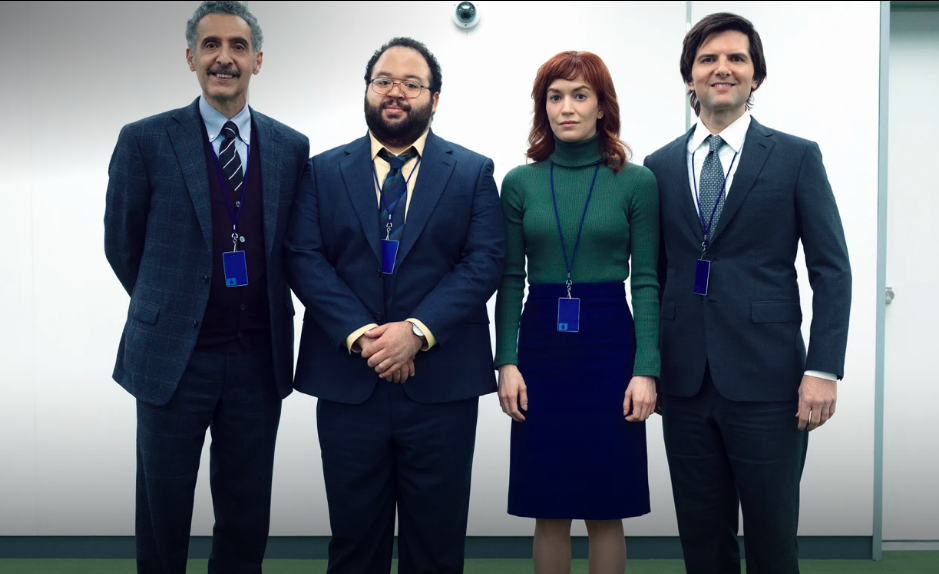
I started watching the hit show Severance on the recommendation of one of my besties who works in the corporate world. The show, which is currently receiving a lot of attention for its sci-fi portrayal of ‘work-life balance,’ depicts the lives of corporate workers at Lumon, a Biotech company. These employees have undergone a surgical procedure, known as severance, that allows them to mentally separate their work life from their personal life. An implanted device causes employees to lose all their memories of the outside world, which then creates a split personality— the “innie” who works at Lumon, and the “outie” who gets to live their personal life.

We’re going to be exploring the importance of mind-body connection, explain the role of our nervous systems (specifically the ANS), and what it looks like to live an ‘embodied’ life.

What Is Severance Really Saying About Work-Life Balance?

As I was watching, I couldn't help but think of all the different mental health implications of a severance procedure while also recognizing the appeal of getting some separation from work and the very coveted ‘work life balance’… especially under late-stage capitalism. 

Severance is set in the near future where getting this medical procedure is certainly controversial but also advertised, encouraged, and appealing for many. 

The main character, Mark, was a history professor at the local university whose wife died in a car accident. We learn that Mark chose to work for Lumon because it was easier than grieving his dead wife; which of course, is not the healthiest solution for grief and loss, but it does humanize our main character and sets the premise for some pretty important mental health questions. Namely, can work-life balance be achieved by splitting our personalities?

If our work personas only exist at work, it sure would make it a lot easier to not bring work home, to not think about work after hours, or to work overtime. And for our main character, Mark, having the option of forgetting about his partner’s death, seems like a surefire way to not deal with it™. 

Although, I wonder how true that actually is. 

While a very interesting premise and story-line, with many different undertones about our society and the emphasis we place on work, and how human beings respond to and deal with trauma, or even the ethical implications about having what is essentially a clone…

I think one of the biggest considerations for me was thinking about what happens to our bodies. 


The Mind-Body Connection: Why Compartmentalization Doesn't Work


From a therapeutic perspective, we might be able to mentally compartmentalize parts of our lives and that kind of organization can certainly be helpful, however we cannot escape from our bodily sensations

The mind-body connection operates on the belief that our mental and physical health are linked (Pally, 1998). When we feel dysregulated or even discomfort, we are likely experiencing a mental and physical symptom. 


For example, when you are feeling anxious you might start to have racing thoughts, while also noticing your muscles tensing or your palms becoming sweaty, you could have butterflies in your tummy, or even be feeling nauseous.

Strengthening the mind-body connection is a gentle reminder that we are made up of not only our mental states but also our physical states. It’s acknowledging that our bodies are not simply vehicles for our minds, but that two work in tandem to keep us healthy.


Understanding the Autonomic Nervous System and Stress

When we work to strengthen that mind-body connection we are engaging in a form of emotional regulation and directly working with our nervous systems. 


The Autonomic Nervous System (ANS)

  •  is our body’s command centre that influences everything from our breathing to our heart rate and how we navigate and understand stress (Gibbons, 2019). 

  • The ANS can be thought of in two parts: the sympathetic nervous system and the parasympathetic nervous system. 

The graphics explain that the sympathetic nervous system increases our energy for fight and flight while parasympathetic nervous system helps us rest and digest.

Sympathetic Nervous System (SNS): Our bodies’ fight or flight response that activates when we perceive a threat. It prepares our body by increasing our heart-rate, blood pressure, and by releasing adrenaline. 


Parasympathetic Nervous System (PNS): Our bodies’ at rest and digest. After a stressful situation, this system allows our body to slow and restore balance. 

ANS and the Severance Department: Our Bodies’ Aren’t Separate

Our ANS plays a big role in our bodies response to stress and furthers the importance of strengthening the mind-body connection. In Severance, characters who’ve undergone the medical procedure are only mentally compartmentalizing their lives. This means that if either the innie or the outie experiences a significant amount of stress or trauma —it will show up in the body for both of them. 

If the fight or flight response gets triggered for the innie at work, their outie will feel the effects of that in their body too. One could even argue that being severed doubles the stress, exacerbated by the fact that neither personality can remember what happens to the other. 


When we start to factor in mind-body connection, including how our autonomic nervous system plays a role, the curtain gets pulled back a bit more, and we see that ‘work-life balance’ for the characters in Severance is merely a mirage. 

Practical Ways to Cultivate an Embodied Life

Our bodies are central to our mental health, when we are living in ways that are embodied or simply, being in tune with the way our body feels throughout the day, we are more likely to engage in the kind of emotional regulation that activates the parasympathetic nervous system — when we are recalibrating and at rest. 

This is easier said than done and it takes practice. It’s a normal thing to want to compartmentalize, run away, or hide from our problems/feelings and a large part of that is societal conditioning to value productivity. 

One of the ways we can practice becoming more embodied is to give ourselves permission to exist, be, and/or live slower but with more intention. This is where somatic interventions like box breathing, grounding exercises, physical activity, or meditations can help by bringing us back into the present moment and creating an awareness of our body to develop a more holistic approach to our healing.


Further Reading on Trauma, Stress, and Embodiment
Invitations for further study

Bodies you can mirror when being in your own is just too much via Instagram @eroticsofliberation https://www.instagram.com/p/DGLGS6WssSC/?igsh=MWVmODAyM2oyYXBoNg==
Book: The Pain We Carry: Healing from Complex PTSD for People of Color by Natalie Y. Gutiérrez

Podcast: The Meaning of Embodiment, with Prentis Hempill https://www.ted.com/talks/how_to_be_a_better_human_the_meaning_of_embodiment_w_prentis_hemphill


References: 

Pally, R. (1998). Emotional Processing; The mind-body connection. The International journal of psycho-analysis, 79(2), 349.

Gibbons, C. H. (2019). Basics of autonomic nervous system function. Handbook of clinical neurology, 160, 407-418.


About the Author: 

Maryam is a Registered Clinical Counsellor at Decipher. She is currently taking new clients! If you like to explore themes in tv, media, or literature and how it relates to your life or the different things you may be going though, she may be a good fit. 

Interested in exploring work-life balance and embodiment through therapy? Book a session with Maryam today—available online and in person in so-called Vancouver, BC.

 
I was on an expert panel for therapists, here are some key insights
 

notes by Linda Lin, RCC, CCC, RCAT

Q: “How are you doing things differently than what you were taught in grad school?”

Therapy is political.
I can’t separate therapy from social justice anymore: if one group is not free, all of us aren’t free. True freedom cannot exist in a society where some groups face oppression, discrimination, or limited rights.

Liberation-based healing
is hard to reframe and unlearn. The language in which I initially type out from thoughts are wired from years of indoctrinated academia from psychology where it centers on people’s struggles, suffering, pain points, deeply rooted in colonization, pathologizing and problem-solving, rather than recognizing systemic oppression or honouring the wisdom and agency people already have and need from community and care.

Re-indigenizing.
I am slowly digesting that most of what I learned in grad school about the field of psychology is deeply appropriated from Indigenous, Eastern, African ancestral practices…eg. maslow’s hierarchy of needs (Blackfoot people) (Yoga: India, commodified into a fitness trend; focusing mainly on physical postures (asanas) without the spiritual or philosophical teaching that are core to its practice; EFT (chinese acupuncture); Mindfulness based cognitive therapy: and Mindfulness-based stress reduction draw from Zen Buddhism and Vipassana meditation; ACT: eastern practices: buddhist philosophy, mindfulness and acceptance; Somatic therapies: Indigenous healing traditions- body-mind connections; peter levine even discusses spending extensive time in Africa, pulling from some areas of chinese medicine)

I think of harm and repair differently.
Rooting in anti-carceral practices and harm-reduction approaches when it comes to supporting those who need immediate care and oversurveilled groups: seeking alternatives (community-based) interventions, pod mapping, Grassroots organizations/resources, care planning collaborating with folks I work with and their loved ones are involved instead of involving authorities to reduce retraumatization and systemic harm; ongoing informed consent and advocating; support after reporting/note taking, ethical reflection through the intersectional pieces at play: critical examination of our role as the ‘mandated reporter’ within systems of power and control.

On repair.
Healing also includes addressing the harm caused to clients. Academia/grad programs don’t teach us how to repair in ways where we address the systems that affect us; where we stay in the middle with folks: to stay in connection, and birth a new cycle that isn’t violent. This is different from fixing/solving; it’s a deep embodying of the impact from institutional systems that exist, races and identities, kin based violence have harmed us.

Q: “How is being a therapist at this point in time different from what has come before?”

Saying no to ‘therapy hats’.
I’ve realized there’s no such thing as a ‘therapist hat.’ I no longer wear multiple ‘hats’ to separate my roles in and out of the therapy room. This shift has helped me show up authentically—both with my clients and my loved ones. It’s also allowed me to align with my living ethics, ensuring the work I do feels liberating rather than stifling or oppressive.

Professionalism vs. Competence is ever-changing in online therapy.
The landscape of online therapy is constantly evolving, especially when balancing professionalism and competence:

  • Professionalism involves adherence to ethical guidelines, maintaining boundaries, and presenting oneself in ways that foster trust and credibility in a therapeutic context.

  • Competence focuses on a therapist's ability to effectively address clients’ diverse needs, requiring ongoing professional development, recognizing limitations, and seeking supervision when necessary.

In my practice, transparency is key. I focus on supporting underrepresented groups through community care, addressing systemic issues in the therapy field like policing and mandated reporting. Guided by ethics and social justice, I try my best through a harm reduction approach to ensure therapy is effective and rooted in care and connection.

Transparency and shared identities and values in the therapy room.
Therapy isn’t neutral. Many clients value transparency to ensure their therapist’s values and identity align with their own. It’s not just about visible traits—for instance, I’m a fair-skinned, medium-sized East Asian, able-bodied, and femme-presenting individual. Beyond these, I am a first-generation immigrant, born in this city with Mandarin as my first language, neurodivergent, living with complex PTSD, vegan, and demisexual. When seeking out my own therapist, I prioritize someone who “gets it,” who doesn’t just validate but can advocate for me, and is committed to creating a better world for all of us.

Therapy lingo has become less stigmatized, but weaponized.
The normalization of therapy language in daily life is a sign of progress in reducing mental health stigma; however increased use of therapy language comes with unintended consequences like how people may misuse therapy terms to control in conflicts or undermine others, making emotionally manipulative statements sound like legitimate boundaries or justifying hurtful behaviour as “self-care.”

Weaponized therapy language can obscure personal accountability. Phrases like "that's my boundary" or "you're projecting" can shut down meaningful dialogue, potentially preventing resolution or deeper understanding and curiosity for connection and repair.

Rationalizing is not as needed bc the culture does that enough: rational processing vs. Feeling processing; going back to listening to our body and embodying values, hope, change is what I see many of us needing right now.

Recent shifts in social justice and Empathy

Over the past 5 years, we’ve witnessed climate change crises, movements like #MeToo, Black Lives Matter, the Covid-19 pandemic, and the surge in fat liberation and HAES. We’ve seen the impact of systemic issues like greed, environmental justice, and the dark history behind Indigenous communities. From Roe v. Wade to the exposure of the entertainment industry complex, these events have sparked empathy. However, true solidarity requires more than just words—it's about living ethics through actions, not just blackout posts. I hope the therapy field can move towards one that actually protects us and keeps us safe.

Be sure to sign up to our newsletter, Creative Ponders, where we share tidbits from our therapists, art prompts + new updates on offerings, delivered directly to your inbox!